Finding the right mental health care can feel overwhelming, especially when you’re trying to understand which online platforms offer the services, insurance coverage, and therapeutic support that matter most to you. Many people searching for a therapist often compare Headway vs. Grow Therapy, two leading platforms designed to make care more accessible and more affordable.
Both platforms connect clients with licensed mental health providers and help simplify the process of using insurance benefits for mental health care.
However, the user experience, insurance options, and specialty availability differ in meaningful ways. In this guide, we’ll break down those differences to help you make the best choice for your personal mental health goals.
Key takeaways
- Both Grow Therapy and Headway connect clients with licensed therapists and accept commercial insurance — but they differ significantly in insurance breadth, specialty depth, and available tools.
- Grow Therapy accepts 125+ insurance plans including Medicaid and Medicare in select states; Headway works with commercial insurance and limited Medicare Advantage plans only.
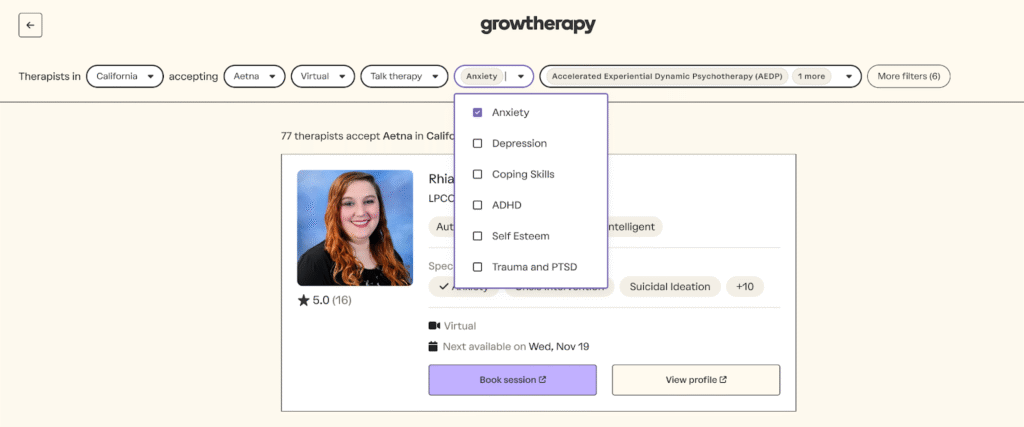
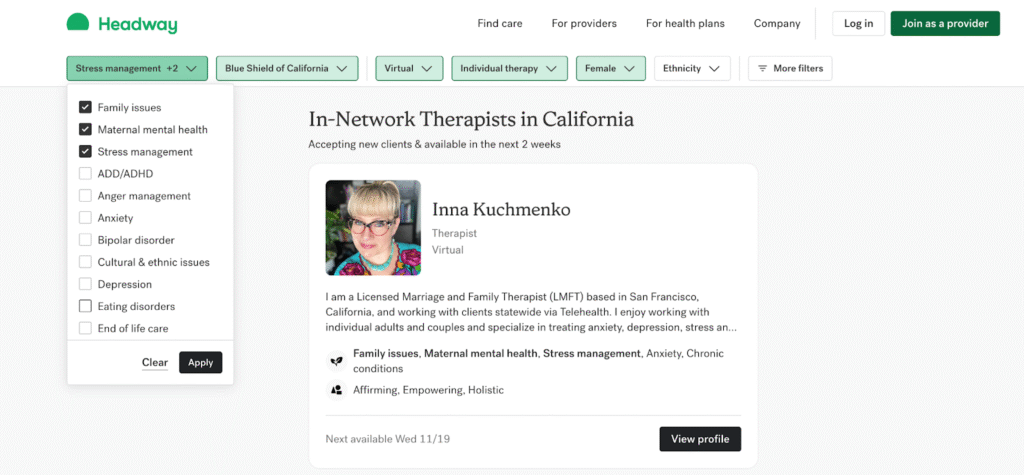
- Grow Therapy offers 135 specialties with identity-based filters; Headway offers 20+ specialties with more limited filtering.
- Grow Therapy includes self-guided tools, worksheets, and progress-support resources; Headway focuses primarily on fast scheduling and insurance navigation.
- If you have Medicaid, Medicare, or want a more personalized match, Grow Therapy is likely the better fit. If you have commercial insurance and want the fastest route to an in-network therapist, Headway may serve that need.
Headway vs. Grow Therapy at a glance
| Grow Therapy | Headway | |
|---|---|---|
| Offers cash-pay options | ✔ | X |
| Accepts Medicare and Medicaid | ✔ 125+ plans, including Medicare & Medicaid in select states | X Limited Medicare and Medicaid acceptance |
| Medication management | ✔ | ✔ |
| Offers wide range of specialities | ✔ 135 specialties | X Limited to 20+ specialties |
| Session flexibility | ✔ Virtual or in-person; nights/weekend availability | ✔ Virtual or in-person; nights/weekend availability |
| Therapy tools | ✔ Progress tracking tools, therapy toolkit, self-guided resources | X Limited client-facing tools |
What is Grow Therapy?
Grow Therapy is an online therapy platform that helps clients find licensed therapists, psychologists, and psychiatric providers for virtual or in-person care.
You can filter your search by specialty, insurance, language, therapist identity, and availability to find the right match for your needs. Grow Therapy accepts 125+ insurance plans including Medicaid and Medicare in some states, and also supports private-pay sessions when preferred.
Many therapists offer evening and weekend availability, giving clients more flexibility to find care that fits their schedule.

Grow Therapy pros and cons
| Pros | Cons |
|---|---|
| • Accepts 125+ insurance plans, including Medicaid and Medicare in some states | • Cash pay rates vary by provider |
| • Offers virtual and in-person therapy with evening/weekend availability | • In-person availability depends on location |
| • Includes 135 specialities and identity-based filters | |
| • Offers access to psychiatric providers and medication management in many states | |
| • Offers self-guided tools, AI-assisted journaling, worksheets, and educational resources | |
| • Streamlined insurance navigation and transparent pricing |
Grow Therapy stands out for its flexibility, specialty options, and user experience. With broad insurance acceptance and more than 135 specialties, clients can find a therapist who meets their exact needs.
Self-guided tools, worksheets, and AI-assisted journaling make it easier to stay engaged in your mental health journey between sessions.
Some specialty areas and in-person appointments may have regional limitations; however, Grow Therapy offers one of the most accessible and personalized therapy experiences available.
What is Headway?
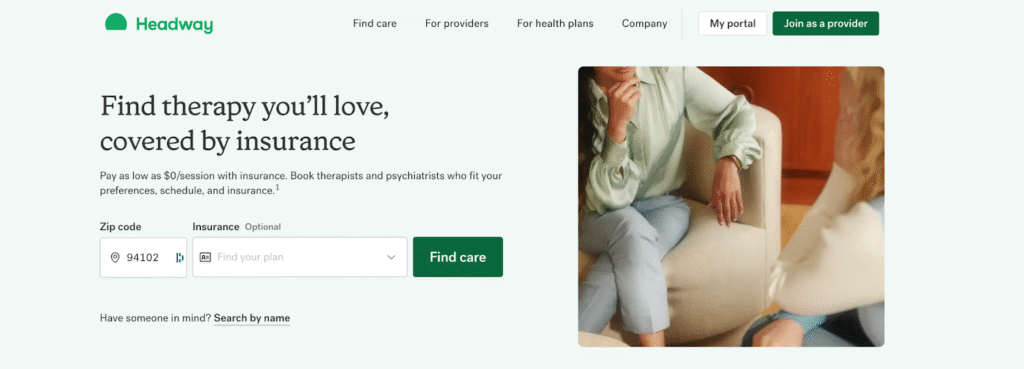
Headway is a mental health platform that helps clients find licensed therapists and psychiatric providers who accept their commercial insurance. The platform focuses on making in-network care easier to access by allowing you to verify your benefits instantly, view estimated copays, and schedule virtual or in-person appointments. Headway is designed for clients who want fast, affordable access to care through commercial insurance plans, though it does not accept Medicaid or traditional Medicare and supports only limited Medicare Advantage plans.
Headway pros and cons
| Pros | Cons |
|---|---|
| • In-network with many commercial insurance plans | • Does not accept Medicaid or traditional Medicare |
| • Offers virtual and in-person therapy with evening/weekend availability | • Only supports limited Medicare Advantage plans |
| • Transparent copay estimates and fast benefits verification | • Minimal private-pay or out-of-network options |
| • Easy booking and simple user experience | • Fewer specialty and identity-based filters compared to Grow Therapy |
| • Minimal self-guided mental health tools | |
| • In-person and specialty availability varies by region |
Headway is a strong option for clients seeking in-network, affordable therapy through commercial insurance. Its biggest advantage is how quickly you can check benefits, understand your copay, and book a therapist who is available soon, which can be especially helpful if you need care quickly. However, Headway’s specialty filters are more limited, and the platform does not offer self-guided mental health tools or support for Medicaid, traditional Medicare, or private-pay clients. For those whose primary goal is fast, insurance-backed access to care, Headway may be a convenient fit.

Did you know?
A 2024 study of 175,000 private practice psychotherapy providers found that a significant share do not accept insurance at all — relying instead on direct pay. Cost and lack of in-network providers remain the two most commonly cited barriers to accessing mental health care in the United States. This is exactly the problem platforms that verify insurance upfront are designed to solve.
Compare Headway vs. Grow Therapy benefits
Choosing the right platform comes down to what you value most, whether that’s specialty options, affordability, or access to specific types of providers. Here’s how they compare across four key areas: pricing, insurance, specialties, and therapy tools.
Pricing model and payment structure
Grow Therapy
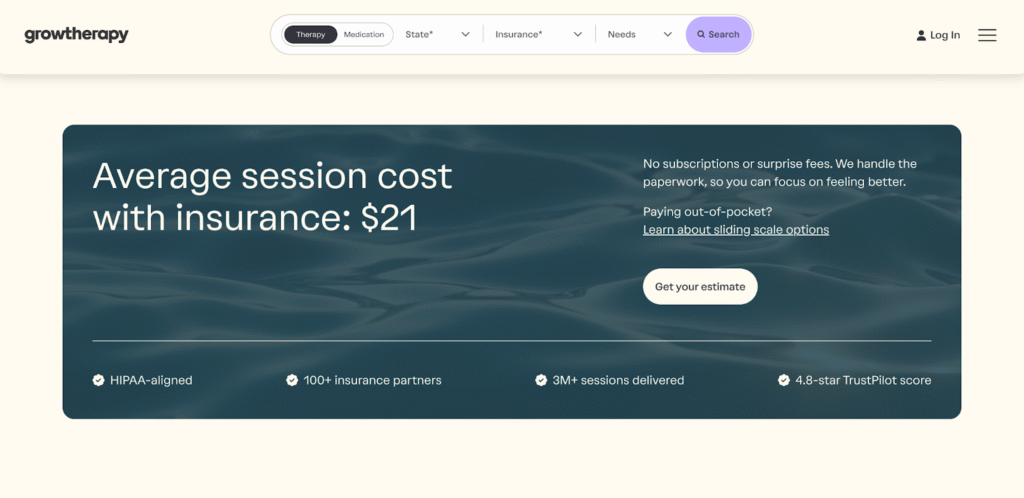
Grow Therapy uses a flexible pay-per-session model that supports insurance and private-pay. Your copay or out-of-pocket cost is shown upfront before booking. This model gives clients more control, especially if you want to choose a therapist outside of your insurance network.
Headway
Headway relies entirely on an in-network model. Clients typically pay their in-network copay, which varies by plan and makes it a convenient option if keeping costs low is your priority. The platform automatically bills your insurance company, but it does not offer private-pay flexibility. If you don’t have commercial insurance, you’ll need another platform.

Insurance and billing
Grow Therapy
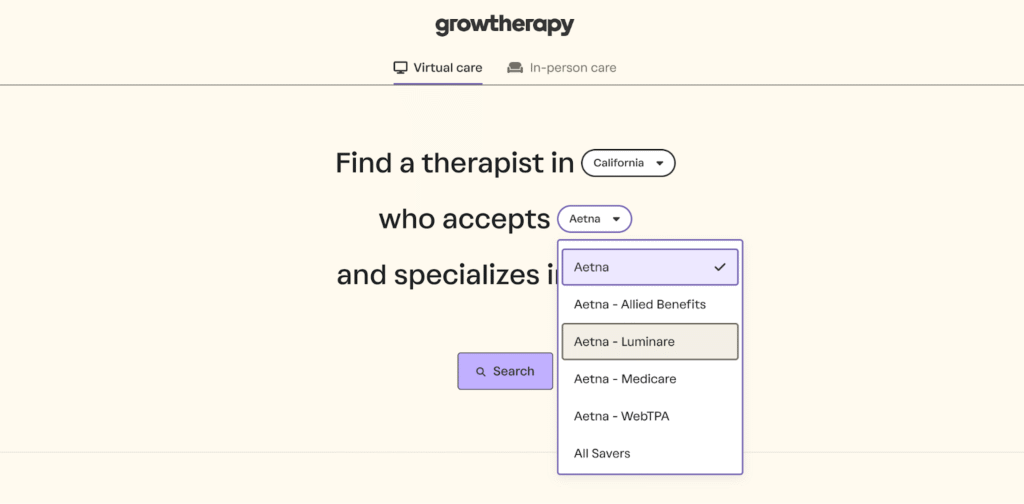
Grow Therapy accepts 125+ insurance plans plus Medicaid and Medicare in some states, making therapy accessible to a wide range of clients. Grow also offers easy benefit verification and straightforward billing through their cost estimate tool, which helps reduce confusion around mental health insurance benefits.
For more on how to navigate using insurance for therapy, check out our guide.
Headway
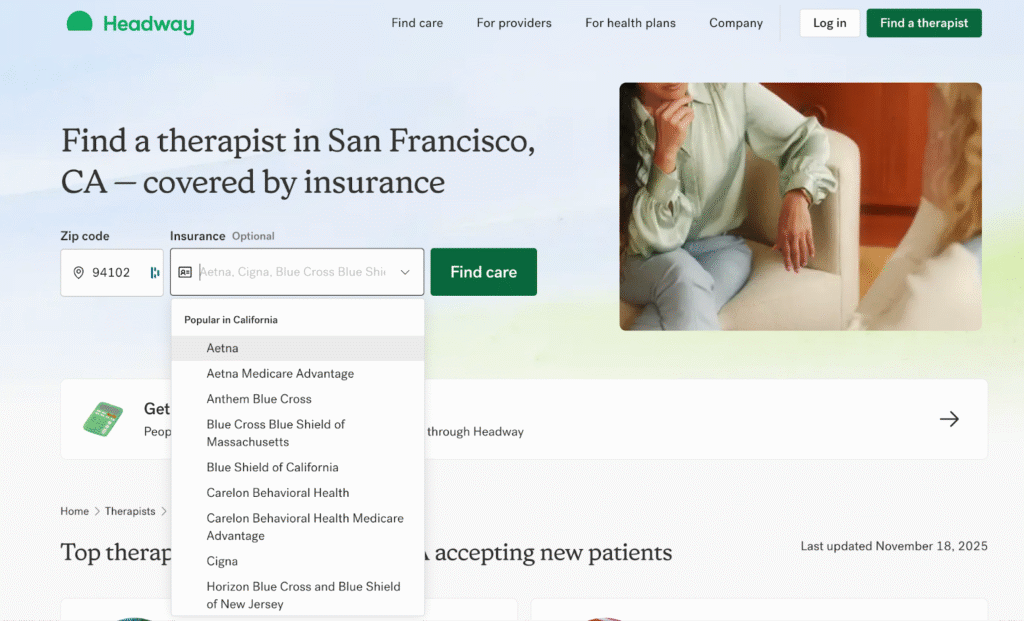
Headway specializes in commercial in-network insurance and offers instant benefit checks with clear copay estimates. This makes the booking process fast and predictable. However, the platform does not accept Medicaid or traditional Medicare, and only works with limited Medicare Advantage plans. If you rely on public insurance, Grow Therapy is likely the better fit.
Specialities
Grow Therapy
Grow offers 135 specialties, including trauma therapy, couples counseling, LGBTQ+ affirming care, ADHD treatment, child/teen therapy, and more. This makes it easier to find a therapist whose experience matches your mental health goals. Grow also provides access to psychiatric services and medication management in many states, allowing clients to receive both therapy and medication support in one place.
Headway
Headway offers 20+ specialties and focuses on quickly connecting clients with therapists who accept their insurance. While it covers many common areas (like anxiety, depression, and relationship issues), specialty filters and identity-based matching are more limited. In addition, access to psychiatric providers varies by region.
Therapy tools
Grow Therapy
Grow Therapy offers a comprehensive user experience by providing therapy worksheets, self-guided tools, psychoeducation modules, and progress-support resources. These tools help clients stay engaged in their mental health journey between sessions. The platform also makes it easy to book appointments, view insurance details, and message your therapist securely.
Headway
Headway centers its experience around fast scheduling and insurance navigation. You can verify your benefits, see estimated costs, and book appointments through a clean, simple interface. However, Headway does not offer self-guided therapeutic tools or educational resources — it is primarily a booking and insurance platform for therapy.
How to choose the right therapy platform
When selecting a therapy platform, consider your insurance, your goals, and how personalized you want the process to be.
Grow Therapy may be a better choice if you want:
- Broader insurance acceptance, including Medicaid and Medicare
- Highly personalized therapist matching across 135 specialties
- Identity-based and culturally affirming filters
- Access to psychiatric services and medication management
- Self-guided mental health tools, worksheets, and educational resources
- Clear pricing and the option to choose private pay
Grow Therapy is typically the best choice for clients who value flexibility, specialty options, and a more supportive, resource-rich user experience.
Headway may be a better choice if you want:
- Low-cost therapy through commercial in-network insurance
- Instant benefit verification and upfront copay estimates
- A fast, simple way to find an in-network therapist
- A simple booking process and straightforward scheduling
Headway is often the best choice for clients whose priority is quick, affordable access to an in-network therapist — especially if you have employer-sponsored or marketplace insurance.
Can I switch from Headway to Grow Therapy without losing my progress?
Yes — and the transition is typically straightforward. If you’re currently seeing a therapist on Headway and want to switch to Grow Therapy, you have a few options.
If your current therapist is also on Grow Therapy’s network, you may be able to continue with the same provider under a different platform. If not, you can search for a new therapist on Grow who specializes in the same areas and request that your previous provider share any relevant clinical notes or a brief treatment summary — most therapists are willing to do this with a signed records release. Your mental health history and progress belong to you, not to the platform.
Switching platforms does not erase your progress; it simply changes the administrative structure through which you access care. On Grow Therapy, you can filter by specialty, insurance, and identity-based preferences to find a therapist whose approach closely matches what you’ve been working on.
Final thoughts
Ultimately, choosing between Headway and Grow Therapy depends on the type of coverage you have, your mental health goals, and how personalized you want your care experience to be.
Grow Therapy is the stronger option for clients who need broad insurance acceptance — including Medicaid and Medicare — or who want access to 135 specialties, identity-affirming filters, and a more supportive user experience with self-guided tools. Headway may be a better fit if you have commercial insurance and want fast, in-network scheduling with clear copay estimates.
If you’re ready to begin, search by insurance, specialty, and availability on Grow Therapy — most clients are in their first session within two days.
Find a therapist on Grow Therapy
Frequently asked questions
Headway’s platform is built primarily around commercial in-network insurance. It does not support Medicaid, traditional Medicare, or private-pay clients. If you don’t have commercial insurance or want private-pay flexibility, Grow Therapy is the more appropriate platform.
When you search on Grow Therapy, you can enter your insurance plan directly — the results will show only therapists who are in-network with your plan. You can also use the cost estimate tool to see your estimated copay or out-of-pocket cost before booking, so there are no surprises.
Yes — Grow Therapy provides access to psychiatric providers and medication management in many states, allowing clients to receive both therapy and medication support in one place. Headway also offers some psychiatric services, though availability varies by region.
Switching platforms is possible and does not erase your mental health progress. If your current therapist is available on both platforms, you may be able to continue with the same provider. If not, requesting a clinical summary from your previous therapist before starting with someone new can help ensure continuity of care.
Yes — Grow Therapy accepts Medicaid in select states. Headway does not accept Medicaid or traditional Medicare. If you are covered by Medicaid, Grow Therapy is the better option of the two platforms. Use the cost estimate tool to confirm Medicaid coverage in your specific state before booking.