Online therapy platforms are making the connection between people and therapy much easier, offering assistance with understanding payment options, finding qualified providers across the country, and utilizing insurance benefits. With so many options available, choosing the right platform comes down to your specific needs, preferences, and budget.
Grow Therapy and BetterHelp are two online therapy platforms designed to overcome the challenges of accessing traditional mental health care, providing those in need of support with a way to connect with licensed mental health care professionals. However, each platform’s provider, treatment, and payment options are different.
Let’s take a deeper look at Grow Therapy vs. BetterHelp so you can determine which option best connects you to the care you need at a price that works for your budget.
Key takeaways
- Online therapy connects users with licensed mental health professionals.
- Grow Therapy accepts insurance and offers both in-person and online therapy, with access to medication management in many states.
- BetterHelp is online-only and does not accept insurance.
- Grow Therapy allows users to choose a therapist from a curated list, while BetterHelp initially assigns one based on a survey (with the option to request a different provider).
- Grow Therapy can be more affordable for many people with insurance, whereas BetterHelp requires out-of-pocket payment.
Grow Therapy vs. BetterHelp at a glance
| Grow Therapy | BetterHelp | |
|---|---|---|
| Pricing model | Pay-per-session | Monthly subscription |
| Accepts insurance | ✔ 100+ plans | X Limited states and plans |
| Medication management | ✔ | X |
| Teen and couples therapy offered | ✔ | X Offered through sister sites only |
| Virtual and in-person sessions available | ✔ Virtual or in-person | X Virtual only |
| Digital tracking tools | ✔ Progress monitoring, AI journal | ✔ Digital journal |
What is Grow Therapy?
Grow Therapy is an online therapy platform designed to connect people with licensed therapists within their region and insurance network. The platform is easy to use, generating a list of providers and allowing you to make an appointment directly through the platform. Users can access additional filters, such as specialty, gender, and identity to ensure they find the right therapist.
Finding a therapist
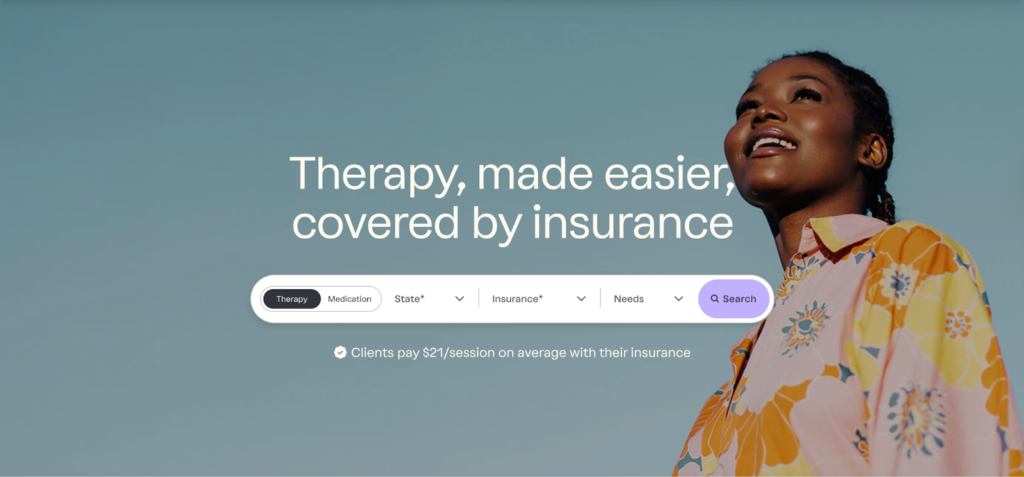
Finding a therapist with Grow Therapy is simple. All you need to do is input your state, insurance or payment preference, including cash, and the broad reason you’re seeking therapy. You can also select whether you’d rather be seen virtually or in-person.
From there, you’re given a list of different types of providers licensed in your state that meet your needs, which can include clinical social workers, marriage and family therapists, nurse practitioners, and psychiatrists who can manage medication.
The results of your search also give you access to provider bios, which list the practitioners’ therapeutic methods and specialties. You can further narrow down your choice of therapists by using a robust set of filters that include:
- Gender
- Language
- Ages they specialize in working with
- Availability
- Virtual or in-person
- Talk therapy vs. medication management
- Identities related to race, ethnicity, culture, and religion
Paying for therapy
Grow Therapy goes beyond making connections by also handling booking, billing, and navigating insurance claims for you. Additionally, you can instantly see therapist availability, with the option to book within a few days with many providers.
Once you’ve decided on a provider and are ready to book a session, you fill out your profile information, including your insurance, billing, and address to make the first appointment. The booking page includes an eligibility check to ensure the provider you’ve selected accepts your insurance plan. If you don’t have insurance, Grow Therapy also accepts out-of-pocket cash pay (rates vary by provider), as well as Medicare, Medicaid, and EAPs in select states.
You can cancel appointments up to 24 hours before your scheduled visit without an additional fee. The price per session varies based on your insurance coverage. Many clients pay low copays, and session costs typically vary from no out-of-pocket cost to standard specialist copays, depending on your plan and coverage details.
Understanding therapy options
Grow Therapy has providers who offer in-person and/or online appointments, and if you need to reschedule, you have the option to contact your therapist through the client portal. Grow therapists may also use this portal to send reading materials or “homework” to clients between sessions.
Grow Therapy’s nationwide network of 25,000 licensed mental health providers covers a wide range of specialties, including ADHD, anger management, anxiety, depression, and much more. Additionally, you can opt for various types of talk therapy and/or medication management based on the type of provider you select.
What is BetterHelp?
BetterHelp is a subscription-based online therapy service that connects users with a therapist for virtual counseling. It sounds similar to Grow Therapy, but there are distinct differences in how BetterHelp operates.
Finding a therapist
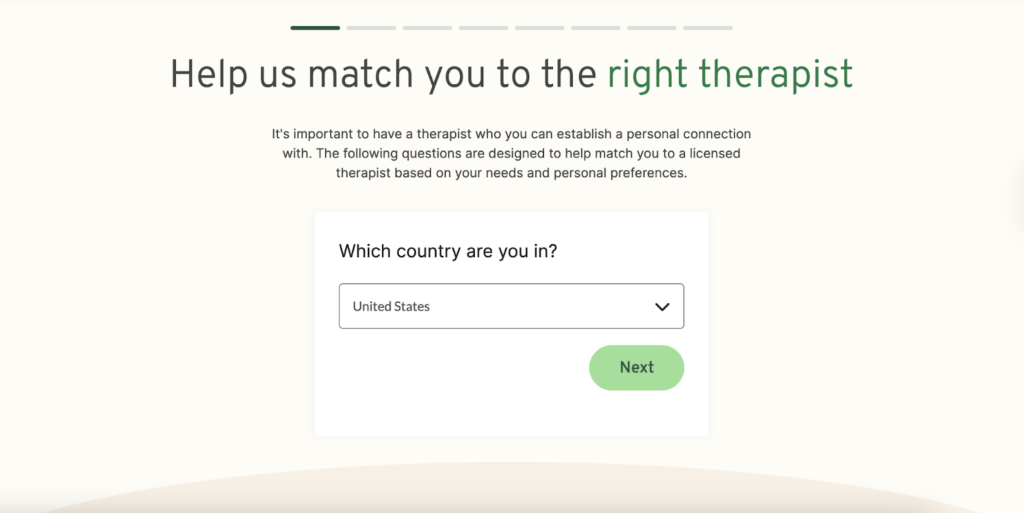
Like Grow Therapy, BetterHelp requires users to answer a series of questions. However, BetterHelp’s onboarding survey takes considerably more time because the platform matches you directly with a therapist rather than letting you choose from a curated list of mental health professionals. BetterHelp asks about topics such as your gender and sexual identity, your reasons for seeking therapy, and your expectations for therapy.
The matching process can take anywhere from a few hours to several days. Once you’ve been matched, you can schedule an online therapy appointment. You have several communication options that include video, phone, or live chat. If the provider isn’t a good match, you can opt to change providers at any time. Keep in mind that there are no options for in-person sessions through BetterHelp.
Paying for therapy
BetterHelp runs on a subscription model with a weekly fee that varies by location, provider availability, and any promotional pricing. Unlike Grow Therapy, BetterHelp does not work with insurance.
Understanding therapy options
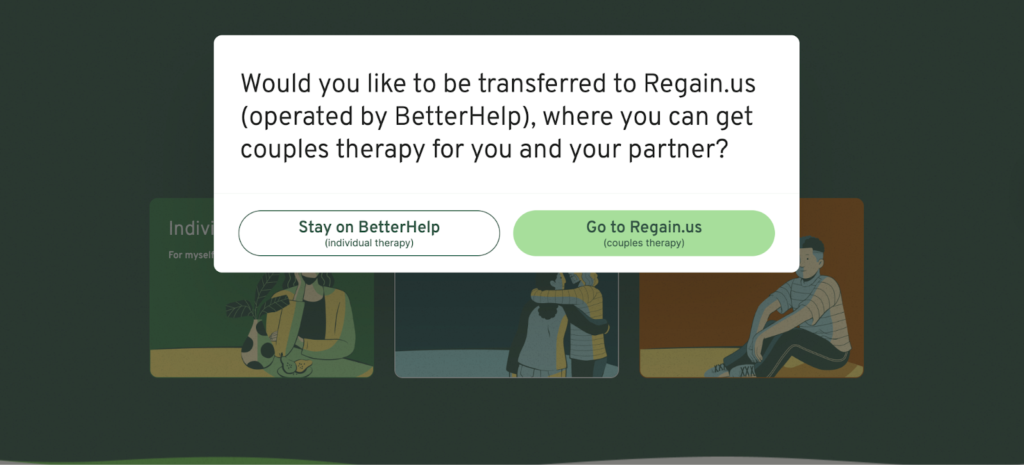
BetterHelp reports a global network of more than 30,000 providers, making it one of the largest online mental health platforms. All providers are certified and licensed within their geographic locations. However, BetterHelp specializes in individual therapy. If you need teen or couples therapy, you are referred to separate sister sites. BetterHelp provides access to various forms of talk therapy only. There are no options for medication management.
Costs of paying for therapy services: Grow Therapy vs. BetterHelp
Therapy costs are big treatment deterrents for many people. Both platforms have payment options designed to make it easier to access the services you need at an affordable price. You’ll have to decide which works best with your budget, insurance, and treatment needs.
Grow Therapy connects you with therapists within your health insurance network to take full advantage of your benefits and save money. Session costs vary depending on your insurance coverage and provider. Many clients pay only a copay when using in-network benefits, while others may pay standard private-pay rates.
Telehealth opens up easier access, and that allows clients to attend treatment (always a plus). It may also be that clients who have been wanting to do treatment but were unable to due to the cost or availability in their area are now engaging. -Chance Reynolds, LCSW
You can use a credit, debit, or HSA card to pay any remaining fees not covered by insurance—Grow Therapy handles insurance claims and payments for you.
BetterHelp offers relatively low fees but requires out-of-pocket payment. The platform does not bill or work with insurance. BetterHelp charges a recurring subscription fee billed every four weeks, with weekly costs that vary based on location, plan, and any discounts.
Insurance plans accepted
BetterHelp now partners with select major insurance carriers in certain states, allowing some users to access in-network coverage. Availability varies based on plan, location, and which providers are licensed in your area. Because BetterHelp is still expanding its insurance partnerships, not all therapists on the platform are in-network. For those without eligible coverage, BetterHelp may still be an option depending on individual budget and care preferences.
Grow Therapy connects with a wide range of insurance companies across all 50 states and the District of Columbia. Accepted plans vary by state and provider but may include major commercial, Medicaid, and Medicare plans, such as:
- Aetna
- Aetna – Medicare
- All Savers
- Ambetter
- Ambetter of Georgia
- AmeriHealth
- AmeriHealth Administrators
- AmeriHealth New Jersey
- AvMed
- Blue Care Network
- Blue Cross
- Blue Cross Blue Shield
- Blue Shield
- Blue Shield (MHSA)
- Buckeye Health Plan
- Buckeye Health Plan (Managed Medicaid)
- Carefirst
- Carelon Behavioral Health (Commercial)
- Central California Alliance for Health (Commercial)
- Central California Alliance for Health (Medi-Cal)
- Cigna
- EAP:Cinga
- Evernorth
- EAP:Evernorth
- EAP:UnitedHealthcare/Optum
- Florida Blue
- Gold Coast Health Plan (Medi-Cal)
- Golden Rule
- Harvard Pilgrim
- Health Plan of San Joaquin (Medi-Cal)
- Highmark
- Horizon
- Humana
- Humana – Medicare
- Humana Dula (Medicare & Medicaid)
- Husky Health
- Independence Administrators
- Independence Blue Cross
- Independence Keystone 65 HMO
- Independence Personal Choice 65 PRO
- Kaiser Permanente
- Kaiser Permanente – Medicaid
- Kaiser Permanente – Medicare
- L.A. Care Health Plan (Commercial)
- L.A. Care Health Plan (Medi-Cal)
- Managed Health Services (Managed Medicaid)
- Medicaid
- Medicaid – Buckeye Health Plan
- Medicaid – Managed Health Services
- Medicaid – Peach State Health Plan
- Medicaid – Superior Health Plan
- Medicare
- Optum
- OptumHealth Complex Medical Conditions
- Orange County Mental Health Plan (Medi-Cal)
- Oscar
- Oxford
- Partnership HealthPlan of California (Medi-Cal)
- Peach State Health Plan (Managed Medicaid)
- Point32
- San Francisco Health Plan (Medi-Cal)
- Sharp Health Plan
- Superior Health Plan (Managed Medicaid)
- Surest (formerly Bind)
- Tufts Health
- United Healthcare
- United Medical Resources
- UnitedHealthcare Shared Services
- UnitedHealthcare Life Insurance
- UnitedHealthcare Student Resources
- UnitedHealthcare/Optum – Medicaid
- UnitedHealthcare/Optum – Medicare
- WellCare
- WellCare of Georgia
Online therapy vs. in-person therapy
While online therapy has existed for more than a decade, the pandemic resulted in an increased need for telehealth services of all kinds—including mental health services. And many have chosen to stick with online therapy.
But is online therapy as helpful as in-person therapy? While it may not work for everyone, for many people, the answer is yes.
According to research comparing teletherapy and in-person therapy, online therapy can have the same post-treatment benefits, long-term benefits, and consistency with client follow-through as in-person therapy, all of which are important indicators of treatment success.
“So far, multiple studies, though still preliminary, find that online therapy can be equivalent to face-to-face care,” said Kristian Wilson, an LMHC with Grow Therapy. For example, a 2021 study conducted on veterans found that telepsychology services were as effective as face-to-face services, as did a 2022 study on cognitive behavioral therapy in rural settings.
“I have done face-to-face therapy for the majority of my career and have just transitioned to online therapy primarily within the last two years,” Wilson said. “I find that the type of therapy I do can be effective both online and in person.” Ultimately, choosing between the two modes comes down to what’s best for you.
In-person therapy: pros and cons
Based on his work with different clients, Chance Reynolds, a Grow Therapy provider practicing in Texas, can see many circumstances under which in-person therapy can be a better choice. For example, clients in the 65+ age range may prefer in-person sessions. “If the client is uncomfortable with the technology, then an extra barrier has been added to the therapeutic relationship,” he explained.
In-person sessions can also be a better option for those in immediate distress or who may have difficulty controlling their behavior. The face-to-face contact lets the therapist see if the person is taking care of basic hygiene, he said.
Other distinct advantages of in-person therapy include:
- The therapist’s ability to read full body language
- Increased privacy
- Separation from your normal space, which you may have strong feelings about
- The benefit of tactile forms of therapy like play, art, or music therapy
However, in-person therapy also comes with some disadvantages, such as:
- Travel time
- Higher costs (sometimes)
- Long wait times or issues with schedule compatibility
- Proximity to the therapist’s office
Online therapy: pros and cons
Online therapy is also known as teletherapy, text therapy, phone therapy, or web therapy. This mode of therapy involves making an appointment with a provider, often through an app or online platform.
You then connect with the provider via a secure link and talk to the therapist via video, phone, or live chat. Online therapy may also include text, email, and other digital communication.
- The downsides of online therapy can include:
- Lack of familiarity with the technology
- Poor internet connection that disrupts sessions
- Lack of privacy if you don’t have a quiet space
But for many people, the positives far outweigh the negatives. Benefits of online therapy include:
- Access to therapists even if there aren’t many options in your area
- The ease of online communication
- The convenience and comfort of doing therapy from your own home
- The elimination of commute times
- Reduced cost in some cases
Reynolds hasn’t seen a difference between the outcomes of online versus in-person therapy within his practice.
“Telehealth opens up easier access, and that allows clients to attend treatment (always a plus),” he said. “It may also be that clients who have been wanting to do treatment but were unable to due to the cost or availability in their area are now engaging.”
The convenience factor can also be a major selling point for clients. Online therapy provides access to a range of providers and services that might not be accessible in certain geographic locations.
“If clinically appropriate, it is hard to argue against a client who is in their literal, safe space discussing difficult topics, instead of dragging them into a clinical environment that is dominated by another,” Reynolds points out.
Booking a session
Grow Therapy’s booking process doesn’t take long. After getting your curated list of therapists, you can click on your choice and book an appointment within the next few days in many cases. Some specialties or providers may have longer waiting times. Before finalizing your appointment, you’ll enter your insurance, payment, and standard identity information.
BetterHelp’s process matches you with a therapist, which can take anywhere from 15 to 20 minutes to get through the survey process, and the final matching may take a few hours to several days. However, the BetterHelp membership doesn’t start until you’ve made your first appointment.
Final thoughts
Grow Therapy and BetterHelp are online therapy platforms that connect people with licensed mental health providers within their state or region. However, their methods, treatment options, and payment options are different.
BetterHelp offers online therapy only, matching members to a therapist that meets the criteria from an in-depth survey. All fees are out of pocket and billed every four weeks. There is no option to bill insurance unless you’re willing to submit claims for reimbursement yourself.
Grow Therapy uses client insurance to connect with in-network providers for both in-person and online therapy with the option for psychiatric services that include medication management. It’s designed to make it easier to fully utilize insurance benefits and make appointments that fit your schedule and needs.
Compare Grow Therapy with other platforms like Headway and Talkspace to see how we stack up.If Grow Therapy sounds like the right choice for you, book an appointment and start your journey to better mental health.
Frequently asked questions
What are the key differences between Grow Therapy and BetterHelp?
The key differences between Grow Therapy and BetterHelp lie primarily in their approach and service offerings. Grow Therapy connects clients with licensed therapists and psychiatric providers for in-person or virtual sessions, often within their local community. BetterHelp focuses on fully online therapy with a large network of providers accessible from anywhere.
How do the pricing structures for Grow Therapy and BetterHelp compare?
Grow Therapy and BetterHelp offer different pricing structures tailored to their therapeutic models. Grow Therapy typically works with insurance providers and offers an option for clients to use their health insurance benefits to cover therapy costs, which can make services more affordable for those with coverage. In contrast, BetterHelp operates on a subscription model, charging a recurring weekly subscription fee that varies by location, provider availability, and promotions, without insurance billing options.
What types of therapy services do Grow Therapy and BetterHelp each offer?
Grow Therapy focuses on connecting clients with licensed therapists who offer in-person and virtual therapy sessions, emphasizing personalized care through a wide network of professionals. BetterHelp, on the other hand, primarily provides online counseling services through messaging, live chat, phone, and video sessions, offering flexibility and convenience for users seeking mental health support.
Is Grow Therapy the same as BetterHelp?
While both online therapy platforms help connect users with mental health providers, they are not the same. Grow Therapy accepts insurance while BetterHelp does not, and Grow Therapy has the option of in-person therapy. BetterHelp has a more robust online toolkit for users, though it does not offer couples counseling or group therapy on its platform.
Is there anything better than BetterHelp?
BetterHelp is one of many online therapy platforms that help connect people with therapists, all of which have different offerings. For online-only therapy, BetterHelp is one of the largest platforms, but it focuses on talk therapy only and does not offer medication management. The ‘best’ option depends on your needs, including whether you prefer subscription vs. insurance-based care, access to in-person visits, and the level of specialty matching you’re looking for.