A nationwide poll by the American Psychiatric Association found that 59% of U.S. adults would choose telehealth for mental health treatment, with one in three now preferring it over in-person care. This shift reflects evolving attitudes toward mental health and is supported by strong clinical evidence: a 2023 systematic review and meta-analysis found that telemedicine can be as effective as traditional therapy for many people managing depression and anxiety
As clinical validation continues to grow, online therapy has become a reliable first step for many seeking support. Among leading options, Grow Therapy and Alma stand out for their affordability, insurance coverage, and flexibility. This guide compares each platform’s key features to help you decide which best supports your mental health goals.
Key takeaways
- Grow Therapy accepts 135+ insurance plans including Medicare and Medicaid; Alma works with a smaller set of commercial plans and does not accept either.
- Both platforms use a pay-per-session model with no subscription fees.
- Alma offers free consultations before committing to a therapist; Grow Therapy shows estimated costs upfront before booking.
- Grow Therapy includes between-session tools — progress tracking, a therapy toolkit, and self-guided resources; Alma focuses on provider matching and direct scheduling.
- Both offer virtual and in-person sessions with evening and weekend availability, though in-person access varies by location.
Alma vs. Grow Therapy at a glance
| Grow Therapy | Alma | |
|---|---|---|
| Pricing model | Pay-per-session | Pay-per-session |
| Number of providers | 25,000 | 21,000 |
| Accepts Medicare and Medicaid | ✔ | X |
| Medication management | ✔ | ✔ Limited access |
| Therapy tools | ✔ Progress tracking tools, therapy toolkit, self-guided resources | X |
What is Grow Therapy?
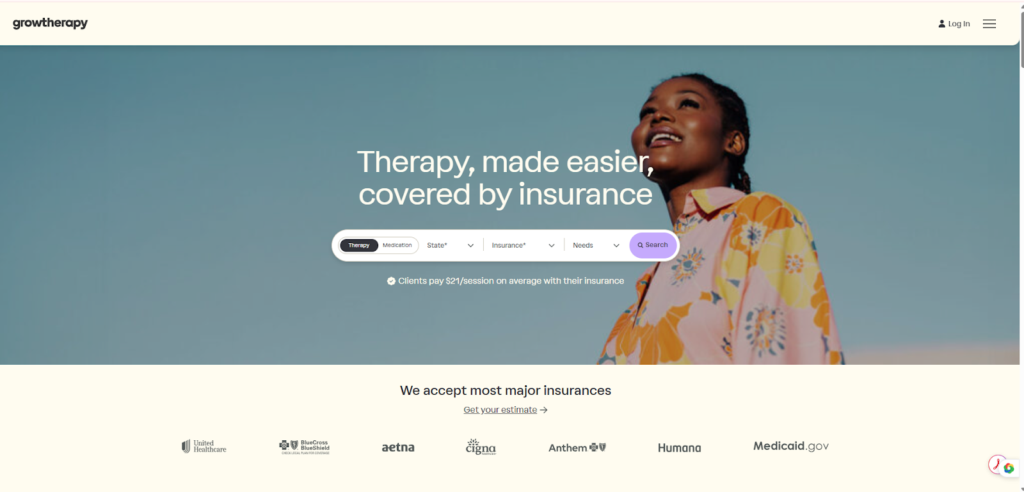
Grow Therapy is an online therapy platform that connects clients with in-network, licensed therapists. With a growing network of more than 25,000 providers nationwide, clients can easily find the care they need by filtering based on specialty, insurance, therapy approach, and availability, all directly from the homepage. Grow providers may offer virtual or in-person sessions, with evening and weekend options often available.
Grow Therapy pros and cons
| Pros | Cons |
|---|---|
| • Accepts 125+ insurance plans, including Medicare and Medicaid | • Cash pay rates vary by provider |
| • Virtual or in-person sessions | • In-person availability depends on location |
| • Broad scheduling flexibility, including nights and weekends | |
| • Includes medication management | |
| • Client dashboard with messaging, billing, and therapy tools |
Online therapy that takes insurance
Grow Therapy offers accessibility and convenience for those looking for therapy. The online therapy platform accepts 125+ insurance plans, including Medicare and Medicaid. Many clients pay only a standard copay when using in-network benefits, while exact costs depend on their specific plan. Clients have the flexibility to choose between virtual or in-person sessions, and can even opt for evenings and weekends depending on availability.
Types of therapy offered
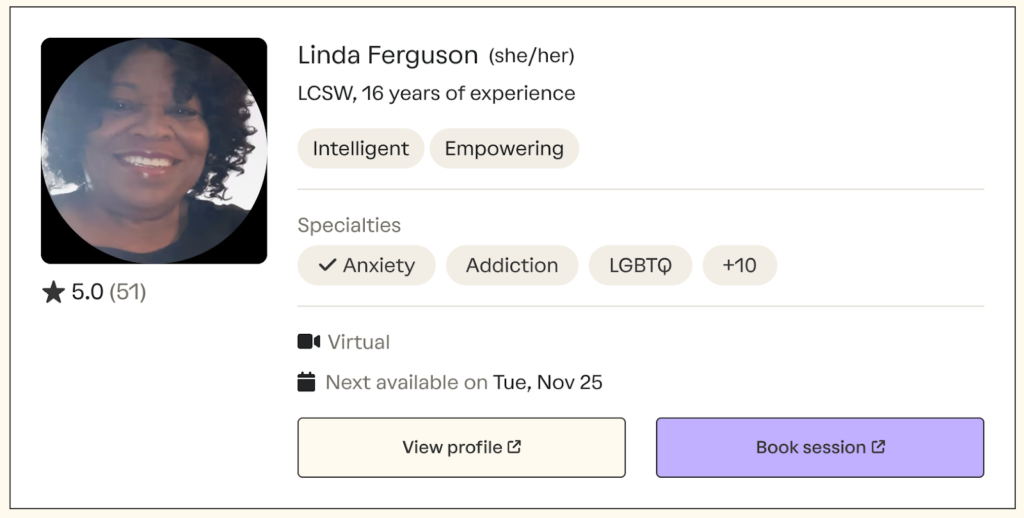
Grow Therapy providers range in specialty, from psychiatry for medication management to clinicians who focus on couples therapy or teen counseling. Clients can filter by therapist background, experience, approach, and more. Also, provider profiles highlight therapy style descriptors like “solution-focused” or “empowering,” making it easier to find a compatible match.
Choosing a therapist
When choosing a therapist on Grow Therapy, clients can explore provider profiles and read detailed information to find a good match. Availability may vary slightly by state or specialty area, which can occasionally mean longer wait times for certain services. Even so, Grow Therapy’s broad network, insurance coverage, and modern support tools make it a strong option for those seeking comprehensive mental health care.
Can I switch therapists if I’m not happy with my match?
Yes — on both Grow Therapy and Alma, you can switch providers at any time. On Grow, you can search for a new therapist directly through the platform using the same filters (insurance, specialty, availability) without starting over.
On Alma, clients can also switch, though the process depends on provider availability and the therapist’s practice policies. On either platform, it’s worth asking about the process before your first session.
What is Alma?
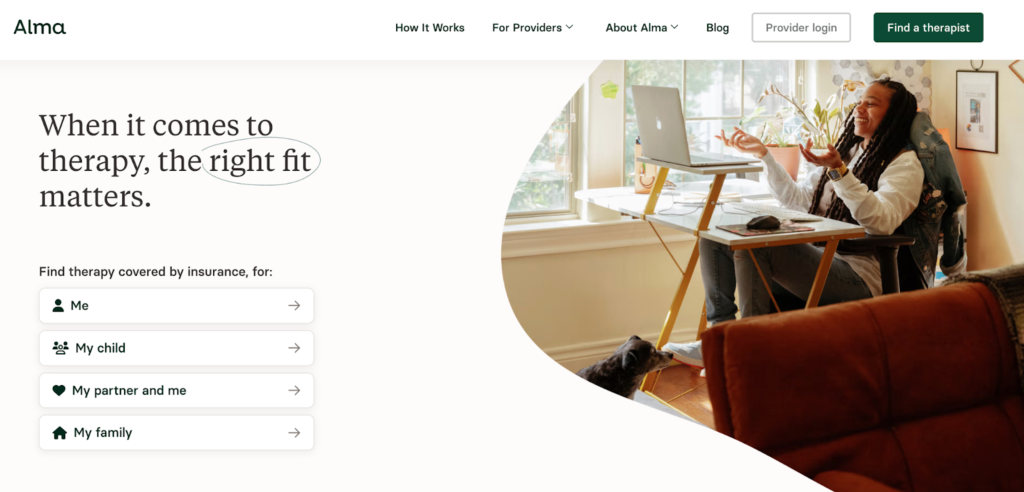
Alma is an online platform that connects individuals with licensed therapists based on insurance, location, and personal preferences. Clients can browse detailed profiles and, in many cases, schedule a complimentary consultation before committing to ongoing care. Sessions are also available to schedule online or in person, depending on the provider.
Alma therapy session prices for self-pay clients can vary widely by provider and location, and some therapists offer sliding-scale options. Alma simplifies the search process by providing detailed bios, specialty filters, and a guided onboarding flow to help match clients with compatible providers.
Alma pros and cons
| Pros | Cons |
|---|---|
| • Free consultations available | • Accepts fewer insurance plans |
| • Wide variety of therapist identities and specialties | • No therapy tools or built-in resources |
| • Virtual and in-person care options, including nights and weekends | • Fewer psychiatric and medication management options |
| • Works with licensed clinicians across many states in the U.S. | |
| • Strong provider bios and detailed profiles |
Choosing a therapist
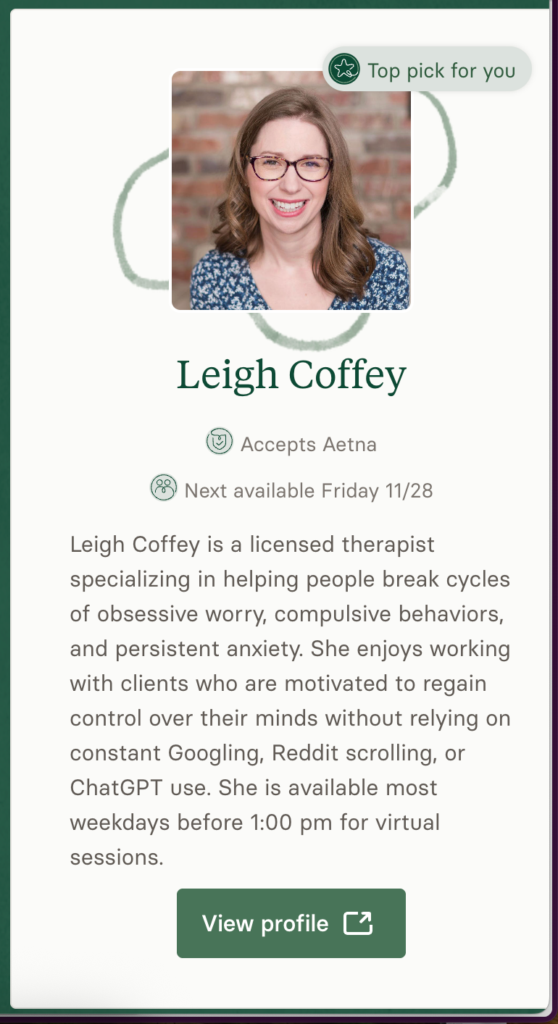
Alma stands out for its wide range of therapist identities and specialties, along with flexible care options that include both virtual and in-person appointments. The platform showcases detailed provider bios and profiles, helping clients understand each clinician’s background and therapeutic approach before booking.
Before viewing a list of recommended providers, clients will complete an eight-step onboarding flow where they can specify therapist preferences. This thorough process helps match clients with a suitable provider more efficiently than some competitors.
Platform limitations to consider
However, Alma has a few drawbacks. It accepts a smaller range of insurance plans compared to other platforms, which can increase out-of-pocket costs for some clients. Appointment availability may vary depending on the region, and the platform offers limited psychiatric and medication management options. Alma also focuses solely on provider connections, without built-in tools or self-guided therapy resources.
Compare Alma vs. Grow Therapy benefits
Both Alma and Grow Therapy connect clients with licensed therapists, making it easier to find care that fits their needs. However, they differ in pricing transparency, insurance coverage, and available specialties.
Did you know?
According to a KFF/CNN survey on mental health in America, cost and finding an available provider are the two most commonly cited barriers to getting mental health treatment, even among people who know they need support.
Pricing model
Grow Therapy
Grow Therapy uses a straightforward pay-per-session model with no hidden fees. Clients pay only for attended sessions. When using in-network insurance, many people pay a standard specialist copay, while private-pay rates vary by provider and market. Grow allows clients to enter their insurance information to estimate costs before booking, offering transparency and predictability.
Alma
Alma also operates on a per-session basis. Insured clients may pay only a copay, depending on their plan, while self-pay rates vary by provider and location, with some therapists offering sliding-scale options. While Alma manages insurance claims and billing, it partners with fewer insurers than Grow, which can lead to higher out-of-pocket expenses for some individuals.
Insurance acceptance
Grow Therapy
Grow Therapy partners with more than 100 insurance plans, including major carriers such as Aetna, Blue Cross Blue Shield, Cigna, UnitedHealthcare, Humana, Medicare, and Medicaid, as well as several regional plans (exact availability varies by state and provider). This broad coverage increases the likelihood of finding an in-network provider and reduces client costs.
Alma
Alma partners with a select group of commercial insurance providers, including Aetna, Cigna, Optum/UnitedHealthcare, Anthem Blue Cross Blue Shield (in specific states such as Colorado, Connecticut, Maine, and Virginia), Empire BlueCross BlueShield of New York, and Carelon Behavioral Health. These partnerships cover a range of national and regional plans, but Alma does not currently accept Medicare, Medicaid, or most state and community plans.
Session flexibility
Grow Therapy
Grow Therapy offers extended hours, including nights and weekends, making scheduling more accessible. With a large provider selection and streamlined booking, many clients are able to secure an appointment within a few days, which can be significantly faster than typical wait times for behavioral health services in many areas. Sessions can be conducted virtually or in person, and appointments may be rescheduled up to 24 hours in advance without penalty.
Alma
Alma offers similar flexibility with virtual and in-person options, allowing clients to filter therapists by availability and preferred times. While the online therapy platform places less emphasis on extended hours, its broad network in larger metro areas can offer comparable convenience. Clients can also switch therapists at any time if scheduling conflicts arise.
Specialties offered
Grow Therapy
Grow Therapy features 135 mental health modalities to find the right therapist for issues like anxiety, depression, ADHD, and relationship conflicts, as well as niche needs such as LGBTQ+ support and eating disorders.
With transparent therapist profiles showing expertise and methods, it’s easy to find qualified professionals. Supported by 25,000 licensed health professionals, Grow offers tailored care, making it a comprehensive platform for diverse therapy needs.
Alma
Alma connects clients with over 21,000 therapists nationwide, covering a wide range of mental health issues and therapy modalities. Users can filter by concerns like anxiety or trauma, and find specialists in psychology, social work, family therapy, and psychiatry. Alma offers diverse, culturally competent care, with multilingual therapists available.
The platform provides a guided search for up to three focus areas and preferred therapeutic approaches, catering to a range of needs from depression to faith-based counseling.
How to choose the right therapy platform
Finding the right therapist is a personal process, and the platform you use should align with your needs, preferences, and goals. When comparing options, it helps to consider a few key factors:
- Cost and insurance: Check which insurance plans each platform accepts and how that impacts your out-of-pocket costs. Some online therapy platforms offer broader insurance coverage, while others may have higher self-pay rates or sliding-scale options.
- Availability and scheduling: Look for online therapy platforms that fit your schedule. Many offer virtual sessions, evening or weekend appointments, and the ability to start therapy quickly.
- Therapy goals and services: Consider what kind of support you’re looking for, whether it’s general talk therapy, help with anxiety or relationships, or medication management. Some platforms specialize in specific areas or have larger provider networks covering a wide range of needs.
- Personal preferences: Consider your ideal therapist match, including factors like communication style, identity, language, or cultural background. This can make a big difference in your comfort levels during therapy sessions.
Ultimately, the right platform is the one that helps you feel supported, understood, and confident as you take the next step in your mental health journey.
Final thoughts
Both Alma and Grow Therapy make it easier to access licensed mental health care providers. Grow Therapy may appeal to those seeking insurance-friendly, flexible, and tool-supported care, while Alma may suit clients who value free consultations, detailed therapist profiles, and diverse provider representation.
Ultimately, the best platform for you will depend on your unique needs, priorities, and financial situation. Consider what factors are most important to you in your mental health journey, whether it’s cost, convenience, personal connection, or therapist expertise, to guide your decision in finding the right therapist for your needs.
Find your therapist on Grow
Frequently asked questions
Grow Therapy doesn’t offer a standard free consultation, but many providers on the platform post detailed profiles with session style, background, and approach — so you can make an informed match before your first paid appointment. Some individual providers may offer introductory calls at their discretion.
Yes — both platforms generally allow clients to pay using HSA or FSA funds for eligible sessions. If you plan to use these funds, confirm with your provider at the time of booking, as eligibility can depend on the type of care.
Yes, Grow Therapy works with select EAP plans. If your employer offers an EAP, it’s worth checking whether your plan is accepted before booking — some clients can access a set number of free sessions through their employer’s program.
Grow Therapy offers medication management through licensed prescribers, including psychiatrists and nurse practitioners. Alma has limited psychiatric options and is primarily focused on therapy. If medication evaluation or management is part of your care needs, Grow is the stronger choice.