
Traumatic events are a near-universal experience, with almost 90% of people facing exposure to trauma in their lifetime. Choosing to heal from trauma by seeking support can have a long-term impact on the quality of your life, but searching for a trauma therapist can be overwhelming.
To find the right support, some people spend hours reviewing providers and services or taking matching quizzes, just to end back where they started. Somewhere along the way, the energy it took to start looking runs out. But this is a practical problem, not a personal one, and it’s solvable.
For adults processing a past trauma or parents looking to support their kids (and everyone in between), this guide covers the best online trauma counseling options and highlights the benefits of trauma-focused therapy.
Key takeaways:
- On full-service trauma counseling platforms like Grow Therapy, you can view cost estimates and book directly from the provider’s view.
- Trauma care directories like Inclusive Therapists help you find a provider, then leave the booking and outreach to you.
- To treat trauma and PTSD, the American Psychological Association (APA) recommends cognitive processing therapy, prolonged exposure, and trauma-focused CBT as the strongest treatments.
- Coverage for trauma-informed therapy varies by platform, with many deferring insurance acceptance to the providers themselves.
An overview of the top online trauma counseling platforms
From full-service networks to directories that surface trauma-trained clinicians, the following platforms offer high-quality trauma counseling services:
| Platform | Takes insurance? | Accepts Medicare/ Medicaid? | Offers medication management? | Payment model |
|---|---|---|---|---|
| Grow Therapy | ✓ (Accepts 135+ plans) | ✓ | ✓ | Pay-per-session |
| BetterHelp | ◑ (Limited by state) | ✗ | ✓ (Via UpLift, a separate platform) | Subscription |
| Talkspace | ✓ | ◑ (Does not accept Medicaid) | ◑ (Not controlled substances) | Pay-per-session and subscription (varies by insurance coverage) |
| Talkiatry | ✓ | ◑ (Does not accept Medicaid) | ✓ | Pay-per-session |
| Inclusive Therapists | Provider dependent | ✓ (Provider dependent) | ✓ (Provider dependent) | Provider dependent |
| Reclamation Collective | ◑ (Individual providers may offer coverage) | ✗ | ✗ | Provider-dependent or pay-as-you-can for support groups |
| TherapyDen | Provider dependent | ✓ (Provider dependent) | ✓ (Provider dependent) | Provider dependent |
| Thriveworks | ✓ | ◑ (Does not accept Medicaid) | ✓ | Pay-per-session |
| Little Otter | ◑ (Limited) | ✗ | ✓ | Pay-per-session |
1. Grow Therapy

Grow Therapy is an insurance-supported online therapy platform that supports licensed therapists and psychiatric providers. It puts the full directory at your disposal, ensuring you choose a therapist you relate with who also matches your needs. Plus, many providers offer evening and weekend appointments.
These differentiators matter when you’re pursuing therapy for trauma because you need to know whether a provider is trained in cognitive processing therapy (CPT) or other trauma-focused treatments. You can also switch providers for free, so if your first choice hasn’t worked with your history or type of trauma before, you can find a better fit.
Cost and insurance
- Accepts 135+ insurance plans, including Aetna, Cigna, UnitedHealthcare, Medicaid, and Medicare (varies by state)
- Cost with insurance: Starting at $0, with an average of $21 per session (varies by plan)
- Cost without insurance: $75-$250 per session (depending on provider’s credentials and location)
Features
- Filters for trauma, identity-affirming providers, language, and provider background
- Real-time calendar availability
- In-network cost estimates before you book
- Both virtual and in-person sessions
- Medication management
Who it’s best for
People who want to choose their own trauma therapist, are interested in in-network providers, and may need therapy and medication management coordinated in the same place.
| Pros | Cons |
|---|---|
| Full provider bios and credentials | In-person availability depends on your area |
| Pay per session with no subscription | Self-pay rates vary by provider |
| Progress tracking tools | |
| Integrated provider note-sharing |
2. BetterHelp
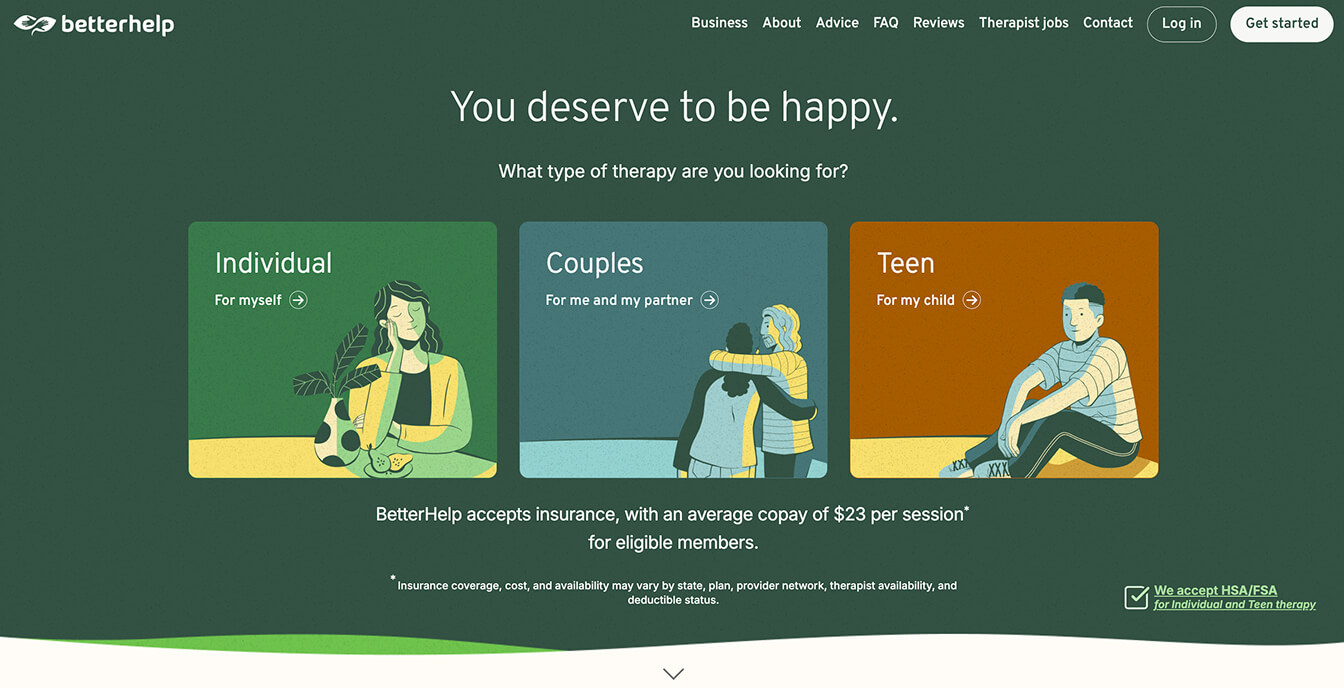
BetterHelp is an online therapy platform that matches users with a trauma-informed therapist. Its insurance-covered services are limited, and uninsured individuals must subscribe to use the platform’s features. BetterHelp therapists offer phone, video, and live chat sessions focused on conditions like post-traumatic stress disorder (PTSD).
Cost and insurance
- Insurance coverage is limited and varies by state
- Cost with insurance: Copays average $23/session for eligible members
- Cost without insurance: $70 to $100/week (for a subscription)
Features
- Weekly live therapy sessions
- Messaging with your therapist between sessions
- Financial aid available for those who qualify
- Therapist switching at no extra charge
Who it’s best for
Individuals without behavioral health coverage who want a predictable monthly cost and between-session messaging.
| Pros | Cons |
|---|---|
| Therapist network of 30,000+ providers | Limited insurance coverage |
| Flat weekly rate covers sessions plus messaging | Assigns a therapist based on questionnaire results |
| Cancel at any time | Trauma training varies |
3. Talkspace
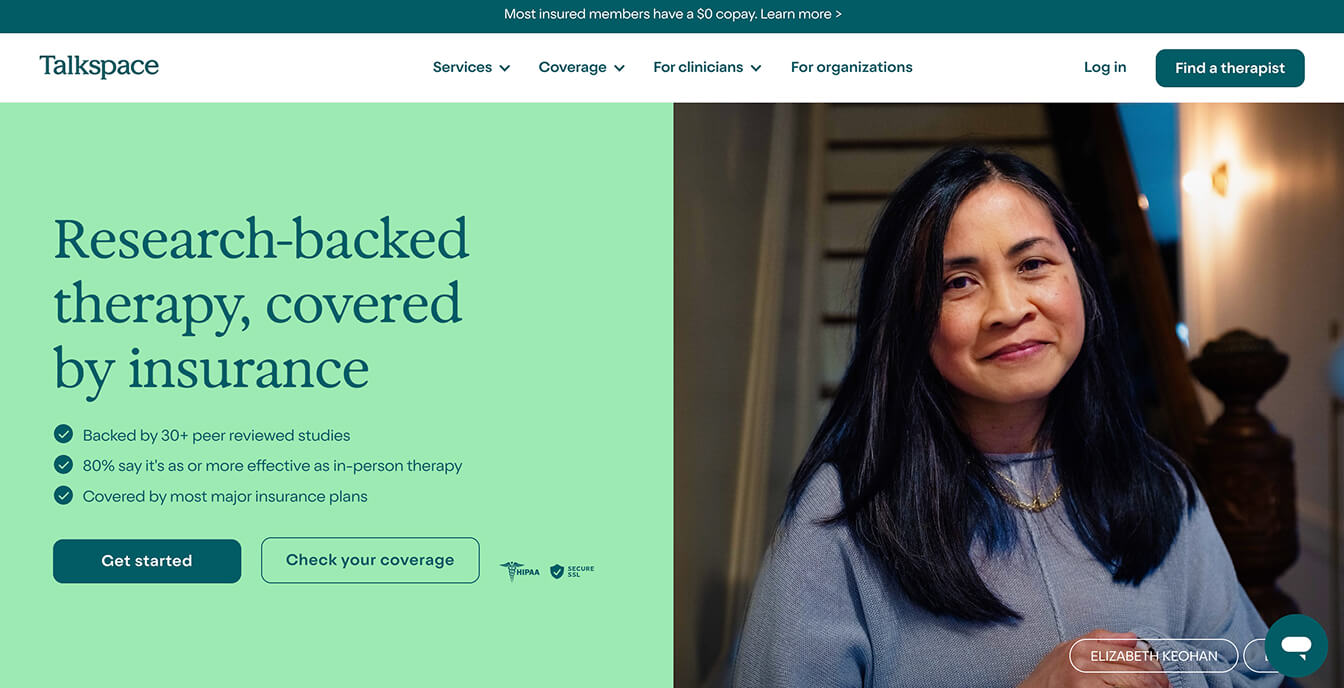
Talkspace pairs live therapy sessions with asynchronous messaging. The platform’s provider network specializes in more than 150 approaches and conditions, including trauma care and PTSD counseling for well-known and lesser-known symptoms. Talkspace’s out-of-pocket plans require weekly subscriptions and limit the number of live sessions available.
Cost and insurance
- Cost with insurance: Clients report average copays between $0 and $25/session
- Cost without insurance: $69 to $109/week
Features
- Video, audio, or chat session options
- Provider switching at no additional cost
- Superbills for out-of-network reimbursement
- AI mental health support
Who it’s best for
Insured clients who want between-session messaging, and those who may want therapy and psychiatry coordinated on one platform.
| Pros | Cons |
|---|---|
| Messaging between sessions | Video sessions on standard plans are 30 minutes |
| Integrated psychiatry with provider note-sharing | No in-person options |
| Teen and couples options | Matched through an intake assessment |
4. Talkiatry

An insurance-first psychiatry practice that employs therapists, Talkiatry offers online counseling for trauma when medication is part of the picture. This platform does not accept self-pay and provides care only to those with insurance coverage. However, the practice maintains a dedicated PTSD treatment track for children, teens, and adults.
Cost and insurance
- Clients cannot self-pay
- Cost with insurance: $30 or less (varies by plan)
Features
- Personalized copay estimator before you book
- Board-certified psychiatrists with longer appointment times
- Secure messaging with your provider
- Quizzes and self-assessments
Who it’s best for
Insured adults, teens, and children who want psychiatric care for trauma-related symptoms.
| Pros | Cons |
|---|---|
| No payment required at the time of your visit | Self-pay is not accepted |
| In-network guarantee on the first appointment | Therapy is generally accessed alongside psychiatric care, not on its own |
| Treats people age five and older | Not available in every state |
5. Inclusive Therapists
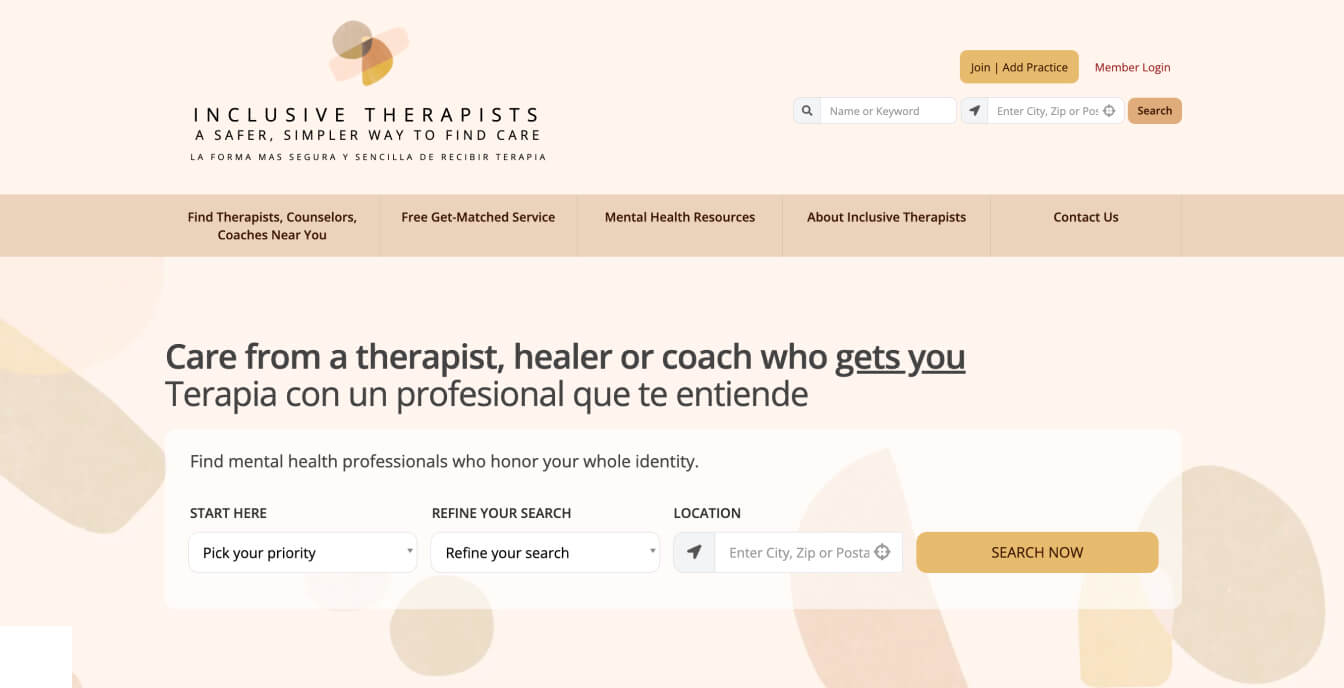
Inclusive Therapists is a directory built around culturally sensitive, identity-affirming care. It supports providers committed to racial, 2SLGBTQIA+, neurodivergence, and disability justice.
For trauma, it carries categories for complex trauma and CPTSD, as well as trauma-informed therapy by state. Provider approaches also include eye movement desensitization and reprocessing (EMDR) and Internal Family Systems (IFS).
Cost and insurance
- Financial assistance and sliding scale options may be available
- Cost with insurance: Varies by provider and insurance plan
- Cost without insurance: Varies by provider
Features
- Verification process for every listed provider
- Free human-reviewed Get-Matched service
- Complex trauma and trauma-informed therapy categories
- Support groups, healing circles, and community events calendar
- Filters for identity, cultural knowledge, language, insurance, and sliding scale
Who it’s best for
Anyone for whom identity fit is central to feeling safe enough to do trauma work, particularly BIPOC, 2SLGBTQIA+, neurodivergent, and disabled clients.
| Pros | Cons |
|---|---|
| Free to search, with no client-side fee | You handle insurance, billing, and scheduling with each provider yourself |
| Sliding scale widely available | No centralized cost estimates |
| Deep, inclusive filters | No medication management through the platform |
6. Reclamation Collective

A nonprofit instead of a therapy platform, Reclamation Collective runs virtual support groups for people navigating religious trauma and spiritual abuse. It houses a directory of religious-trauma-informed clinicians licensed in the state or province where you live.
As Reclamation Collective offers community-based care and a referral directory, it does not bill insurance or provide clinical treatment itself.
Cost and insurance
- Scholarships for support groups are available
- Cost with insurance: Varies by provider
- Cost without insurance: Support groups operate under a pay-as-you-can model, averaging between $250 and $500
Features
- Online directory of religious- and spiritual-focused providers
- Virtual support groups facilitated by licensed clinicians
- Nonprofit structure with survivor leadership
- Toolkits for spiritual regulation
- Survivor care
Who it’s best for
People processing religious trauma or spiritual abuse and who want referrals to clinicians who understand it.
| Pros | Cons |
|---|---|
| Peer community alongside clinical referrals | Support groups run in seasonal windows, not constantly |
| Free educational resources on deconstruction and reclamation | No medication management |
| Pay-as-you-can pricing for group sessions | Small directory compared with general-purpose options |
7. TherapyDen
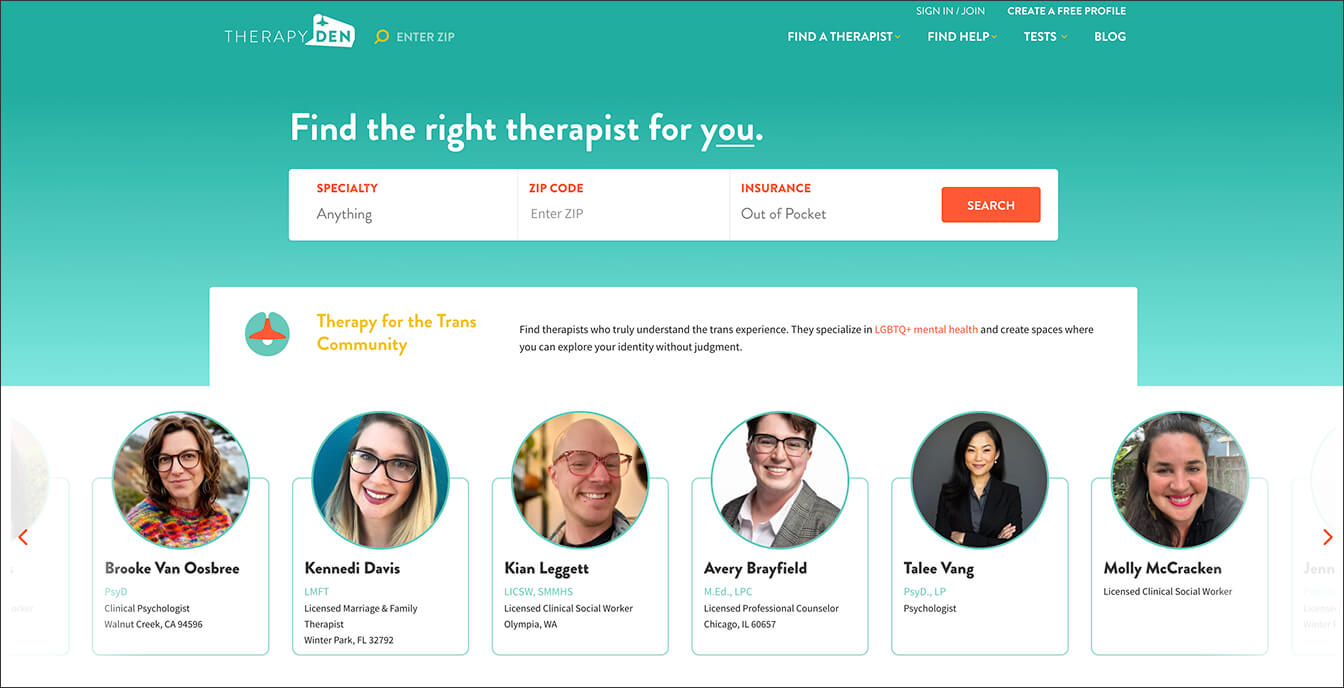
TherapyDen is a directory with granular filters, covering issues like cultural and systemic oppression, immigration stress, and political climate stress, alongside standard trauma and PTSD specialties. It’s free for users to search, and sliding-scale availability is prominently surfaced.
Each profile lists the provider’s fees, accepted insurance, specialties, and licensure, so you can review individual providers’ costs before reaching out.
Cost and insurance
- The platform is free to browse
- Cost with insurance: Varies by plan and provider
- Cost without insurance: Varies by plan and provider
Features
- No membership or matching fees
- Map-based search for in-person options
- A best-matches feature that narrows the field quickly
- Individual, couples, family, and group therapy listings
Who it’s best for
Individuals who’d prefer to vet and choose providers themselves, especially those whose trauma is systemic- or culturally-based.
| Pros | Cons |
|---|---|
| No gated features | Not a treatment platform, so you handle billing and scheduling |
| Cost and licensure visible before outreach | No centralized insurance verification |
| Group therapy options available | Medication management is provider-dependent |
8. Thriveworks
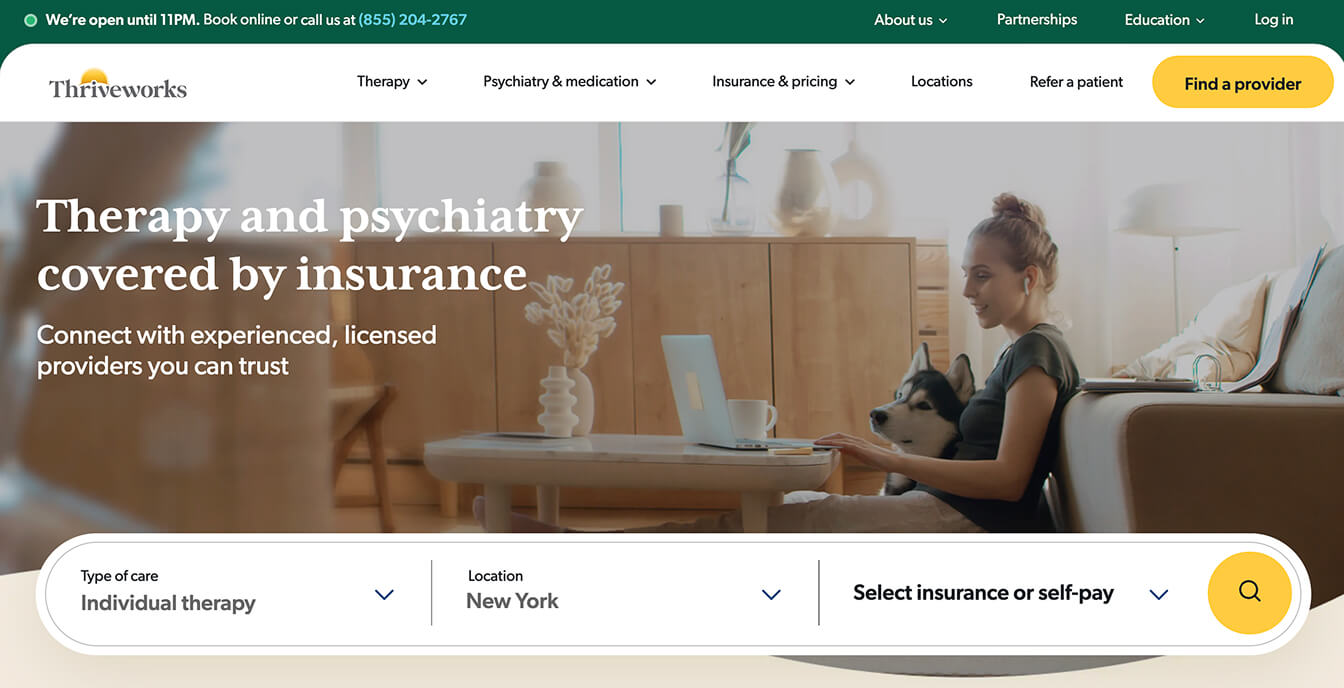
Thriveworks operates like a national clinic, running 340+ physical offices and offering access to more than 2,600 licensed providers, both in-person and online. The platform names EMDR, prolonged exposure therapy (PE), IFS, CPT, and trauma-informed therapy among its main treatment approaches.
Cost and insurance
- Cost with insurance: Average copays between $0 to $55/session
- Cost without insurance: Initial therapy sessions from $200-$240 with follow-ups from $160 to $195, and psychiatry services from $300-$375 with follow-ups from $210-$300
Features
- In-person therapy options
- Coverage verified before your first session
- Provider switching supported by the customer service team
- Integrated psychiatry and medication management in many states
Who it’s best for
Insured clients looking for evidence-based trauma protocols and in-person treatment options.
| Pros | Cons |
|---|---|
| Offers long-term treatment models | Psychiatry availability is limited to some states |
| Supports evening and weekend appointments | Does not accept Medicaid |
| Therapy, psychiatry, and coaching | Does not support between-session messaging |
9. Little Otter

Little Otter, a Hazel Health company, is a therapy platform that provides child-specialized care. Its whole-family model offers PTSD treatment for children and caregivers, and its family-inclusive care accepts HSA/FSA funds and offers out-of-network benefits.
Cost and insurance
- Cost with insurance: Individual plans determine co-pays and deductibles
- Cost without insurance: Assessments between $200 and $500, $200/therapy session, and $250/psychiatry session
Features
- Free 30-minute kickoff call
- Care for infants, children, teens, parents, and couples
- Assessment results and clinician notes in the app
- Care leads who coordinate with schools, pediatricians, and OT or speech providers
Who it’s best for
Parents seeking trauma support for a child and families who want the caregiver included in treatment.
| Pros | Cons |
|---|---|
| Provides therapy, psychiatry, and parent coaching | Short in-network insurance list |
| Tailored care plans and progress reports | Available in 23 states plus D.C. |
| Supports treatment through therapists, psychiatrists, parenting specialists, and care leads | Medicaid and TRICARE plans don’t reimburse for services |
Tips for choosing an online trauma therapist
Comparing a list of platforms only gets you so far in finding a therapist. Below are the main considerations when choosing an online trauma therapist.
Check their trauma-specific training and credentials
When a clinician’s profile reads “experience with trauma,” it’s vague and doesn’t actually help you understand their skills or abilities. Official licensure means a provider holds a graduate degree and has completed supervised clinical hours under the accountability of a state board.
In most states, independently licensed therapists hold an LCSW, LPC, LMFT, or a Psy.D. or Ph.D. in psychology, though this licensure doesn’t necessarily guarantee trauma training.
To learn more about their experience and training, ask:
- Which trauma treatments are you formally trained in, and where did you train?
- Are you certified in EMDR, or trained without certification?
- How do you decide when someone is ready to begin processing trauma memories?
- What happens in a session if I become overwhelmed?
- How do you measure whether our sessions are working?
Consider your specific type of trauma
From single events to a history of prolonged or repeated harm, different experiences call for unique approaches. Consider your own trauma and use a platform’s filters to find providers who treat:
- Single-incident traumas, such as an accident, assault, disaster, or medical event
- Childhood trauma, including abuse, neglect, or growing up with an unsafe caregiver
- Complex or repeated trauma from prolonged situations that were difficult to escape
- Relational trauma, including trauma bonds and abandonment trauma
- Generational trauma passed through family systems
- Religious or spiritual trauma
- Birth and perinatal trauma
Think about practical fit, not just clinical fit
The best-credentialed therapist won’t help if you can’t reliably make appointments. Trauma treatment works through consistency, and consistency is a logistics problem as much as a clinical one.
In addition to licensure and treatment type, look at:
- Session length, as 30-minute blocks may not offer you enough time to process or work.
- Flexible hours during times you can attend for the long term.
- Cost, and confirm what you’ll owe per session and whether it’s a copay or a subscription.
- Cancellation windows and any fees associated with canceling.
Know that you can switch if it’s not working
Changing therapists is a normal part of therapy. Deciding to switch says nothing about you or your progress. Trauma work depends on a working relationship, and you may not find the right fit with the first provider you meet. Whichever platform you choose should make switching easy and free. Attend a few sessions with a new provider before deciding what’s best for your healing.
Find trauma care with Grow Therapy
The best online trauma counseling is built on trust and consistency and requires dedication to see real growth. No matter what you’re carrying or have experienced, from religious trauma to grief and abuse, choosing a provider is a deeply personal decision.
Grow Therapy shows you in-network providers with real openings. After reviewing each provider’s credentials, treatment approaches, session times, and estimated costs, you can schedule your first session within two days. You can also choose in-person sessions where they’re available, or switch providers at any time at no cost.
Filter your options on Grow Therapy by insurance and availability, and choose a trauma-informed therapist today.
In your first therapy session with an online trauma counselor, you can expect mostly conversation. This intake appointment, typically 45 to 60 minutes, is when your therapist gathers your history, current symptoms, and goals and begins to form a treatment plan.
Your therapy sessions move at your pace, and you don’t have to describe what happened in detail on day one. Many trauma clinicians spend early sessions on stabilization and coping skills before any processing work begins.