Choosing an online therapy platform can feel overwhelming, especially when every option promises accessible, effective mental health care. While Grow Therapy and Brightside both aim to make therapy more accessible, they take notably different approaches to care, pricing, and flexibility. Understanding these differences can help you feel more confident about taking the next step toward finding support.
Whether you’re seeking virtual therapy covered by insurance, medication management, specialized therapy for specific age groups, or a fusion between virtual and in-person sessions, it’s crucial to find a platform that aligns with your personal needs and goals. Cost, insurance coverage, provider choice, and treatment style can all play a role in determining which service is the best fit.
In this guide, we’ll take a side-by-side look at Grow Therapy vs. Brightside, breaking down how each platform works, what types of care they offer, and who they may be best suited for. We’ll explore pricing models, insurance acceptance, and appointment flexibility so you can make an informed decision based on what matters most to you.
Key takeaways
- Grow Therapy is a platform that helps you find therapists and prescribers who accept your insurance, with no subscription and the option to choose virtual or in-person care, depending on provider availability.
- Brightside offers structured online care (therapy, psychiatry, or both), with insurance-based session pricing or subscription-style plans for self-pay clients.
- If you want the option of in-person sessions, Grow Therapy is typically the better fit, as Brightside offers only video-based care.
- Both platforms support therapy and medication, but they organize care differently. Grow Therapy prioritizes provider choice and insurance-based affordability, while Brightside prioritizes structured care pathways.
Brightside vs. Grow Therapy at a glance
| Grow Therapy | Brightside | |
|---|---|---|
| Pricing model | Insurance-based session pricing (copay, coinsurance, deductible) | Insurance-based per-session pricing or a monthly subscription for self-pay clients |
| Insurance coverage | ✔ 100+ plans | ✔ Accepts many major plans; offers insurance eligibility checks |
| Medication management | ✔ | ✔ |
| Child therapy option | ✔ | X Care for ages 13+ only |
| Virtual and in-person session availability | ✔ Virtual or in-person; nights and weekend availability | X Virtual-only |
| Therapy tools | ✔ Progress tracking tools, therapy toolkit, self-guided resources | ✔ Self-guided lessons, messaging, check-ins (plan-based) |
What is Grow Therapy?
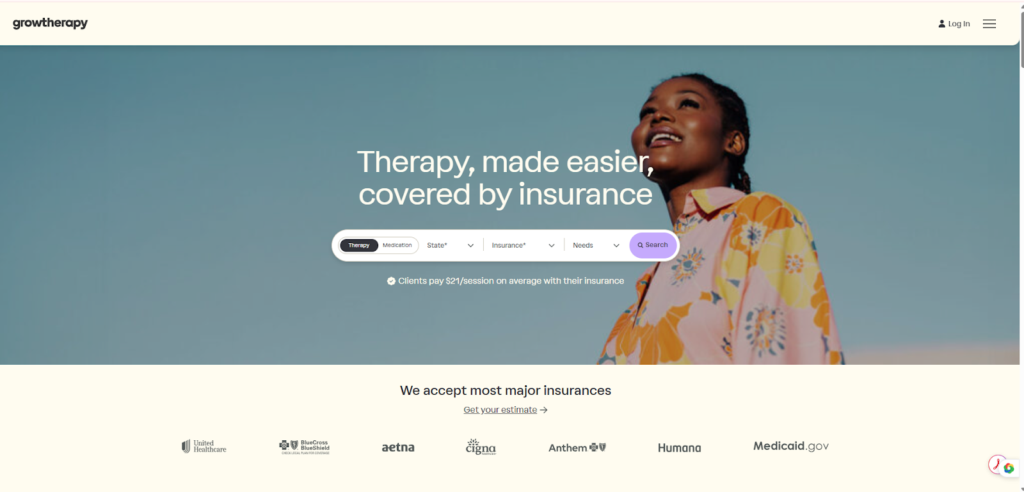
Grow Therapy is an online therapy platform that helps individuals find licensed mental health professionals across the United States. Instead of offering a single, preset treatment program, the platform lets you search for providers based on factors such as insurance coverage, location, clinical specialties, availability, and personal preferences.
Grow Therapy pros and cons
| Pros | Cons |
|---|---|
| • Broad insurance coverage | • Cash pay rates vary by provider |
| • No subscription; pay-per-session with upfront cost clarity | • In-person availability depends on location |
| • A wide range of therapist specialties is available for both virtual and in-person therapy |
Grow Therapy can be a strong option for individuals who value affordability and flexibility in their mental health care. It’s well-suited for those who want to use insurance, explore in-person sessions, or compare providers across different backgrounds and specialties before starting therapy.
The platform can also be a helpful choice for families seeking options for younger children, depending on provider availability. Care is structured much like traditional outpatient therapy in which individuals choose a clinician, schedule sessions as needed, and pay per visit rather than committing to a monthly plan.
What is Brightside?
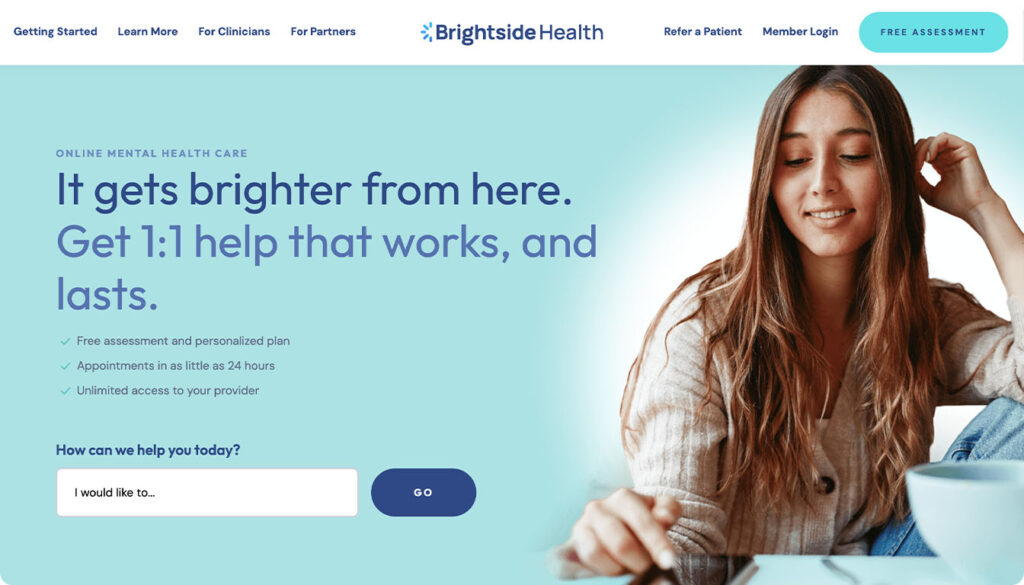
Brightside is a fully virtual mental health platform primarily designed to treat more common mental health conditions, such as anxiety, depression, stress, burnout, insomnia, trauma, post-traumatic stress syndrome (PTSD) and suicidal ideation. Care typically begins with a free clinical intake assessment that helps guide treatment recommendations, which may include online therapy, medication management, or both.
The platform emphasizes quick access and standardized care, noting that appointments may be available within a few days. The standard treatment model is a subscription plan that combines monthly therapy sessions, psychiatric care, and resources like messaging and symptom tracking. For individuals with insurance, an alternative is to request per-session billing, under which they are only responsible for the copayment for treatment and the cost of prescription medications.
Brightside pros and cons
| Pros | Cons |
|---|---|
| • Structured online programs (messaging, lessons, check-ins, depending on plan) | • Limited condition focus range |
| • Integrated medication management | • No in-person sessions |
| • Fully virtual care model | • No therapy support for children under 13 |
| • Subscription pricing may feel expensive if you want fewer sessions |
Brightside may be well-suited for individuals who prefer a structured treatment model with built-in program elements, such as ongoing messaging and self-guided exercises, and who are comfortable receiving care exclusively online.
For some clients, however, this approach may feel limiting. Those who want access to in-person sessions, the ability to choose among a broader range of independent clinicians, or a pay-per-visit pricing structure may find Brightside less aligned with their preferences. It’s also important to note that their providers do not prescribe controlled substance medications, which may influence care decisions for some individuals.
Compare Grow Therapy vs. Brightside benefits
While both platforms offer online mental health care, they differ in many features. Below, we’ll compare key benefits: pricing model, insurance coverage, medication management availability, and child therapy options.
Pricing model
Grow Therapy
Grow Therapy uses a pay-per-session model similar to traditional outpatient therapy. When working with an in-network provider, clients typically pay only their standard copay or coinsurance, while self-pay rates vary by provider and location. There are no subscriptions or hidden fees, and clients can use the cost estimate tool to get a clearer picture of upfront costs.
This approach makes therapy easier to fit into real-life budgeting, whether someone prefers weekly sessions, less frequent visits, or short-term support during a particularly stressful period. Paying per session also allows for greater flexibility, especially when insurance is involved.
Brightside
For uninsured and self-pay individuals, Brightside uses a flat monthly subscription model. While this can simplify billing, it may lead to higher out-of-pocket costs for individuals without insurance coverage or whose plans are not accepted.
Self-pay options include $299/month for therapy (4 video sessions + unlimited messaging), $95/month for psychiatry (+ pharmacy copays), and $349/month for both. Insured clients can use per-session co-pay billing, averaging $25 per session. While the bundled model offers structured, ongoing support, it may be less flexible for those wanting fewer sessions or lower overall costs
Insurance coverage
Grow Therapy
Insurance coverage is central to Grow Therapy’s model. The platform partners with over 100 insurance plans (including Medicaid) to reduce financial barriers to care. Many clients can access therapy at the exact cost of an in-network medical visit.
By prioritizing insurance compatibility and upfront pricing, the platform aims to make therapy more accessible and cost-predictable. Many clients can begin care within as little as two days, depending on availability, and those with insurance often pay only their standard copay.
Brightside
Brightside states that it accepts many major insurance plans, including Medicare and Medicaid, and offers an insurance eligibility check during the initial assessment. Coverage, however, varies by plan and state, and some members may incur additional fees if certain services are not fully covered. Please note that individuals without insurance are responsible for the full monthly subscription cost.
Medication management
Grow Therapy
Grow Therapy offers medication management as an option, allowing individuals to access both therapy and medication support through a single platform. For many people, medication is one component of their treatment plan and is often most effective when combined with therapy, depending on individual symptoms, diagnoses, and preferences.
Brightside
Brightside offers medication management through a dedicated psychiatry plan and describes its approach as personalized, with prescriptions sent to a client’s local pharmacy. The platform also notes a significant limitation: its providers do not prescribe controlled substances, which may be a consideration for some individuals when evaluating care options.
Child therapy options
Grow Therapy
Grow Therapy allows clients to filter for providers who work with children and adolescents and offers state-based directories to help families find age-appropriate care. The platform supports therapy for children of all ages, including services for autistic children, based on provider expertise and availability.
Because Grow Therapy connects families with independently licensed clinicians, finding the right match often depends on factors such as a child’s age, the therapist’s training (for example, parent-child interaction therapy (PCIT), cognitive behavioral therapy (CBT), family therapy, child-parent psychotherapy, or trauma-informed care), and practical considerations like scheduling and insurance coverage.
Brightside
Brightside offers dedicated teen care plans to individuals ages 13 and older. Their plans include therapy-only and combined therapy and psychiatry. This approach may be helpful for families seeking teen-focused care within a structured online program, particularly when teens are comfortable with video sessions and app-based support. However, they do not have any programs for younger children or in-person counseling support.
How to choose the right therapy platform
When deciding between Grow Therapy and Brightside, consider the following:
- Cost and insurance: Coverage, pricing models, and out-of-pocket costs can vary by insurance plan and individual circumstances. Grow Therapy offers flexible payment options, including per-session payments for both insured and uninsured individuals, and accepts a wide variety of insurance plans. In contrast, Brightside’s service for uninsured clients is exclusively structured as a monthly subscription.
- Care format: Consider whether virtual therapy alone meets your needs, or whether having the option of in-person sessions is important. Grow Therapy offers both formats depending on provider availability, while Brightside is entirely virtual.
- Therapy approach and goals: Consider whether you prefer a structured program with built-in tools or a more personalized, open-ended therapy experience guided by your chosen provider.
- Personal preferences and age-specific needs: Factors such as provider selection, scheduling options, comfort with medication management, and the age of the person receiving care can all play a role. Grow Therapy includes providers who work with children across a wide age range, while Brightside’s services are focused on ages 13 and up.
If you’re still comparing platform options, you may find it helpful to explore other guides, such as Grow Therapy vs. BetterHelp, Grow Therapy vs. Talkspace, Grow Therapy vs. Rula, and Grow Therapy vs. Headway.
Final thoughts
Both Grow Therapy and Brightside aim to increase access to mental health care, but they differ in how they structure and deliver services. Brightside may appeal to individuals seeking a structured treatment model delivered entirely through virtual care, focused on a defined set of conditions.
Grow Therapy offers a range of options for care formats and payment methods. The platform works with many insurance plans, offers pay-per-session pricing, and includes both virtual and in-person therapy options, depending on provider availability. Its network includes licensed mental health professionals who work with adults, children, and teenagers, providing a variety of care options and preferences.
Choosing between platforms often depends on individual priorities, such as cost considerations, preferred care format, provider selection, and the age of the person seeking care. Reviewing these factors can help individuals and families determine which option best aligns with their needs.
When you’re ready, you can take the next step by finding a therapist through Grow Therapy’s nationwide network.
Frequently asked questions
Does Grow Therapy accept Medicare?
Grow Therapy works with many insurance plans, including Medicare in certain states. Coverage depends on provider participation.
Is Grow Therapy a good platform?
Yes, Grow Therapy can be a good platform for individuals seeking flexible, insurance-supported mental health care. It connects clients with licensed providers across a range of specialties and offers both virtual and in-person sessions, depending on availability. Its pay-per-session model and broad insurance acceptance can make therapy more accessible, though the experience may vary based on provider fit and location.
Is Brightside therapy legit?
Brightside describes therapy as licensed-provider care delivered via video sessions, with structured support elements between sessions, including messaging and online lessons. As with any platform, the most important factor is whether the approach and provider relationship fit your needs and whether the level of care matches your situation.