
Most Americans now balance a paycheck with unpaid care for children, aging parents, or sick family members and this dual role often comes at the expense of their own well-being. A new Grow Therapy survey of 1,260 U.S. adults found that 53% of employed caregivers say their duties interfere with caring for their own mental health.
However, the pressure is not distributed evenly. Women are carrying a significantly heavier emotional load than men. Two-thirds (66%) of all caregivers call the strain of balancing work and home “intense,” and that number jumps to 75% for working women.
Fortunately, women are also more proactive about their well-being. Our data shows 65% of women are open to, or are actively receiving mental health help, compared to 60% of men.
Key takeaways
- 75% of working women caregivers experience intense emotional and mental strain, compared to 56% of men.
- 58% of working women say juggling work and life gets in the way of taking care of their mental well-being, versus 47% of men.
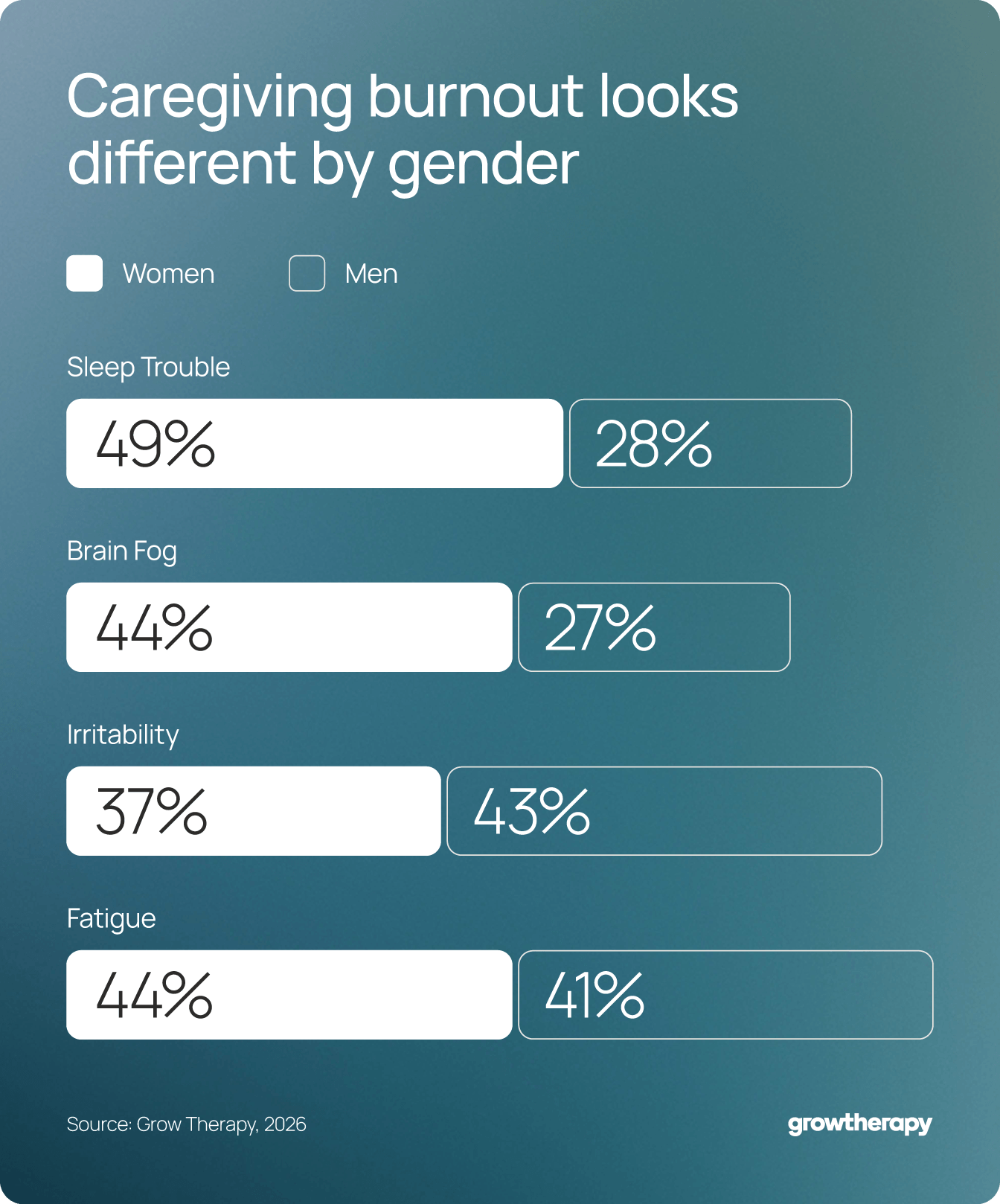
- Women report higher rates of stress-related difficulties, including sleep trouble (49%) and brain fog (44%).
- Despite the strain, 52% of women see their job as a source of personal fulfillment, compared to 40% of men.
- Women (65%) are more open to therapy than men (60%), yet only 14% of those currently struggling are receiving professional support.
Caregiving often stops women from meeting their own emotional needs
The struggle to stay mentally healthy is more challenging for women. This shows up clearly in the numbers, as 58% of working women caregivers report that their duties stop them from caring for their own emotional needs, compared to 47% of men.
This difference may come from the disproportionate amount of caregiving and household management women carry at home. According to Deloitte’s 2025 Women at Work report, women still handle the bulk of these duties. 53% of women take primary responsibility for child care and 52% take the lead on adult care.
While men are taking on more than in previous generations, the mental load of caregiver stress still falls largely on women.
When these responsibilities pile up, women often lose the ability to maintain their own health. Research from the AARP’s 2025 Caregiving in the US report confirms this. Caregivers lose an average of four days per month to poor mental or physical health that keeps them from doing their regular activities, revealing the severe physical and mental health effects of family caregiving on the person providing the care.
This means they are not just losing paid work time. They are losing days where they feel healthy enough to function just for themselves, let alone to care for others. For a woman balancing a career and a household, those lost days can be the difference between stability and crisis.
Different stress, same struggle: How gender shapes caregiver burnout
The emotional weight of caregiving shows up differently depending on who is providing the care. Men and women in our survey reported distinct burnout-related experiences.
For example, men were more likely to feel irritable or have a short temper (43% compared to 37% of women). Women, on the other hand, reported much higher levels of physical and mental exhaustion:
- 49% of women report sleep trouble, compared to 28% of men
- 44% of women report brain fog, compared to 27% of men
These symptoms often bleed into the workday. A caregiver who struggles to concentrate or manage their emotions faces a higher risk of burnout at work. This mental fog often makes it difficult to stay productive or meet expectations at the office.
Recognizing when these feelings shift from a busy schedule into a serious health concern is a key step in getting help.
Grow Therapy provider, Monica D. Randle, LPCC, LPC, looks for specific signals that a caregiver needs professional support. She notes that “depressive and anxiety-related symptoms such as excessive worry, irritability, fatigue, loss of interest in things usually enjoyed, and isolation” are clear signs that a person is overloaded with responsibility and stress.
That link between caregiver mental health and physical rest is a big factor here. Research from Stanford Medicine confirms that sleep and mental health are a two-way street, where poor rest can actually trigger anxiety and make it much harder to manage daily stress. This creates a loop where a person is too tired to manage their stress and too stressed to get the rest they need.
Why work matters to women caregivers
Work is a big part of who many women are, even as they juggle heightened mental and emotional strain. We found that 52% of women caregivers see their job as a source of personal fulfillment, compared to 40% of men. This suggests that, for many women, work may offer a meaningful source of fulfillment alongside caregiving responsibilities.
Maintaining this professional drive is difficult when burnout starts to set in. According to Deloitte’s Women at Work report, only around half of working women describe their mental health as good, and over a third say their stress levels are higher than they were just one year ago.
Because many women caregivers report that work is a source of personal fulfillment, supporting their mental health and well-being may help protect an important source of meaning in their lives.
Many caregivers want therapy, but few have started
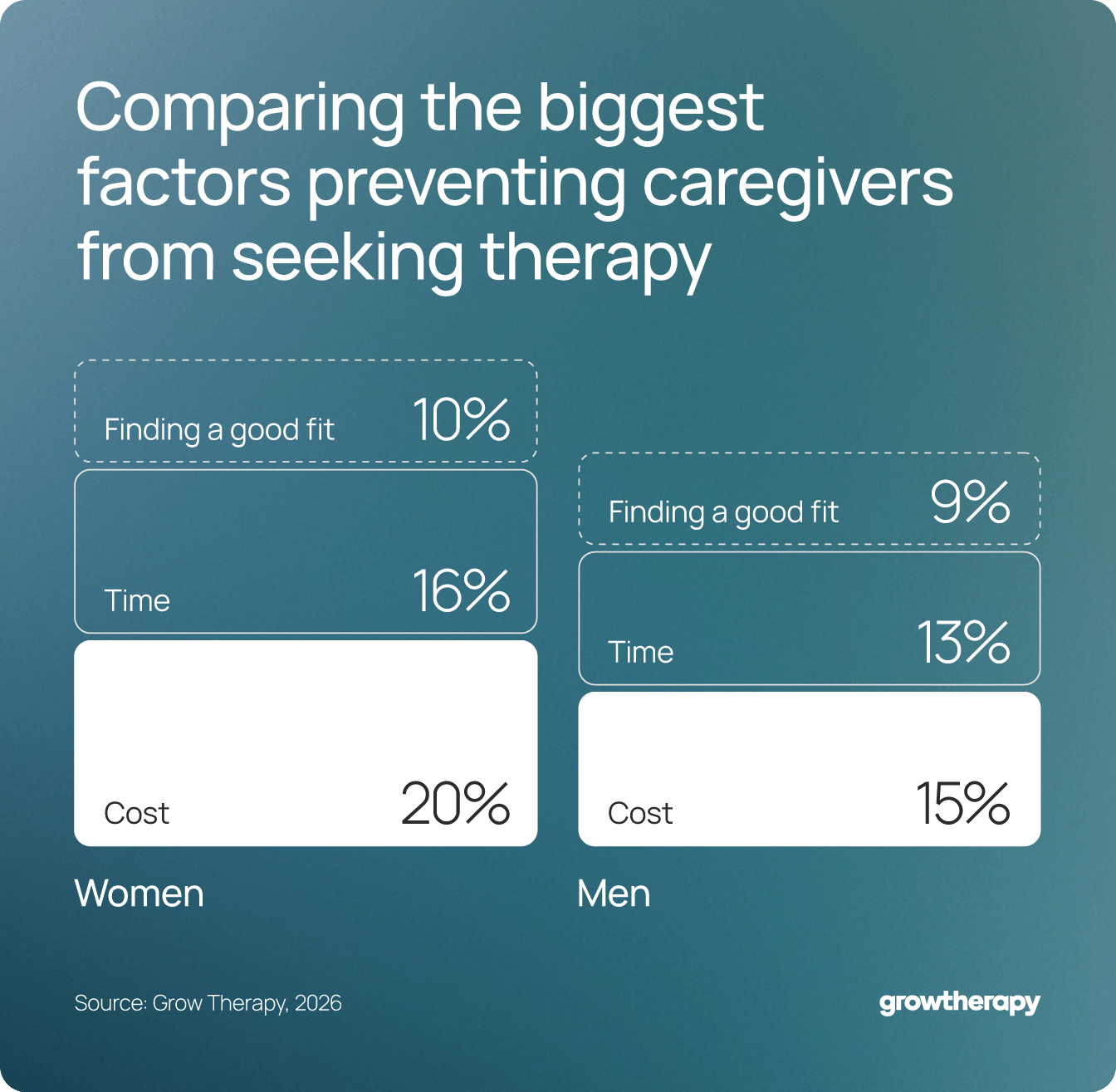
There is a bright spot in the data: Women are ready to accept help. Women caregivers (65%) are usually more likely than men (60%) to say they are open to professional help. Even so, only 14% of working women caregivers are currently in therapy. This shows that the desire for help is there, but the path to getting started is still blocked by a few common hurdles.
Concerns like cost (20%) and a lack of time (16%) are bigger obstacles for women caregivers than the men caregivers surveyed (15% and 13%, respectively). To any caregiver already juggling a job and family, mental health care can feel like another chore they can’t afford.
On top of all of that, 10% of all caregivers say they simply do not know where to find a therapist who would be a good fit for their specific needs.
Addressing these hurdles is key to helping caregivers navigate the emotional strain, grief, and other challenges that often accompany long-term caregiving. Modern platforms like Grow Therapy help you find specialized online therapy and other resources for caregivers that actually work with a busy life.
When caregivers finally reach out for support, practical changes to their routine often make the biggest difference in keeping those appointments. Randle suggests that fitting therapy into your schedule often starts with a shift in how a person manages their time. She recommends that caregivers “utilize available resources such as family or friends” to create space for their own care.
Considering that insurance often makes sessions affordable and virtual appointments remove the need for a commute, it’s now possible to fit a 50-minute session into a week without disrupting caregiving duties or work.
How Grow Therapy supports caregivers trying to ‘do it all’
Grow Therapy makes getting help simpler. The platform matches caregivers to in-network therapists who offer virtual sessions and flexible hours. Many providers specialize in caregiver burnout, parenting stress, and work-family balance. This model fits into a real-life schedule, allowing caregivers to protect their own health so they can show up better for their family and their work.
Methodology
The survey was conducted online by YouGov with a total sample size of 1,260 adults. The results have been weighted and are representative of all US adults 18 years old and older.
Fieldwork was undertaken from Feb. 6 to Feb. 9, 2026. Respondents were selected from the YouGov panel using randomized invitations and completed the survey via an online interview. They were then filtered to focus on those who self-identified as being currently employed and providing care for at least one child under 18 and/or an aging or ill family member.