
For many people, the holidays are the best time of the year. But at the same time, keeping your head above water in the rush of spending, socializing, and events in November and December can be a challenge.
Grow Therapy’s new 2025 Holiday Stress Survey found that while people may try to put on a happy face for the holidays, they may actually feel overwhelmed. As a result, some may be neglecting their mental health.
“During the holidays, work priorities shift as organizations wrap up projects and set new goals, which can feel overwhelming,” says Shae Williams, LMHC, a Grow Therapy provider. “Family and social commitments increase as we prepare for celebrations and try to make everything special. Free time becomes scarce.”
Key takeaways
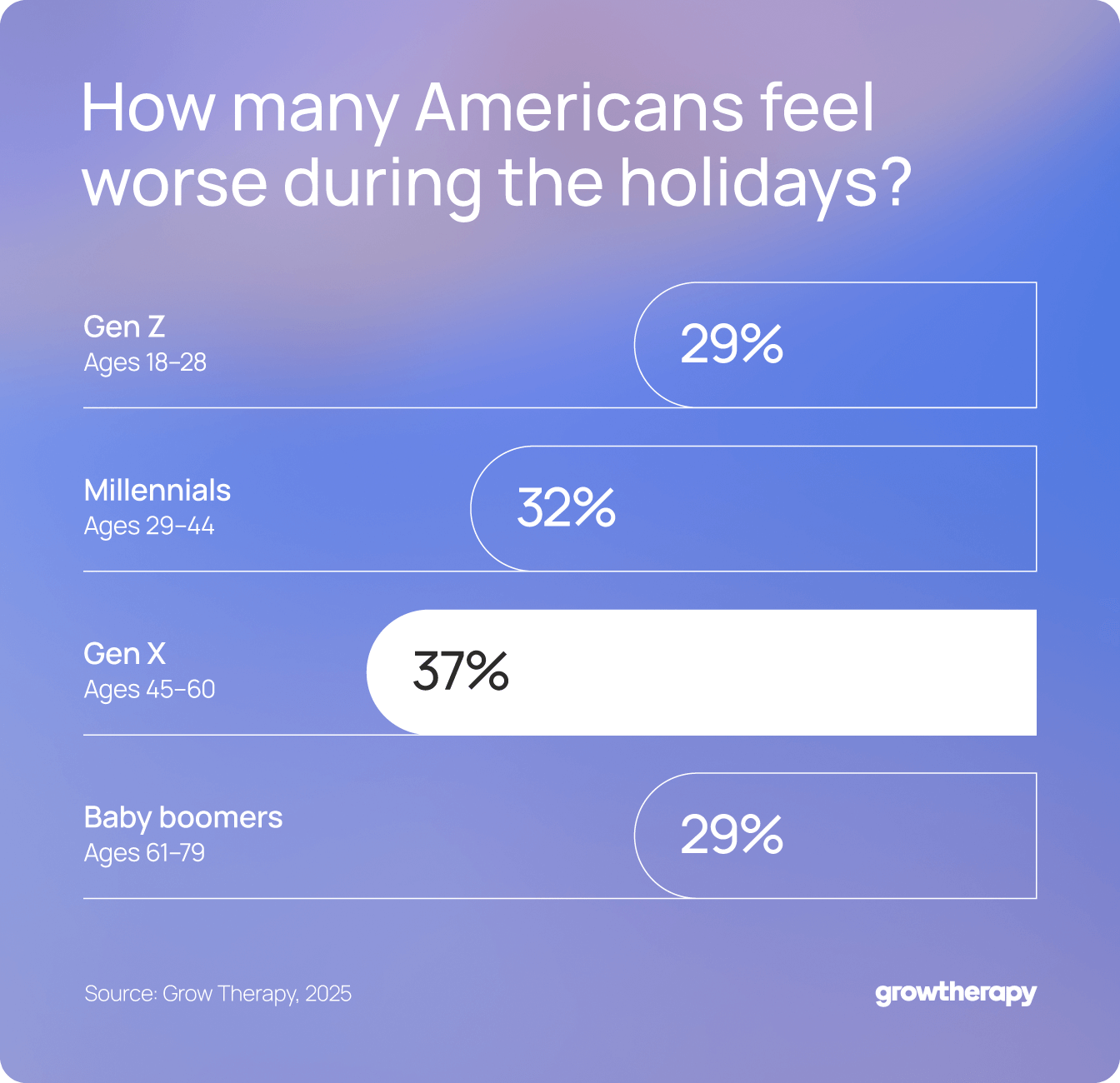
- 32% of Americans report feeling worse mentally or emotionally in November and December compared to the rest of the year.
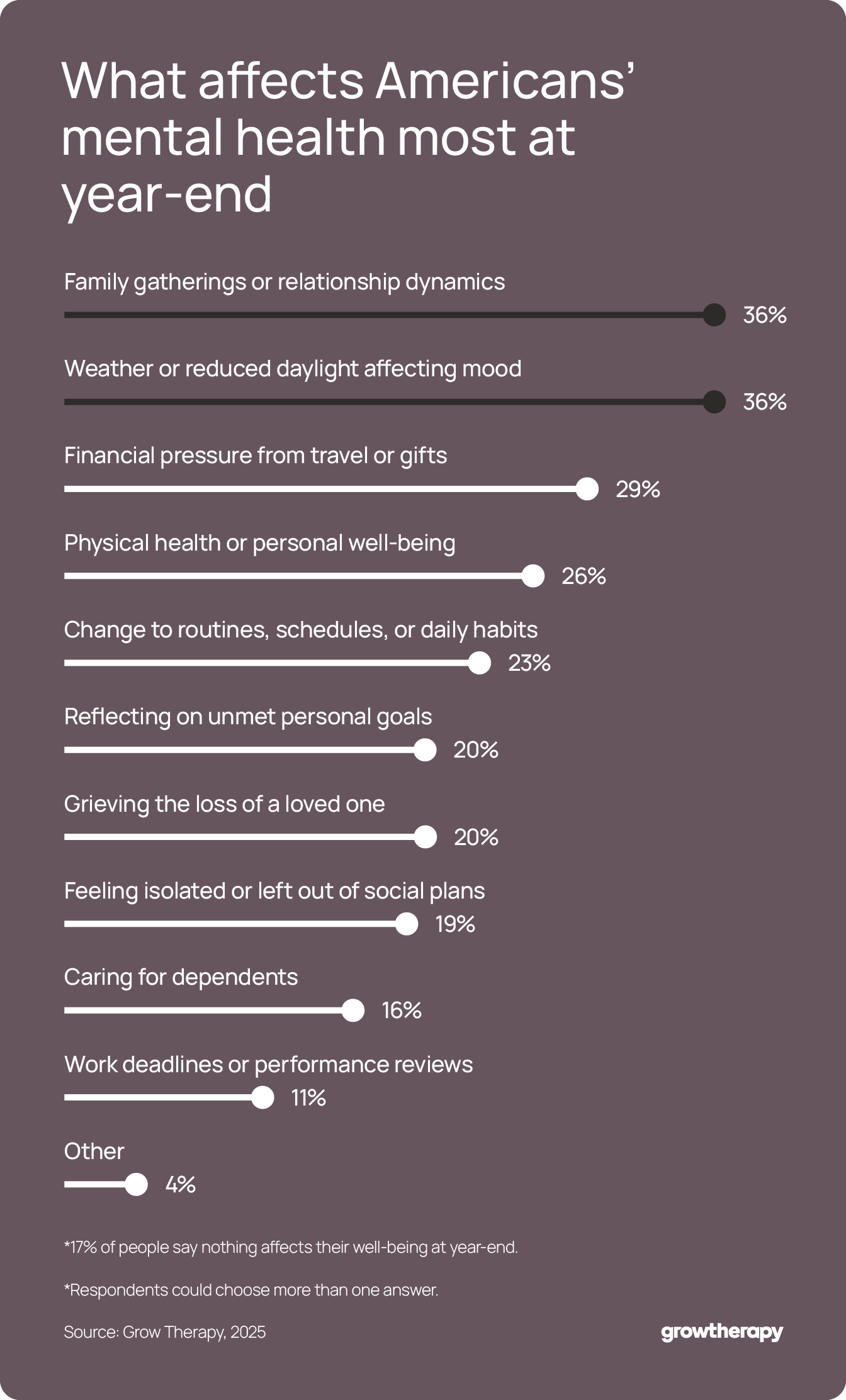
- Family and relationship dynamics (36%), weather or reduced daylight affecting mood (36%) and financial pressures (29%) are top sources of mental and emotional strain.
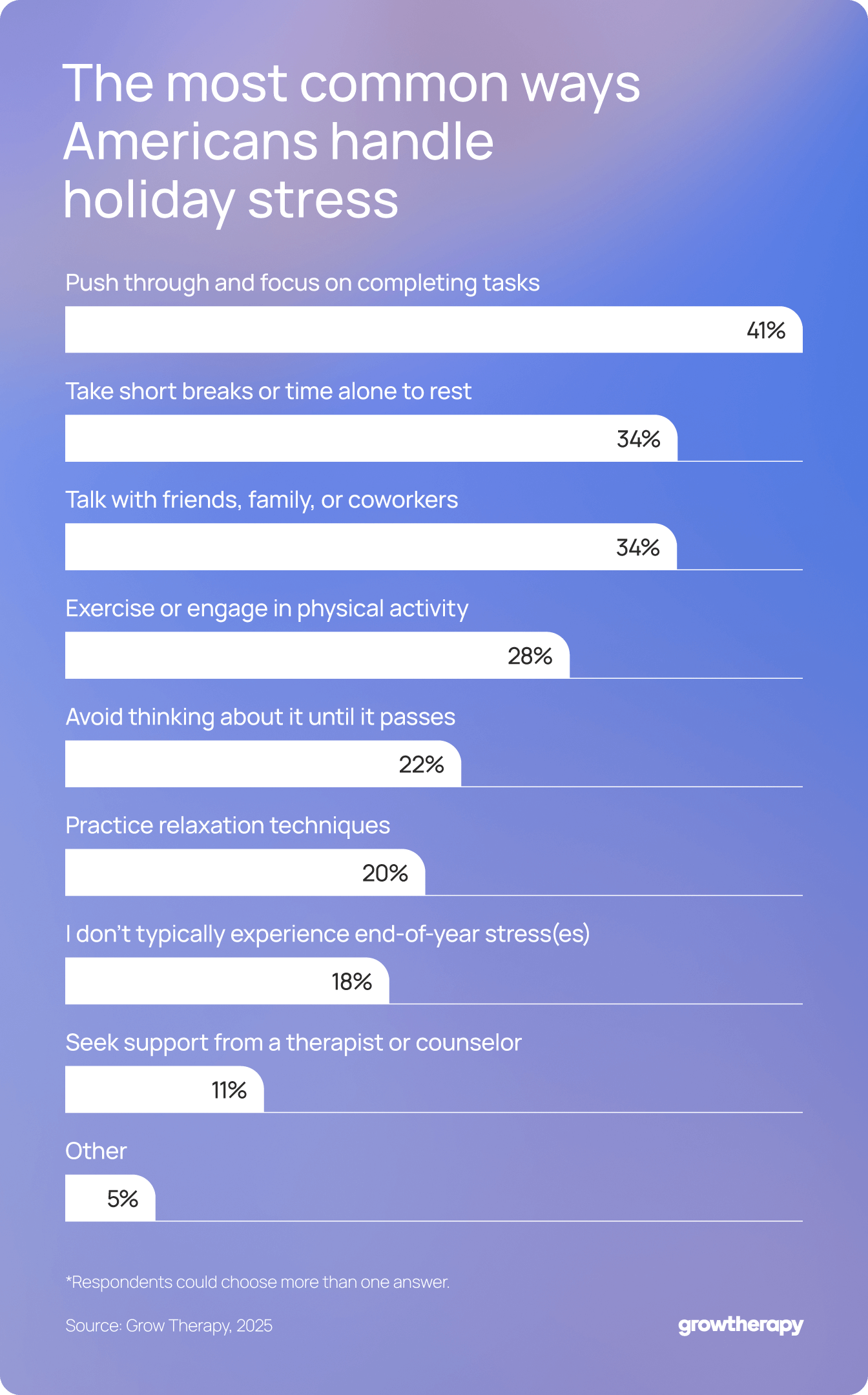
- 34% of people take short breaks or take time alone to reset when end-of-year stress builds up, showing many Americans are taking steps to manage their mental health. Also, 34% talk with friends, family, or coworkers.
- 42% of people who delayed or paused therapy at the end of the year say lower costs or improved insurance coverage would help them go. 37% also say flexible or virtual scheduling options would help.
The hidden toll of the holidays
The holidays are a busy season. Each year, many Americans feel more stress than usual as they take on holiday tasks on top of their already packed schedules.
That stress can build quicker for people who have to manage multiple high-priority needs at once, like work, family, and their own health. Gen Xers (ages 45-60), who might be raising a family, caring for aging parents, and are in the middle of their careers, are more likely than other generations to say they feel worse mentally and emotionally at the end of the year.
Gender plays a part, too. Many American women have the stressful task of managing housework and childcare for their families on top of their busy jobs, according to Pew Research Center. That stress can grow during the holidays — more than 1 in 3 (37%) women feel worse mentally and emotionally compared to the rest of the year, compared to only 26% of men:
Family and finances — America’s top holiday stressors
The holidays are often a time to get together with friends and family and share gifts and food — but constant socializing and spending more money than usual can be stressful.
More than 1 in 3 (36%) people say family gatherings and relationship dynamics affect their mental or emotional well-being the most at the end of the year. The same percentage of people (36%) also said weather or reduced daylight affects their mood the most at the end of the year.
Financial pressure from travel or gifts is also a common stressor (29%).
The dual pressures of financial anxiety and family expectations can turn the holidays into “Stressflation Season.”
“It’s understandable that the holiday season can feel overwhelming, especially for women and Gen Xers. Life stage factors play a big role—holidays often disrupt routines and add extra obligations, which can heighten anxiety and feelings of burnout,” Williams says.
The therapy trade off: How holiday obligations push therapy off the to-do list
Ever forgotten to eat during a busy work day? If you have, you know that when everyday stressors pile up, it can be easy to neglect your health — even when you may need to pay attention to it the most. Nearly half (46%) of people who have been in therapy have delayed or paused sessions at the end of the year because other obligations took priority.
Younger therapy clients are likelier to deprioritize therapy at the end of the year than older therapy clients are:
- Gen Zers: 57%
- Millennials: 47%
- Gen Xers: 42%
- Baby boomers: 28%
Additionally, among people who have gone to therapy, parents or guardians of children under 18 are likelier to deprioritize therapy at the end of the year, compared to people who aren’t parents or guardians (59% and 42%, respectively).
Whether they’re in therapy or not, people will often push through end-of-year stress and focus on completing tasks (41%). Many will also take short breaks or take time alone to rest (34%) or talk with friends, family, or coworkers (34%), among other coping mechanisms:
Costs, insurance, and scheduling block access to therapy during the holidays
If someone is overwhelmed, they don’t have to face the holidays alone. Flexible and affordable support systems like online therapy can help give people the tools they need to manage their mental health during the chaotic holiday season. But it can be hard to prioritize paying for therapy when holiday expenses add up.
More than 2 in 5 (42%) people who deprioritized therapy at the end of the year said lower costs or improved insurance coverage would make it easier for them to start or keep going to therapy.
Convenience makes a big difference, too. More than 1 in 3 (37%) people who deprioritized therapy say flexible or virtual scheduling options would make it easier for them to attend therapy.
There’s a lot of blockers that may keep someone from seeking therapy. Therapy can seem like a major commitment, or like it’s reserved only for people with intense struggles or higher incomes. Or, some may assume that they wouldn’t be able to find a therapist that shares their ethnic or cultural background. But today, many Americans are interested in short-term therapy to tackle specific goals — like alleviating holiday stress.
“If you’re feeling this way, you’re absolutely not alone. The pressures of the season are real, and it’s okay to give yourself permission to slow down, set boundaries, and prioritize your well-being,” Williams says.
That’s where all-in-one therapy platforms like Grow Therapy can help. Grow Therapy can connect you with a licensed provider who meets your specific needs, can work with your schedule, and who takes insurance or offers flexible payment options.
Managing holiday burnout made easier with Grow Therapy
When emotions run high in the last few weeks of the year, accessible, affordable therapy can provide much-needed relief. Grow Therapy can’t manage your long list of holiday to-dos, but it can connect you with a health care provider who will give you the tools to manage holiday stress.
Alleviate holiday burnout before it begins by exploring your therapy options. Book an appointment today.
Methodology
The survey of 2,458 adults ages 18 and over was conducted via YouGov for Grow Therapy from October 30 – November 3, 2025. Data is weighted and representative of all US adults 18+. The margin of error is approximately +/-3% for the overall sample with a 95% confidence level.