
Did you know?
On average, ADHD testing costs between $200 and $5,000+, depending on the type of evaluation, your location, and whether you have insurance. Basic clinical evaluations typically run $20–$75 with insurance, while a comprehensive neuropsychological assessment can exceed $2,500 (even with coverage).
More people than ever are seeking formal attention deficit/hyperactivity disorder (ADHD) evaluations, especially among adults who spent years wondering why focus, organization, and follow-through felt harder for them than for others. With this awareness has come a flood of questions about how much ADHD testing costs and, more importantly, whether it’s financially within reach.
According to Grow Therapy’s 2026 consumer survey, 61% of individuals cite cost as a primary concern when exploring new mental health treatments. And for those seeking an evaluation, the cost can be complex. Prices can vary widely depending on who performs the evaluation, location, and insurance coverage, and it’s not always clear which path makes the most sense.
If you feel uncertain about where to start, you’re not alone. From standard evaluations to in-depth neuropsychological assessments, this guide breaks down ADHD testing costs simply.
Key takeaways
- The average cost of ADHD testing is typically between $200 and $5,000+.
- ADHD testing costs depend on your provider’s credentials, the type of evaluation, location, and insurance coverage.
- The most affordable testing options are typically basic clinical evaluations.
- Affordable testing options can sometimes be found through university clinics, public school evaluations, and HSA/FSA funds.
Average costs of ADHD testing
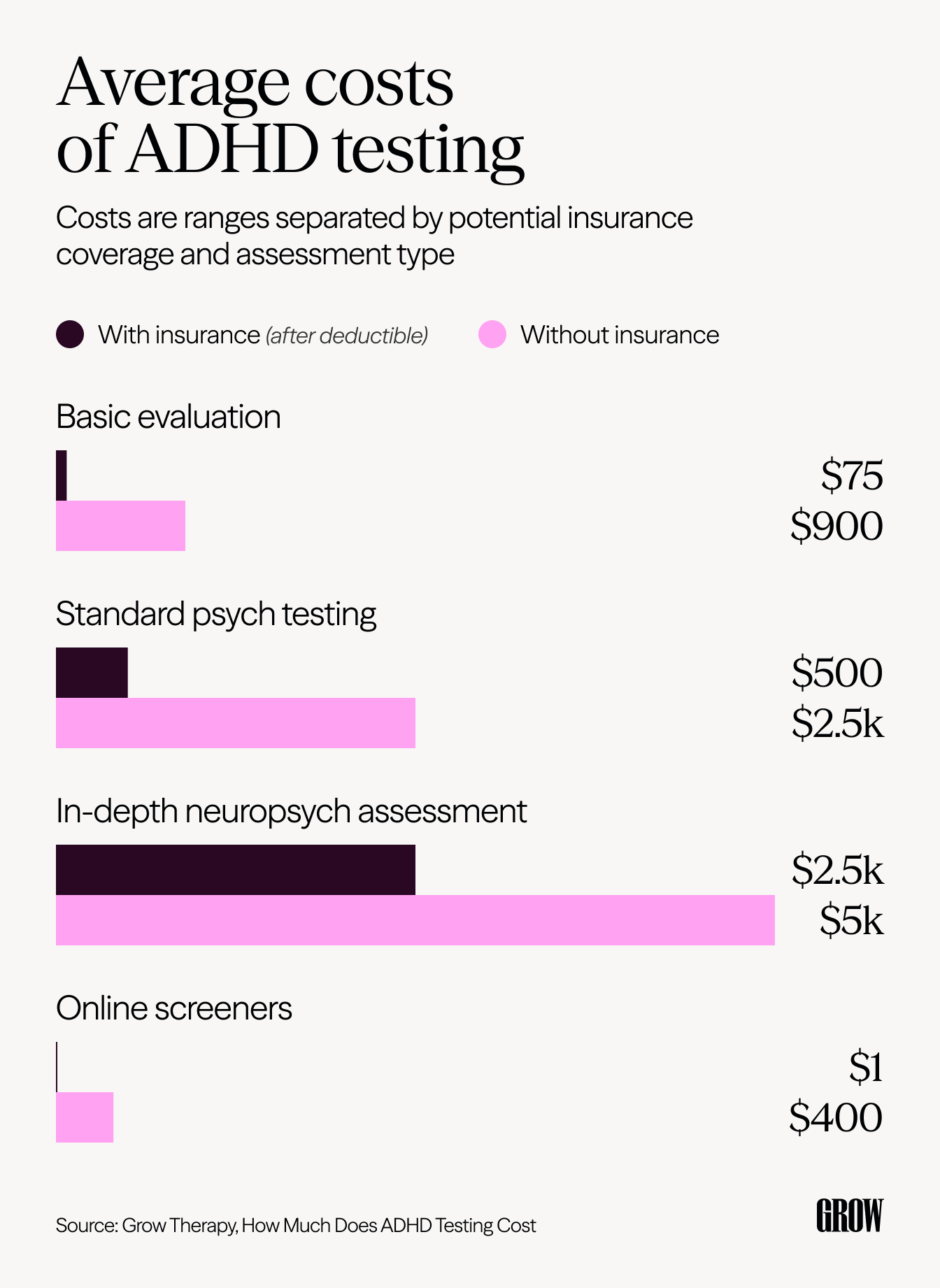
The average costs of ADHD testing are split into four main evaluation tiers. Each type’s cost, covered in the table below, varies based on your insurance plan’s mental health support.
Important note
For those with insurance, your actual cost depends on where you are in your deductible cycle. If you haven’t met your deductible, you’ll pay the insurer’s negotiated rate until you reach that threshold. Once your deductible is met, you’re typically only responsible for a standard specialist copay and/or coinsurance percentage. Check with your insurance provider for the exact details of what your plan covers and the costs you will be responsible for.
| Type of testing | Average price without insurance | Average price with insurance (deductible met) |
|---|---|---|
| Basic clinical evaluation | $200 – $900 | $20 – $75 |
| Standard psychological testing | $1,000 – $2,500 | $100 – $500 |
| Comprehensive neuropsychological assessment | $2,500 – $5,000+ | $500 – $2,500+ (high denial rate) |
| Automated online screeners / quick-check apps | $0 – $400 | $150 – $400 (rarely covered) |
Basic clinical evaluation
Range without insurance: $200 – $900
Range with insurance: $20 – $75 (total cost to patient)
A basic clinical evaluation is the most accessible path for the majority of adults and children who need an ADHD diagnosis to begin therapy or medication. This type of assessment may involve:
- A structured clinical interview from a PMHNP, PCP, or other licensed professional
- Standardized rating scales (i.e., the Adult ADHD Self-Report Scale (ASRS) or the Conners Rating Scales)
- Cognition screening
- Behavioral observation
Most basic evaluations can be completed in a single 60 to 90-minute appointment, keeping costs relatively low compared to more involved testing formats. Plus, this is the most reliably covered tier by insurance and is typically billed under standard psychiatric diagnostic codes.
Standard psychological testing
- Range without insurance: $1,000 – $2,500
- Range with insurance: $100 – $500
Standard psychological testing goes deeper than a basic clinical evaluation. During this assessment, a licensed psychologist administers a range of standardized tests across multiple sessions. These tests assess:
- Working memory
- Processing speed
- Attention regulation
- Executive functioning
This level of testing is typically recommended when the clinical picture is complicated or if an individual may have co-occurring conditions. Insurance coverage at this tier is partial and conditional, often requiring prior authorization and documentation of medical necessity before approving costs billed under psychological testing codes.
Comprehensive neuropsychological assessments
Range without insurance: $2,500 – $5,000+
Range with insurance: $500 – $2,500+ (highly unpredictable)
A comprehensive neuropsychological assessment is the most thorough (and expensive) evaluation available. This type often involves six to 10 hours of direct testing using cognitive batteries such as the Wechsler Adult Intelligence Scale (WAIS), plus assessments of:
- Memory
- Processing speed
- Language
- Fine motor function
Costs for this evaluation are also higher because the process requires an additional 15 to 25 hours of clinician time for scoring, data integration, and report writing. Insurance coverage for neuropsychological assessments is the least predictable of all tiers. Evaluations may be denied or only partially covered, even when documented neurological reasons are evident.
Automated online screeners and quick-check apps
Range without insurance: $150 – $400
Range with insurance: $150 – $400
Unlike other forms of online ADHD treatment, this tier of evaluations refers to platforms that offer self-administered digital symptom checklists. These may be paired with a brief check-in with a non-prescribing clinician and are often low-barrier first steps for those who want to gauge whether their symptoms warrant a formal evaluation.
It’s important to note that these types of assessments cannot produce an official diagnosis. Instead, these screening services can help individuals communicate their concerns and experiences to prescribing providers during full clinical evaluations. Insurance companies do not cover these flat-fee digital services because they don’t meet the face-to-face clinical interview requirements built into standard mental health regulations.
Grow Therapy is not an automated quiz platform, though it offers a quick ADHD quiz to evaluate symptoms and recognize patterns. Our platform connects you with fully licensed, credentialed ADHD psychiatrists and psychiatric nurse practitioners who conduct real-time clinical evaluations recognized by insurance and accepted by providers.
Factors that drive ADHD testing costs
In addition to the different evaluation tiers, other factors account for ADHD diagnosis cost variations.
Provider credentials
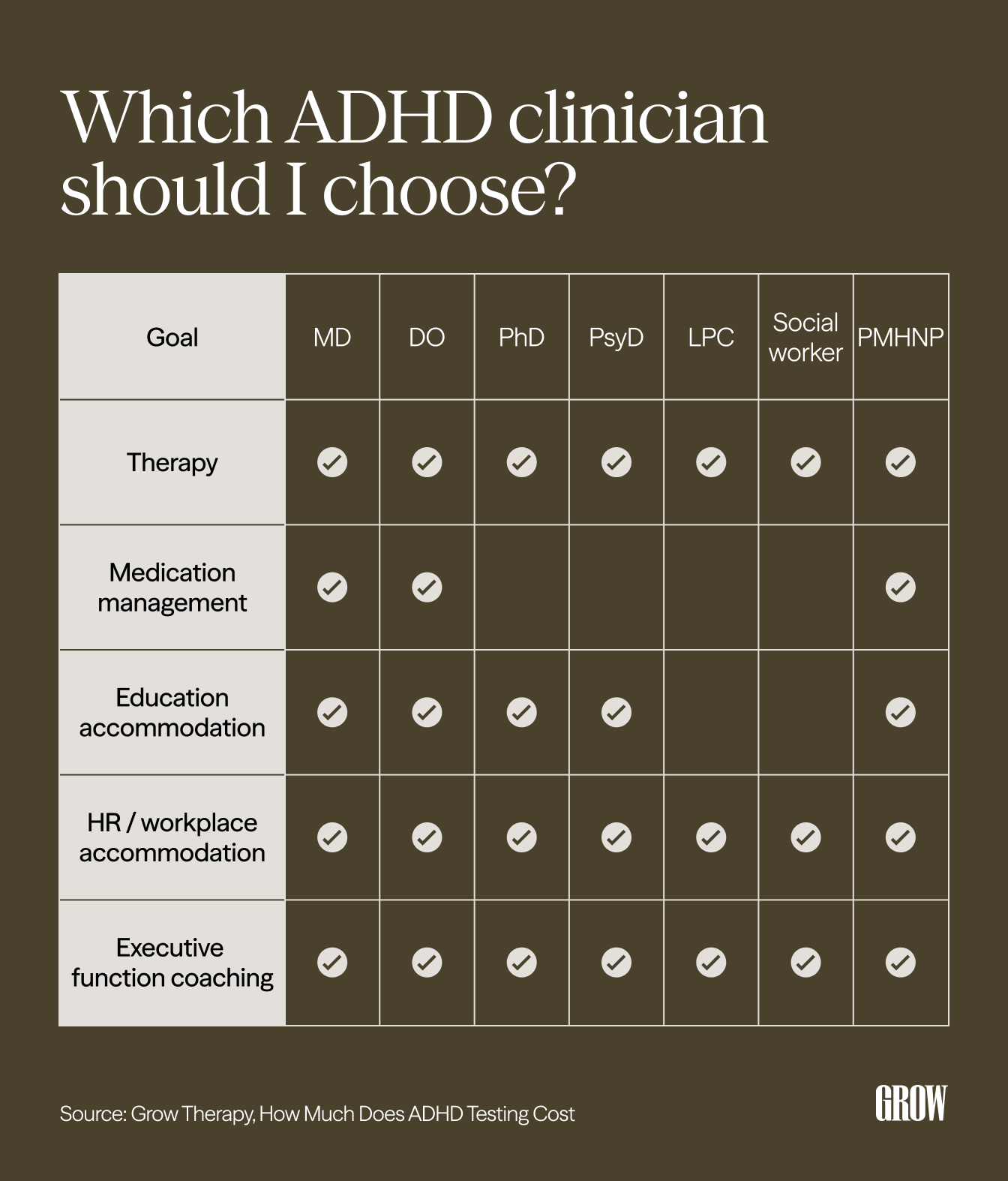
The clinician performing your evaluation has the largest impact on cost. Based on their training and experience in diagnostic instruments and complex clinical presentations, psychiatrists (MDs and DOs) and clinical psychologists (PhDs and PsyDs) command the highest hourly rates.
Licensed professional counselors, clinical social workers, and psychiatric mental health nurse practitioners (PMHNPs) can conduct equally accurate ADHD evaluations at the basic clinical level, often at lower rates.
Depending on your goals after diagnosis, like therapy and medication management or education and workplace accommodations, choose the license level of your clinician with cost in mind.
Location
Urban metropolitan areas carry a meaningful cost premium over suburban and rural markets, driven by:
- Higher overhead
- Commercial rent
- Local demand
For example, a neuropsychological evaluation that costs $2,500 in a mid-sized city might run $3,500 to $4,500 in an urban center like New York or Los Angeles. However, telehealth providers like Grow Therapy may be an effective way to sidestep regional pricing and expand your provider options.
Consider using FAIR Health Consumer to estimate ADHD diagnosis costs based on location.
Scope and complexity
The more a clinician needs to sort through overlapping symptoms, the longer the evaluation and the higher the cost. Symptoms may overlap with other conditions like:
- Anxiety
- Depression
- Other neurodiverse conditions, like autism spectrum disorder
- Learning differences
This may require your provider to administer additional assessments to find the correct diagnosis. Similarly, if you need a written report formatted for a specific accommodation request or legal purpose, this may also increase the cost.
Affordable ADHD testing alternatives and cost-saving strategies
University clinics and sliding scales
Some graduate psychology programs at major universities operate supervised training clinics that offer more affordable psychological testing. Assessments are conducted by doctoral students under close faculty supervision, using the same standardized practices used in private therapy practices. While wait times can be longer, the quality of the report is generally equivalent.
Public school evaluations
For school-aged children with ADHD symptoms affecting their academic performance, the Individuals with Disabilities Education Act (IDEA) and Section 504 of the Rehabilitation Act require public school districts to provide no-cost educational evaluations. However, it’s important to note that a school evaluation is designed to determine eligibility for academic accommodations, not to produce a clinical medical diagnosis.
HSA/FSA funds
ADHD evaluations are qualified medical expenses under IRS guidelines, which means you can pay for them using pre-tax dollars from a Health Savings Account (HSA) or Flexible Spending Account (FSA). If you’re facing an evaluation with high costs, using HSA/FSA funds may help you lower your expenses to a more manageable level.
Post-testing expenses to keep in mind
Getting an ADHD diagnosis is just the beginning of the process. Before finalizing your budget, consider the ongoing costs that typically follow:
- Initial medication consultation appointments: If your evaluation results in a medication recommendation, you’ll need a separate prescribing appointment.
- Monthly prescription copays (stimulant vs. non-stimulant medications): With or without insurance, prescription costs may vary by brand name, discount program, and copay.
- Weekly or bi-weekly Cognitive behavioral therapy (CBT) or executive functioning coaching sessions: Therapy sessions may be covered by insurance plans, but out-of-pocket and out-of-network costs may vary and increase expenses.
Take the next step toward clear, affordable treatment with Grow
Understanding how much ADHD testing costs is the first step toward making a confident, informed decision about ADHD care. For many individuals, the most accessible and insurance-friendly starting point is a basic clinical evaluation, which is exactly the type of care available through Grow.
Grow connects you with in-network providers who accept most major insurance plans and offer evening and weekend availability. Whether you’re seeking a diagnosis, therapy, or medication management, you can search for a provider, verify your coverage, and book an appointment on one platform.