
Finding an attention-deficit/hyperactivity disorder (ADHD) treatment provider should not feel like its own executive function challenge.
Telehealth has opened up real access to ADHD care, but the sheer number of options means the research now falls on you. And even when the desire to sort through your options is there, long waitlists and insurance questions can make taking the first step overwhelming.
Below, we review the best online ADHD treatment platforms based on factors like provider transparency and ease of scheduling, so you can skip the comparison spiral and find the care that works for you.
Best online ADHD treatment platforms at a glance
| Platform | Takes insurance | Payment model | Offers medication management | Digital tracking tools |
|---|---|---|---|---|
| Grow Therapy | ✓ (Accepts 125+ plans) | Pay-per-session | ✓ | ✓ (Progress monitoring and AI journal) |
| ADHD Advisor | ✗ (HSA/FSA accepted) | Subscription | ✓ | ✗ |
| Cerebral | ✓ | Subscription | ✓ | ✓ (Mood tracking, progress monitoring) |
| Sesame | ✗ | Pay-per-session | ✗ | ✗ |
| Talkspace | ✓ | Subscription | ✗ | ✗ |
| ADHD Online | ✗ | Pay-per-session | ✓ | ✗ |
| Circle Medical | ✓ | Pay-per-session | ✓ | ✗ |
| BetterHelp | ◐ (Limited) | Subscription | ✗ | ✗ |
| Teladoc | ✓ | Pay-per-session | ✓ | ✓ (Sleep tracking, mood tracking, activity plans) |
| Talkiatry | ✓ (In-network only) | Pay-per-session | ✓ | ✗ |
1. Grow Therapy
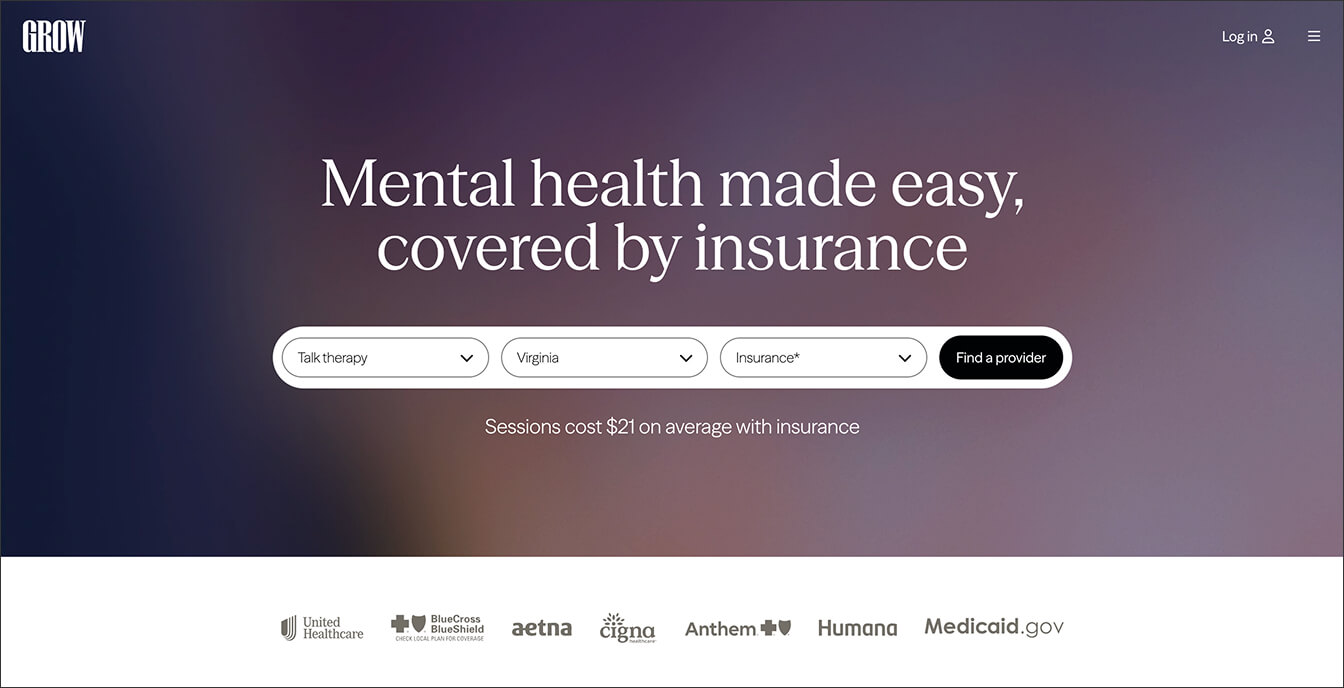
Grow Therapy is one of the best online therapy platforms connecting individuals with providers who specialize in ADHD without requiring a subscription, auto-assigning providers, or insurance guesswork. With more than 125 insurance plans accepted, including Medicaid and Medicare in some states, Grow Therapy is a strong option for people who need accessible, insurance-covered ADHD care with real flexibility.
Grow Therapy also offers ADHD-specific therapy and medication management in one place. Clients can find therapists who specialize in behavioral approaches to ADHD alongside psychiatric providers who can evaluate and manage medications. This is especially valuable for people managing co-occurring conditions like anxiety, depression, or sleep issues.
This platform’s pay-per-session pricing allows clients to make appointments during available nights and weekends, and most clients pay an average of $21 per session with insurance. Plus, clients can browse and choose their own provider using filters for insurance, specialty, availability, and identity.
Cost and insurance
- Accepts 125+ insurance plans, including Aetna, Cigna, UnitedHealthcare, Medicaid, and Medicare (availability varies by state)
- Cost with insurance: Most clients pay around $21 per session; some pay as little as $0 (depending on plan)
- Cost without insurance: $75-$250+ per session (depending on provider’s credentials and location)
Features
- Online and in-person appointment options
- Per-session pricing
- Psychiatry and medication management
- Robust search and filtering tools to find the right provider (e.g., by specialty, language, insurance, etc.) for identity-affirming care, trauma, ADHD, anxiety, and more
- Secure telehealth platform
- Quick ADHD quiz
Who it’s a good fit for
Grow Therapy is a good option for those seeking insurance-covered ADHD therapy or medication management. It’s also great for those managing ADHD alongside co-occurring conditions, and anyone who wants to choose their own provider rather than be assigned one.
| Pros | Cons |
|---|---|
| Accepted by 125+ insurance providers, including Medicaid and Medicare | In-person availability depends on location |
| Progress monitoring tools available | Cash-pay pricing varies by provider |
| Evening and weekend appointments available | |
| Low-stress scheduling with quick availability | |
| Transparent per-session pricing | |
| Large, diverse provider network |
2. ADHD Advisor
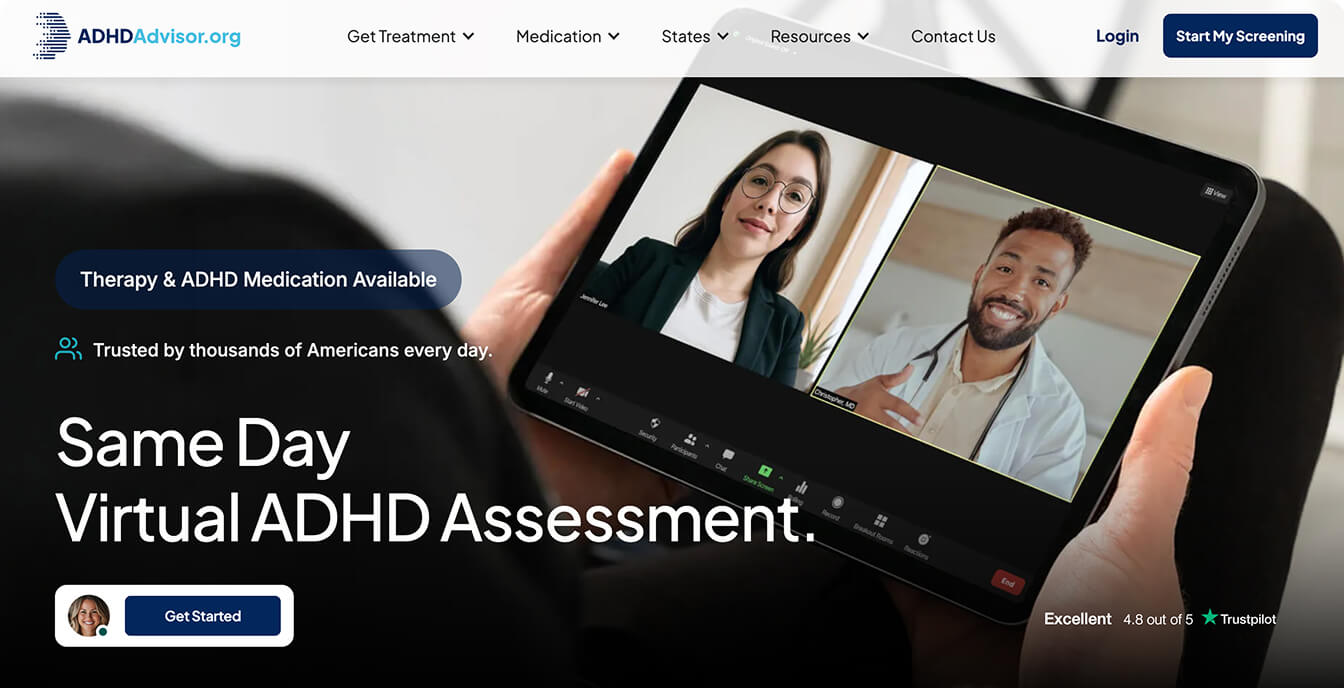
ADHD Advisor is a specialized telehealth platform built specifically for ADHD diagnosis and treatment. Unlike generalist mental health platforms, every provider on this online treatment platform is focused on ADHD and related conditions, creating a more targeted experience.
This platform offers telehealth-only appointments, and same-day services are often available, offering a faster path to an evaluation than alternatives. And while ADHD Advisor doesn’t accept health insurance and provider availability varies by state and service type, its transparent subscription pricing makes costs predictable.
While ADHD Advisor specializes in ADHD treatment, it can’t prescribe stimulant medications in most states. For individuals whose care plan includes or may include stimulant medication, this is an important factor to clarify directly with the platform before committing.
Cost and insurance
- Does not accept insurance; HSA/FSA payments accepted
- Cost without insurance: $150 for initial consultation; $130/month for medication management; $130/session for therapy
Features
- Telehealth options
- Medication management available
- HSA/FSA accepted
Who it’s a good fit for
People looking for a fast, ADHD-specific evaluation. Also, ADHD Advisor is for those without insurance or ongoing support needs.
| Pros | Cons |
|---|---|
| ADHD-focused providers | Does not accept insurance |
| Single platform for diagnosis, therapy, medication management, and success coaching | Stimulant prescriptions may be unavailable (varies by state) |
3. Cerebral
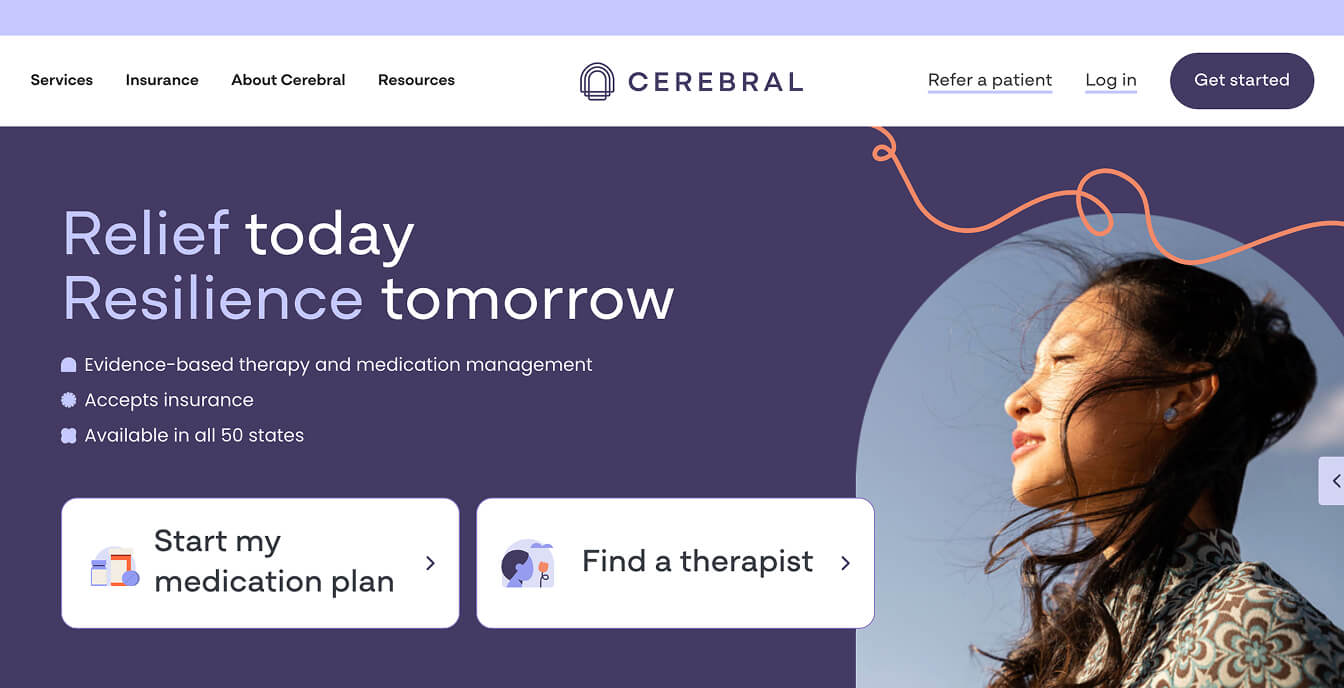
Cerebral is an insurance-accepting and subscription-based mental health platform that offers therapy and medication services. The platform supports an ongoing care model, offering regular touchpoints, consistent provider access, and a single place to manage both the behavioral and medication sides of treatment. Cerebral offers online ADHD treatment and accepts some major insurance plans, though coverage varies by state.
Subscription pricing for cash-pay clients means users pay a recurring monthly fee rather than a per-session fee, which may not align with how often they actually need appointments. Also, it does not offer in-person care options, and they do not prescribe stimulants, which may significantly limit treatment options for individuals with ADHD.
Cost and insurance
- Some insurance accepted (Aetna, Cigna, BCBS, Optum, UHC, etc.), but varies by state; may require copay or coinsurance
- Cost with insurance: The cost of copays, coinsurance, or deductibles (varies by plan)
- Cost without insurance: $175 per individual session (intake sessions cost more)
Features
- In-app messaging
- App-based tracking
- Medication management services
- Evidence-based therapy approach
- Regular progress check-ins
Who it’s a good fit for
Adults or couples seeking a structured ADHD care experience that combines therapy and medication management.
| Pros | Cons |
|---|---|
| Tools available for mood, goal, and therapy tracking | Only offers therapy services for minors in Connecticut, Massachusetts, New York, New Jersey, and Pennsylvania |
| Subscription plans available for those not using insurance | In-person care is not available |
| Custom provider matching | Cannot prescribe stimulant medications |
4. Sesame
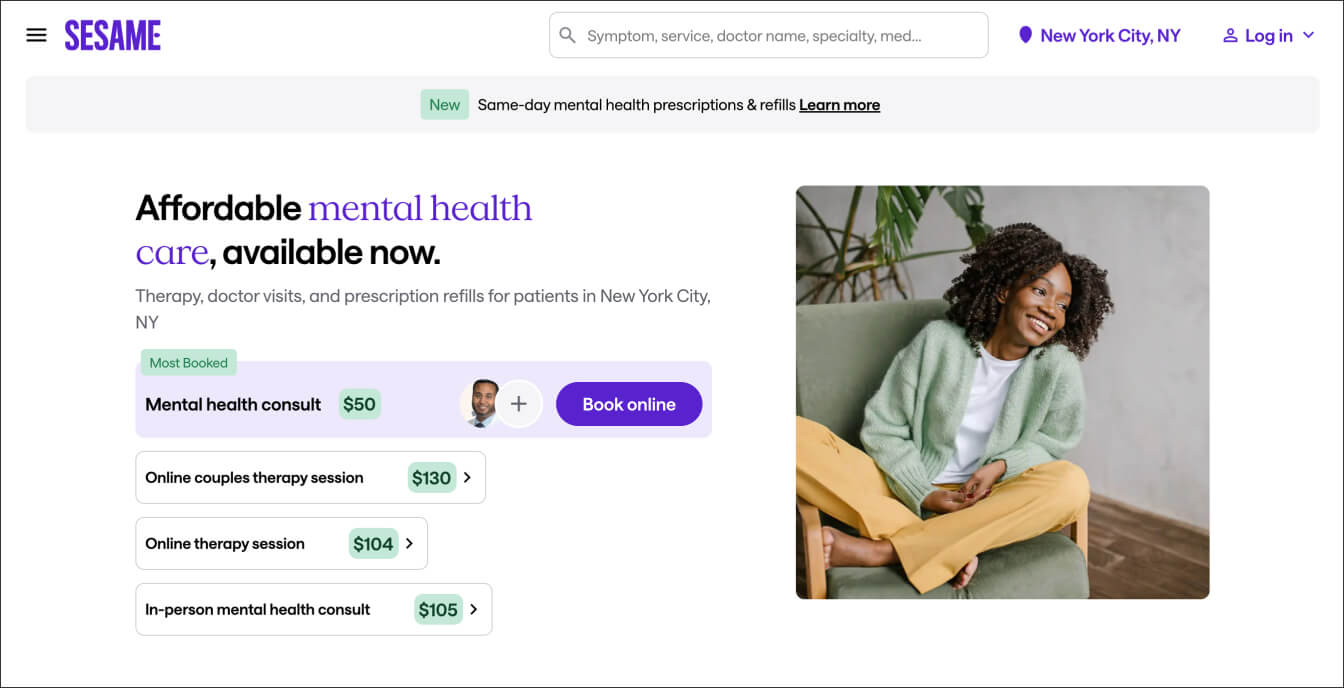
Sesame is an online marketplace platform that connects users with practitioners and specialists for mental and physical health care at transparent prices. Rather than a dedicated mental health platform, Sesame functions as a provider directory where clients can browse and book directly with individual clinicians, including those who offer ADHD and psychiatric services.
This platform’s model works better for episodic care than chronic condition management, and specialist availability may be limited. A more structured platform may be better for individuals who need ongoing ADHD medication management, regular psychiatric follow-ups, or consistent provider continuity. However, Sesame offers an affordable entry point for an initial session.
Cost and insurance
- Does not accept insurance, and no superbill is provided
- Cost without insurance: $79/month Mental Health Rx subscription; Sesame Plus memberships provide discounts on services and are available for $10.99/month or $99/year
Features
- Transparent marketplace model
- Wide availability
- Telehealth and in-person appointments available
- No subscription required
- HSA/FSA accepted for appointment costs
Who it’s a good fit for
People without insurance or on high-deductible plans who want an affordable, no-commitment entry point for an ADHD evaluation.
| Pros | Cons |
|---|---|
| Transparent, low cash-pay pricing | Does not accept insurance |
| Available in all 50 states and Washington, D.C. | Specialist availability varies |
| Browse and choose your own provider before booking | Better suited for episodic care than ongoing medication management |
| Do not prescribe controlled substances, like stimulant medications |
5. Talkspace
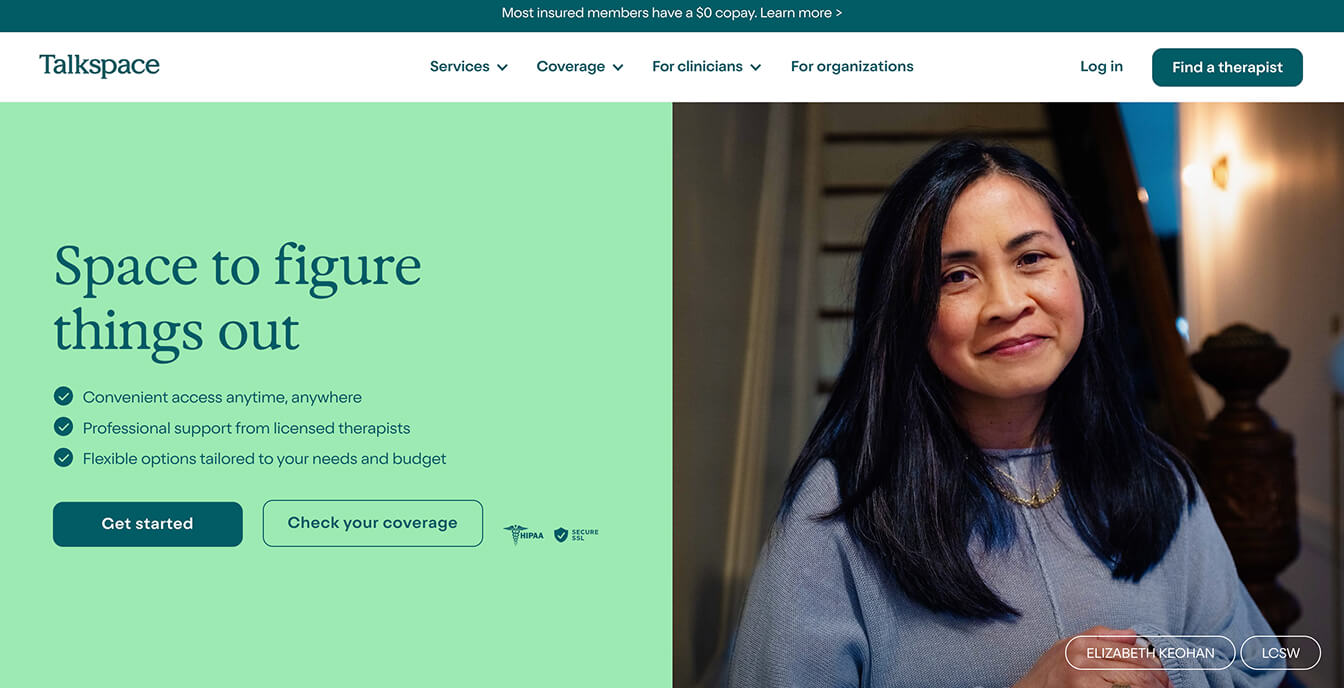
Talkspace is a platform that offers therapy, psychiatry, and messaging-based support for a range of mental health conditions. While the platform offers subscription plans, it also accepts many major insurance plans and EAP programs, making it accessible for people whose employers offer mental health coverage.
For ADHD treatment, Talkspace is suited for people seeking behavioral support combined with medication management. This model can also work well for people who want ongoing access to their therapist between live sessions, including accountability and skills reinforcement.
Cost and insurance
- Accepts many major insurance providers and EAP programs
- Cost with insurance: On average, clients pay a $10 copay
- Cost without insurance: $69 to $109 per week (varies by subscription tier)
Features
- Video, phone, and text-based therapy
- Video-based psychiatric evaluations
- Individual, couples, teen, and LGBTQIA+ therapy options
Who it’s a good fit for
This platform may be valuable for those not using insurance and instead opt for a higher-tier subscription plan that includes both video sessions and messaging with their therapist between appointments, particularly for individuals who do not need medication management.
| Pros | Cons |
|---|---|
| Unlimited messaging with your therapist is available under certain subscription tiers | No in-person care options |
| Specialized programming | Higher-cost subscription-based platform |
6. ADHD Online

Operated by Mentavi Health, ADHD Online is designed for the assessment, diagnosis, and treatment of ADHD. Its diagnostic process uses the Mentavi Smart Assessment, a comprehensive questionnaire developed by psychologists that also screens for co-occurring conditions.
After diagnosis, clients can pursue therapy, medication management, coaching, or a combination of services. The prescription of stimulants and non-stimulants is available in most states, and all appointments are conducted virtually. Plus, the platform is available to adults nationwide for assessments and coaching, and therapy is offered in 40 states.
Cost and insurance
- Does not accept insurance, but HSA/FSA payments are accepted
- Cost without insurance: $199 for initial diagnostic evaluation; $185-$199 per follow-up visit; $220 per psychotherapy session; $59 per mental wellness coaching session
Features
- Ongoing management plans
- Comprehensive, doctorate-level reviewed assessments
- Stimulant prescribing available (varies by state)
Who it’s a good fit for
Adults seeking a thorough telehealth ADHD assessment. Additionally, this platform works well for those without insurance or with limited coverage.
| Pros | Cons |
|---|---|
| Pay-per-session pricing | Insurance is not accepted |
| Psychologist-reviewed diagnosis | Therapy is limited to 40 states |
| Therapy, medication management, and coaching are available in one place |
7. Circle Medical

Rather than an online therapy platform, Circle Medical is a primary care telehealth platform. For people who want to manage their ADHD care within the same platform they use for general health needs, this integrated model is a convenient option. Plus, same- and next-day appointments (including in-person appointments at select locations) are often available.
However, Circle Medical routes ADHD care through primary care physicians rather than psychiatric specialists. This approach allows the platform to successfully support those with straightforward ADHD presentations, but often excludes those with complex needs.
For individuals with complex or co-occurring conditions, a psychiatry-focused platform may be a better match.
Cost and insurance
- Accepts select PPO insurance plans, including Aetna, Cigna, UnitedHealthcare, and Meritain Health
- Cost with insurance: Average of $0-$40 per session with accepted insurance
- Cost without insurance: $179 for initial ADHD appointment; $120 per follow-up visit
Features
- Primary care model
- Same- and next-day video appointments
- Stimulant prescribing available where state law permits
- Pay-per-visit pricing
Who it’s a good fit for
Adults with straightforward ADHD presentations who want to manage their mental and general health care in one place.
| Pros | Cons |
|---|---|
| Integrated primary and mental health care in one place | Not suitable for complex ADHD presentations |
| In-person appointments available at select locations | No therapy or counseling services |
| Does not accept Medicaid or Medicare |
8. BetterHelp
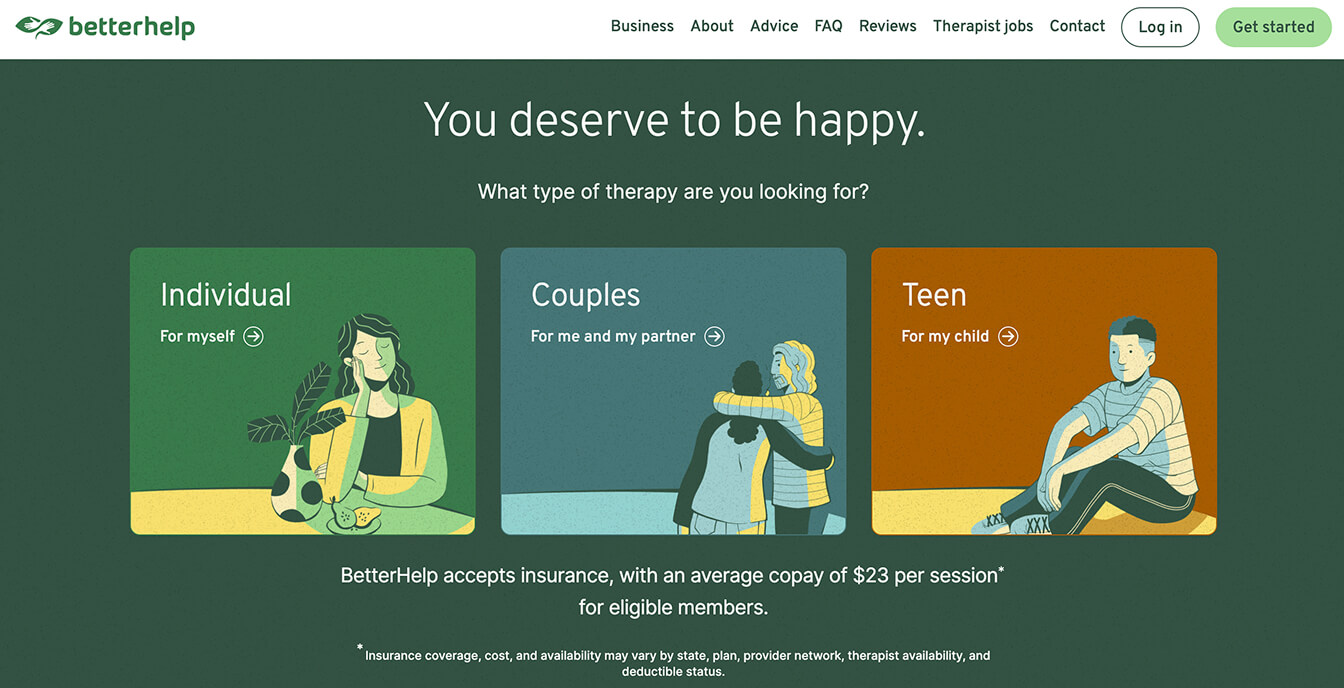
Similar to Grow Therapy, BetterHelp is one of the largest online therapy platforms available, offering access to licensed therapists for a wide range of concerns, including ADHD. The platform accepts certain insurance plans, offers subscription options, requires no long-term commitment, and provides communication options, including chat, phone, and video sessions.
This online ADHD treatment platform’s size translates into a broad network of therapists, offering more provider options than some competitors.
However, BetterHelp does not offer medication management or combined therapy-and-medication ADHD treatment plans. Insurance acceptance is also limited, making it a better option for self-pay clients or those with partial reimbursement through their health plan.
Cost and insurance
- Insurance is accepted in some states
- Cost with insurance: An average copay of $23 per session (varies by plan)
- Cost without insurance: $70-$100 per week
Features
- Live chat, phone, and video sessions
- Unlimited messaging with your therapist
- Options for couples and teen therapy
- Access to group webinars and digital tools
Who it’s a good fit for
Self-pay clients seeking flexible, subscription-based ADHD therapy without medication management.
| Pros | Cons |
|---|---|
| No long-term commitments required | Medication management is unavailable |
| Multiple communication options | Insurance is not accepted in some states |
| Easy rescheduling | Some specialized therapy options are offered through partner sites and may be limited |
9. Teladoc

Teladoc is a broad telehealth platform that offers mental health services, including psychiatry and medication management, alongside general medical care. The platform’s broad insurance coverage and in-platform access to support for sleep, mood, and general health can be useful for people managing ADHD and other health concerns.
This platform focuses more on general care than ADHD-specific treatment, which means the navigation and experience may feel more general than personalized.
However, its flexibility and broad insurer support make it a practical choice for people who want care without switching platforms. Plus, video visits with both therapists and psychiatrists are available, and in-network cost estimates are provided before booking.
Cost and insurance
- Broad insurance acceptance across employer-sponsored plans
- Cost with insurance: Starting at $0 per visit (based on eligibility)
- Cost without insurance: $119 per visit
Features
- Medication management
- Video visits with therapists and psychiatrists
- In-network cost estimates before booking and transparent per-session pricing
- Robust search and filtering tools
- Low-stress scheduling with quick availability
Who it’s a good fit for
Those who already access Teladoc through an employer-sponsored health plan and want to add ADHD care.
| Pros | Cons |
|---|---|
| General medical telehealth available on the same platform | Higher session costs than other competitors |
| Secure telehealth platform | In-person services are not available |
| Interactive tools offer additional support | Providers are matched with clients instead of allowing them to choose their own |
10. Talkiatry

Talkiatry is a telepsychiatry practice staffed exclusively by board-certified psychiatrists who provide ADHD evaluation, medication management, and, in some cases, specialist-level therapy. This platform typically offers initial appointments within a few weeks, which is a meaningful advantage for children, teens, and adults who have been waiting for a thorough evaluation.
Despite its benefits, Talkiatry does not accept self-pay patients, and care is available only to people with in-network insurance. This limits availability, and insurance coverage changes may interrupt treatment even if you want to continue seeing the same provider.
Plus, since Talkiatry is not designed as a therapy-first option, it’s primarily focused on psychiatric evaluation and medication management.
Cost and insurance
- Online appointments are coordinated through insurance
- Self-pay is not accepted
- Cost with insurance: Around $30 per session (varies by plan)
Features
- Personalized medication management
- Therapy sessions following evaluation
- Psychiatric evaluations
- Consistent provider relationships
Who it’s a good fit for
People with in-network insurance who need a thorough psychiatric evaluation and ongoing ADHD medication management from a board-certified psychiatrist.
| Pros | Cons |
|---|---|
| Available for individuals ages 5 and up | Does not accept self-pay |
| Extended sessions for deeper evaluations | Limited or no availability in some states |
| Therapy sessions connected to psychiatric evaluations | Primarily focused on medication management rather than therapy |
What to look for in an online ADHD treatment provider
Not every platform is built the same way, and choosing the right treatment provider depends on what you actually need. Consider these key factors when evaluating your options:
- Find a provider who treats ADHD alongside co-occurring conditions: Anxiety, depression, sleep issues, and learning differences frequently overlap with ADHD, and a provider who understands those connections will be better equipped to build a therapy treatment plan that addresses the full picture.
- Confirm they accept your insurance: ADHD may require multiple appointment types with unique billing, so look for a platform with transparent insurance coverage before you start the intake process.
- Choose a provider you can browse and select yourself: Avoid platforms that auto-assign or match you to providers without giving you the chance to review provider profiles and read bios.
- Check for flexible appointment availability: Platforms that offer evening and weekend appointments, easy scheduling, and reminders can help ensure consistent care.
- Select a platform that fits your financial needs: Beyond insurance, consider whether the pricing model matches how often you expect to have appointments.
The right ADHD treatment starts with Grow
Finding the best online ADHD treatment comes down to one core idea: what you actually need it to look like. For most people, this means ADHD psychiatrists and therapists who accept insurance, a real choice in providers, and continued care as your needs change.
Grow connects you with licensed ADHD providers with no subscription required. Find online ADHD treatment and take the first step toward care that works around your life.