The word “grief” is traditionally linked to death, but life is full of profound, non-death losses. Whether it’s a career setback, a relationship ending, or the loss of financial security, these events take a massive emotional toll.
To better understand the complex reality of modern grief and uncover the emerging trends in coping, Grow Therapy commissioned a national survey. Our results reveal a clear gap between the intensity of these feelings and the number of people seeking help through therapy. This report outlines the current state of loss and the value of connecting with specialized support.
What you should know
- 67% of grieving Americans have not sought professional help, often relying on informal coping methods like solitary time or humor.
- The emotional weight of loss often affects daily life with 39% of grievers reporting they feel disconnected or numb, while 36% experience trouble sleeping or insomnia.
- Grief now extends into economic life, with 37% of Americans citing a loss of financial stability and 20% citing a job loss as significant triggers.
- Millennials (25%) and Gen Z (23%) are the most likely generations to report that professional support was useful in processing their grief.
Almost 70% of grievers skip professional help
The survey reveals a major challenge in mental health access, as 2 in 3 Americans (67%) who have experienced grief have not sought professional support. While many choose to navigate these experiences independently, the absence of clinical guidance can impact the long-term healing process.
As Grow Therapy provider, Rugiatu Bahr, PMHNP, explains, “Healthy coping strategies are essential, but they work best alongside deeper support when grief is complex, traumatic, or long-term.”
In the absence of clinical care, many Americans say they turn to informal support systems and self-management to cope with grief. Time alone to process is the most popular strategy (53%), but people also lean into active social tools such as:
- Humor or shared laughter = 47%
- Spending time in nature or with animals = 43%
- Small acts of kindness = 41%
- Talking openly with someone who’s also experienced loss = 39%
- Spiritual or religious guidance = 31%
- Journaling or creative expression = 16%
These findings highlight a reliance on personal resilience and informal networks. However, specialists note that these tools serve a specific purpose in the immediate aftermath of loss.
“Humor, small acts of kindness, and spending time in nature are good for the soul and are still healthy coping strategies as long as they do not distract us from processing the grief,” says Grow Therapy provider, Monica D. Randle, LPCC, LPC.
How grief impacts daily functioning
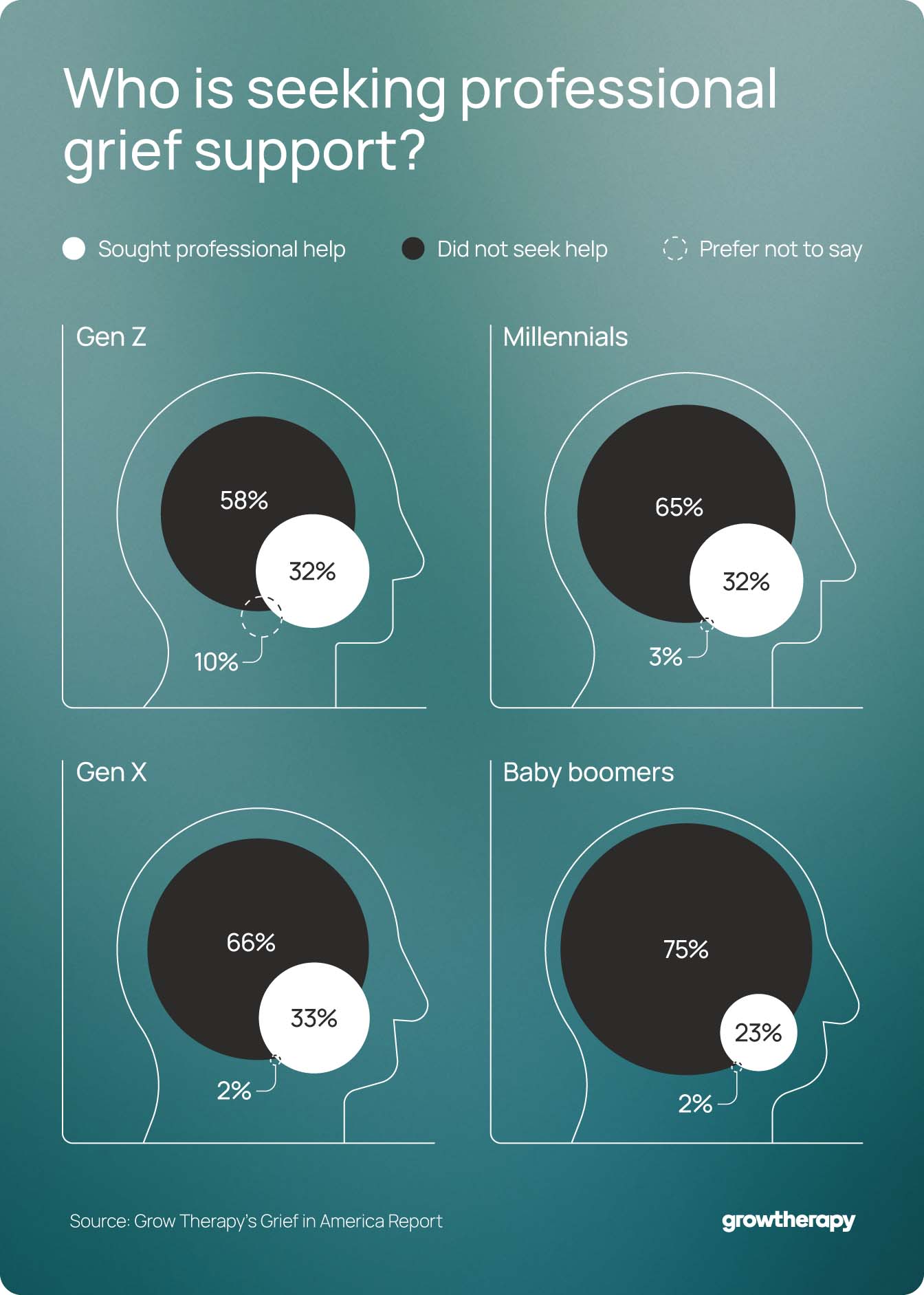
The physical and emotional symptoms reported in our survey reveal how loss often interferes with daily mental and physical activities.
Many of the ways Americans describe their grief include symptoms that overlap with those commonly seen in clinical depression:
- 40% say they cry or feel frequent waves of sadness
- 39% feel disconnected or numb, losing interest in things they once enjoyed
- 36% having trouble sleeping or experience insomnia
- 21% struggle to get out of bed in the morning
These emotional experiences vary by gender and generation. Women are more likely to report overt expressions of sadness, with 52% saying they cry frequently compared to 28% of men. At the same time, men and women report similar levels of difficulty getting out of bed in the morning (20% vs. 22%), suggesting that grief disrupts daily functioning across genders even when emotional expression differs.
These patterns may reflect broader differences in how men and women recognize or report distress. For example, men report turning to drugs or alcohol slightly more often than women (11% vs. 7%), while women more frequently report emotional numbness or disconnection (42% vs. 35%).
Grief-related struggles also look different across generations. Younger adults report higher rates of certain functional challenges, such as Gen Z being more likely to struggle with self-care or hygiene (38% vs. 18% among baby boomers).
At the same time, other indicators of disruption, such as difficulty sleeping or emotional numbness, are reported at similar or higher rates among older age groups. This underscores that grief affects people differently depending on their age.
Loss of financial stability ranks as a top emotional trigger
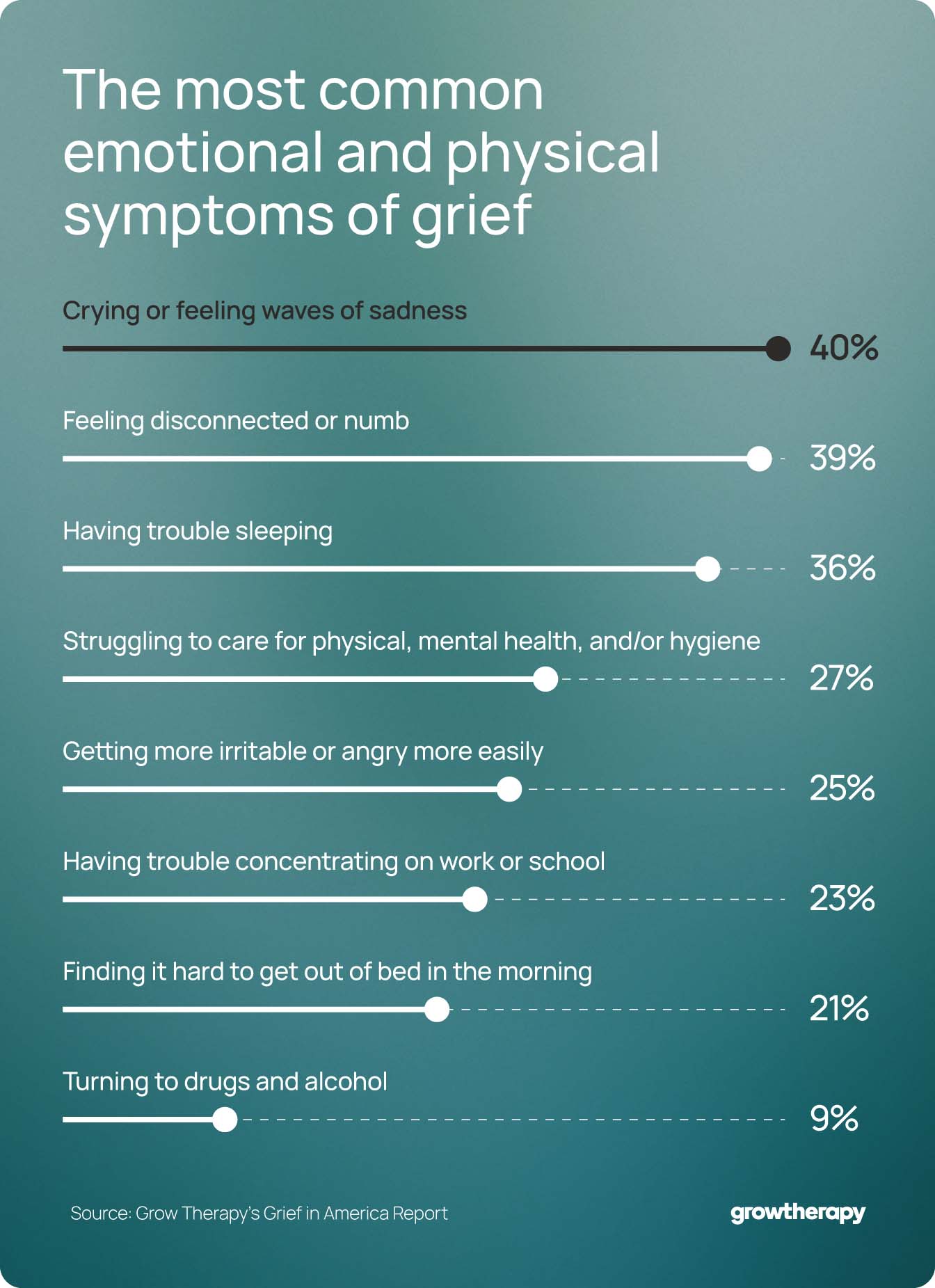
Part of the reason many may not seek help is that they are mourning events not traditionally labeled as “grief.” While the death of a family member or loved one is the most common life disruption (53%), our survey confirms that significant emotional distress is not just solely about mourning human mortality.
Instead, this distress often reflects challenges tied to losses in stability people expected to have, companionship, and health. For example, 37% cite the loss or disruption of financial security, 33% report the loss of a pet, and 30% point to declines in their own health or physical ability as having a major impact on their well-being.
This shift is especially seen in younger generations. Financial hardship is the single greatest emotional trigger for millennials (45%), just barely outranking the death of a loved one (44%).
For older generations, their primary concerns center on the loss of loved ones and their own personal health. Sixty-nine percent of baby boomers cite the death of a family member or loved one as a primary trigger, followed by a decline in their own health or physical ability at 36%.
These results show a clear split in what impacts each generation. While baby boomers focus more on loss of life and health, millennials are struggling just as much with the emotional weight of financial insecurity.
While the sources of distress vary by generation, the emotional toll remains a common experience that requires care and patience to navigate.
As Monica D. Randle, LPCC, LPC, notes, “Giving yourself grace to go through the stages of grief is vital for emotional growth. We need to acknowledge the feeling, feel it, and move through it authentically. Healthy coping strategies to self-regulate are supportive in moving through those emotions… as long as they do not distract us from processing the grief.” to rest (34%) or talk with friends, family, or coworkers (34%), among other coping mechanisms:
Generational attitudes toward professional support
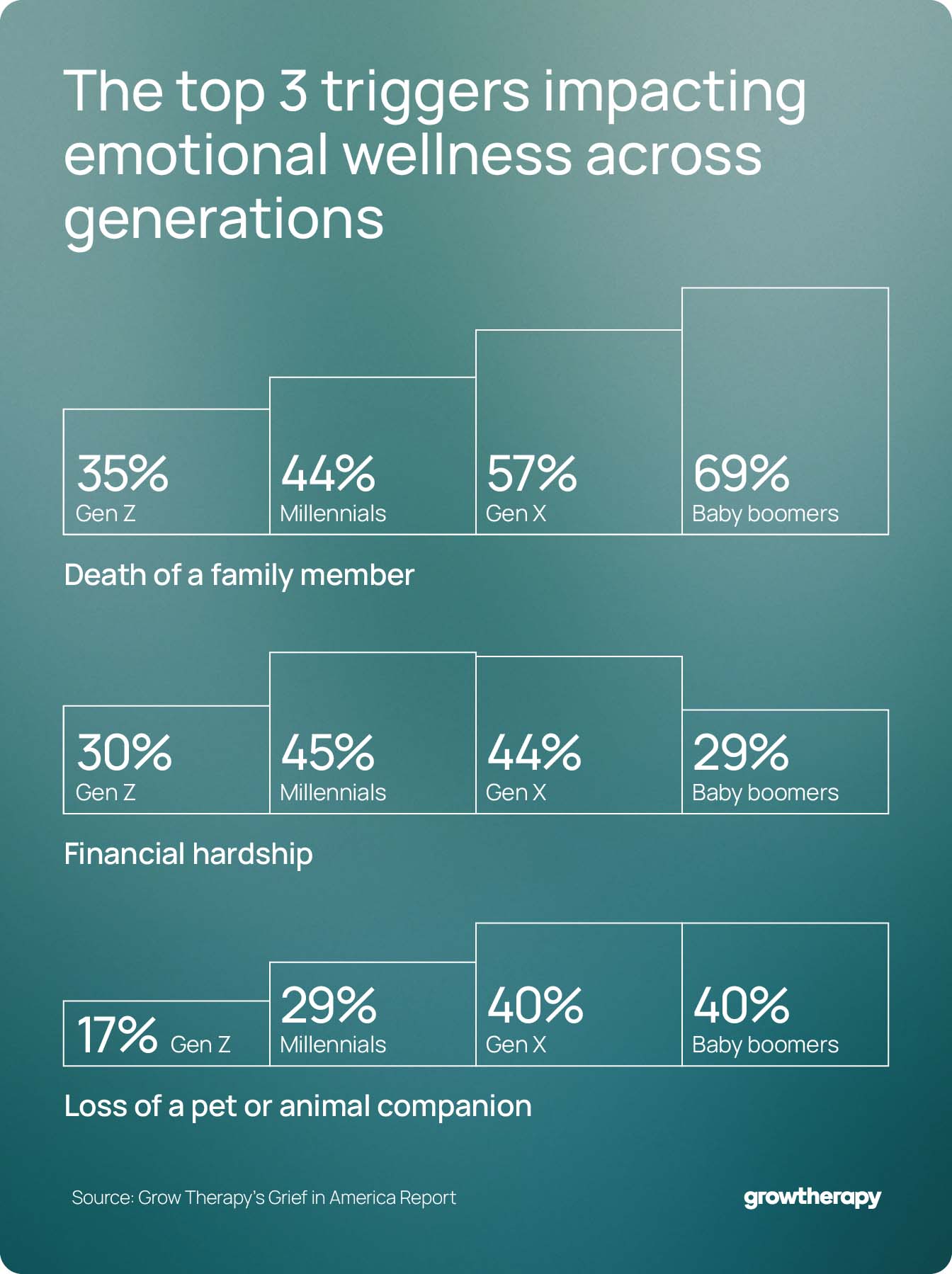
While many people continue to rely on non-clinical coping strategies, there is a clear trend toward professional care among several age groups. Our survey found that Gen Z (32%), Millennials (32%), and Gen X (33%) are more likely to take the step of seeking out professional help, such as grief therapy, compared to baby boomers (23%).
This pattern may reflect generational differences in attitudes toward professional mental health support, as Gen Z, Millennials, and Gen X are also more likely than Baby Boomers to report that therapy was helpful when processing their loss.
This contrast highlights therapy’s relevance for these groups as they seek structured solutions for the non-death losses and financial anxieties dominating their lives.
What this means for healing grief
Loss in America is complex and shared. While Americans are finding their own communal ways to process pain, the nearly 70% of grieving Americans who have not sought professional help illustrate how millions are enduring significant distress without clinical support.
Grow Therapy serves as a trusted partner, connecting you to therapists and other providers who offer evidence-based, personalized therapy. Our providers can help you integrate your own positive coping methods with clinical tools for deeper, lasting recovery.
If you or a loved one are navigating a difficult life change, you do not have to process it alone. Take the next step in your healing journey by finding a Grow Therapy provider who can offer personalized grief intervention.
Methodology
The survey was conducted by YouGov for Grow Therapy. The survey was fielded between November 6-7, 2025. The results are based on 1,254 completed surveys. Data is weighted, and the margin of error is approximately +/-3% for the overall sample with a 95% confidence level.