New moms (and pregnant women, and women navigating fertility challenges) should be able to easily access mental health care. However, the gap between what should be true and what is true remains wide — and it’s why Grow Therapy sponsored The Power of X this year.
We joined because maternal mental health remains one of the most underserved areas in behavioral health. It mattered to be in conversation with the clinicians, companies, and advocates focused on improving care.
Key takeaways
- Maternal mental health is underserved, with high rates of postpartum depression and limited access to care in many regions
- System gaps like maternity care deserts and limited postpartum insurance coverage delay or prevent needed mental health support
- Proactive care like “mental health go bags” helps prepare mothers before crises arise and improves outcomes
- Coordinated, long-term care beyond pregnancy is essential as maternal health impacts future physical and mental health risks
- Improving access requires integrated systems, policy changes, and ensuring referrals connect patients to available, in-network care
What the data tells us
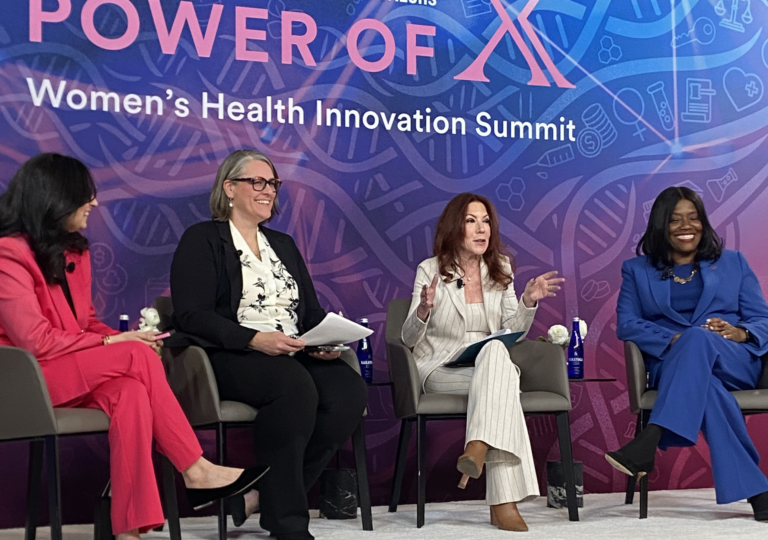
I had the privilege of joining Dr. Joanne Stone (Chair of OBGYN and Reproductive Science at Mount Sinai) and Stacey Brayboy (SVP of Public Policy at March of Dimes) on a panel organized by Cure and Women’s Health Horizons that didn’t pull punches:
- 1 in 8 women experience postpartum depression
- 1,124 counties across the U.S. are maternity care deserts — no OBGYNs, no birthing centers, sometimes no hospitals
- Maternal mortality from suicide and overdose often peaks months after delivery, long after clinical coverage has lapsed
- In most states, Medicaid coverage ends well before a year postpartum
These aren’t abstractions. They’re the realities shaping the lives of patients who need care right now.
Answers at every level
What made this panel worth remembering was that each panelist came with solutions, not just problems.
At the clinical level: Build the infrastructure before the crisis.
This is something I think about constantly in my work at Grow. New and expecting mothers need emotional preparation the same way they pack a hospital bag — what I like to call a “mental health go bag.” Identifying trusted people, knowing what insurance covers, naming fears out loud before they become emergencies. It goes beyond reactive care, focusing on steady support during a vulnerable time.
At the systems level: Pregnancy is the window into future health.
Dr. Stone made the case that the six-week postpartum visit shouldn’t function as a goodbye. Conditions during pregnancy — hypertensive disorders, gestational diabetes, pregnancy loss — predict cardiometabolic risk, mental health vulnerability, and more for decades to come. Care shouldn’t fall apart after delivery. It needs to stay coordinated and easy to navigate.
At the policy level: We’re closer than you think.
Stacey Brayboy shared that 48 states have adopted Medicaid postpartum extension policies, with Wisconsin close behind and Arkansas the only state remaining. That’s not a reason to slow down — it’s a reason to keep pushing. As Stacey put it, change happens when communities are brought into the conversation, not just consulted after decisions are made.
What the broader conversation reinforced
A few themes kept coming up throughout the day:
Telehealth has removed one of the biggest barriers to care, but it comes with caveats. The future is personalization and precision, but we have to build on a foundation of real data.
There was also a consistent reminder that small actions add up. Asking one question about pregnancy complications during an ER intake. Including a depression screening into a routine visit. Trust is often built in those moments, well before anything acute happens.
The throughline
Dr. Stone said it plainly: we can’t just tell a patient “you should see someone.” Screening only works if there’s actually somewhere to send them, like a therapist who takes their insurance and has availability.
That’s the gap Grow Therapy was built to close. When an OBGYN identifies a patient who needs support, we receive the referral, reach out to the patient directly, match them with a provider who accepts their insurance, and close the loop. We can send clinical updates back to the referring physician so care is never siloed. A mom in crisis shouldn’t have to sort through directories or waitlists to get care.
Why this moment matters
Stacey closed by sharing her own experience with postpartum depression after a physician told her to “stop being a kid and be a mom.” She didn’t get the support she needed in that moment and had to find care on her own. Her daughter is now 12, and she has spent her career making sure other women don’t have to find their way alone.
Stories like that are a big part of why events like The Power of X matter, and why Grow continues to be part of this work alongside clinicians every day.