
Many people want a relationship that lasts, but new survey data from Grow Therapy reveals a significant gap in how often couples lean on professionals for help. While 71% of people who have attended couples therapy saw a noticeable improvement in their relationship, only 15% of U.S. adults have ever actually tried it.
This gap is most obvious when looking at why people finally go. Our survey found that 26% of divorced people have tried couples therapy, compared to only 20% of married people. This suggests that some couples are using therapy to handle the end of a relationship rather than using it as a tool to stay together.
To better understand this dynamic, we surveyed over 2,500 American adults and talked to field experts to uncover common barriers keeping couples from therapy and the specific improvements reported by those who have taken the leap.
Key takeaways
- 15% of U.S. adults have attended couples therapy with a current or former romantic partner. Another 16% have not attended but have considered it.
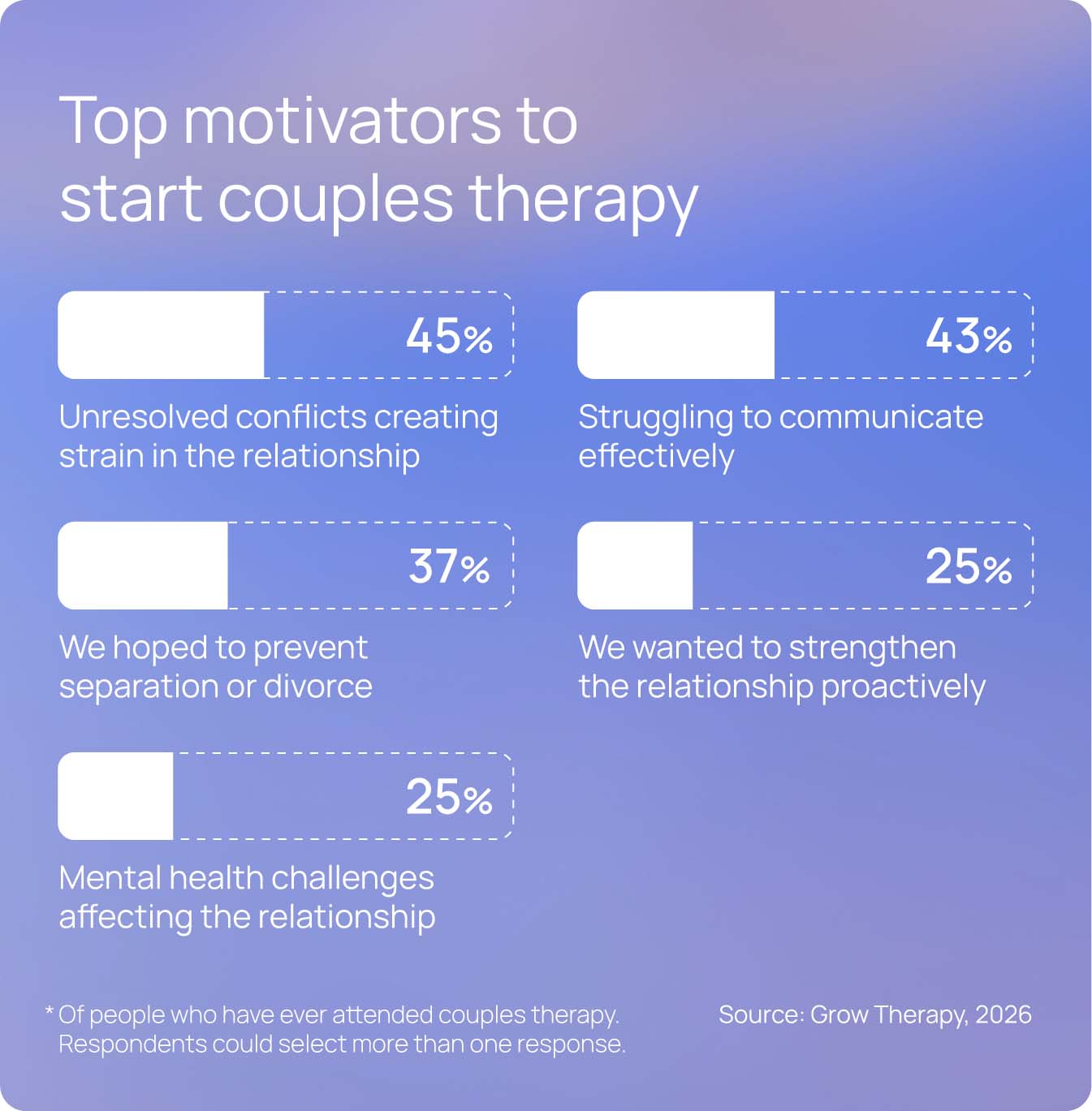
- People most commonly attended couples therapy because ongoing conflicts were creating strain within the relationship (45%) or they were struggling to communicate with a partner (43%).
- Among divorced adults who went to therapy, 56% did so as a final attempt to prevent a split — compared to just 23% of the general population.
- 71% of people who have attended couples therapy saw improvement in their relationship.
- The most common benefits of couples therapy included better communication (34%) and a stronger overall relationship (30%).
Most divorced couples never bothered with therapy
While mental health awareness in the U.S. is at an all-time high, that hasn’t quite translated to the couples therapy room yet.
Currently, 66% of people have never attended couples therapy and have not even considered it. This might suggest that many people make major life decisions, such as ending a marriage, without ever consulting a professional who specializes in repairing connections.
In fact, our data shows that the vast majority of people who get divorced have never tried therapy. Only 26% of divorced individuals in our survey reported attending couples therapy with a former partner. This gap highlights a significant missed opportunity.
Many couples may be turning to divorce lawyers who specialize in separation before first consulting therapists who specialize in healing.
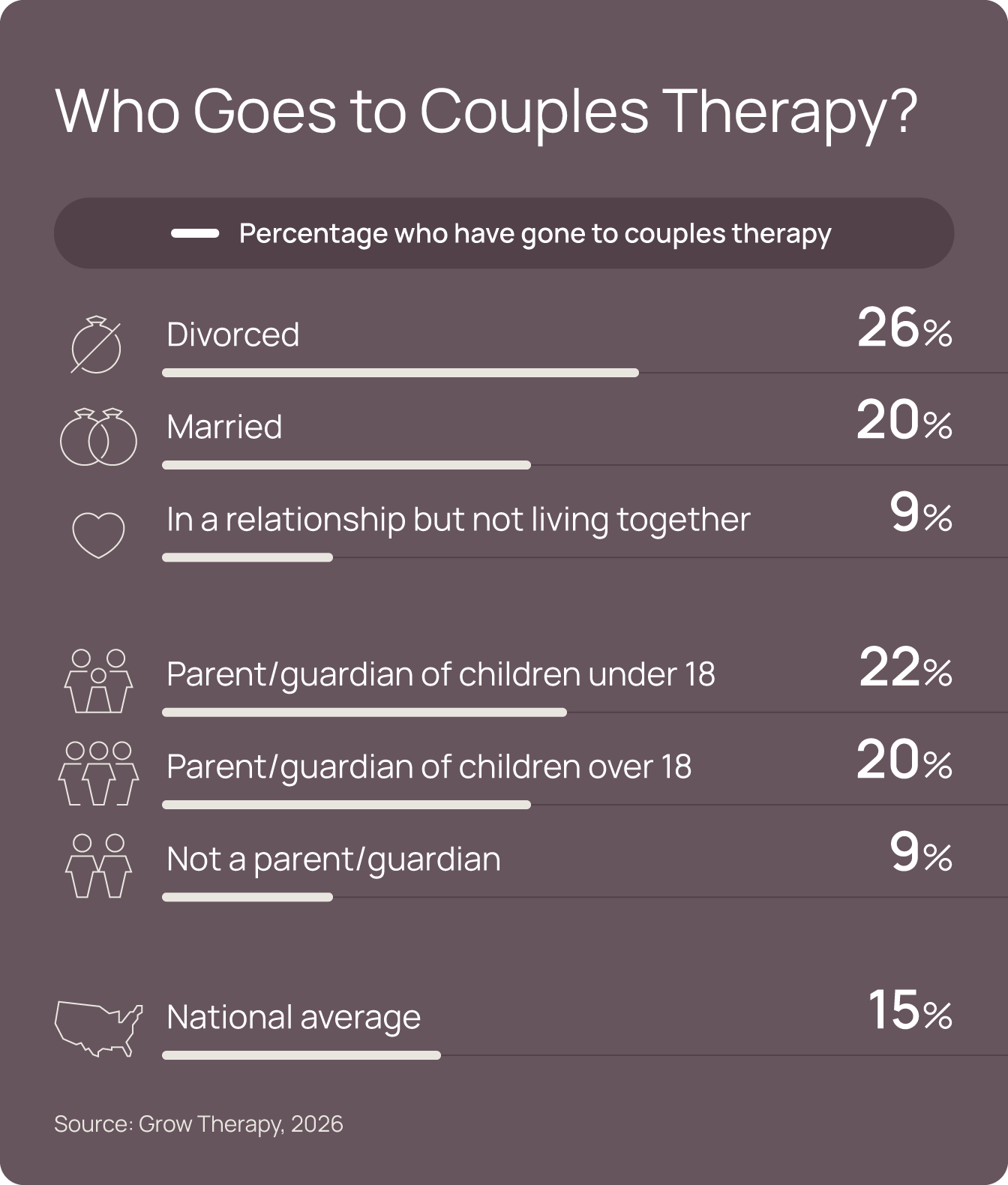
The tendency to bypass professional help is especially visible among older generations. While Baby Boomers (18%) are slightly more likely to have tried couples therapy than younger groups, they are also part of the fastest-growing demographic for divorce.
Researchers have tracked this “gray divorce” trend for years, noting that rates for those over 50 continue to climb even as overall divorce rates drop. For many in this age group, therapy appears to be a last resort rather than a way to prevent the end of a long-term commitment.
The data also shows that major home-life changes are a primary motivator for those who do seek care. For instance, parents often reach out for support during the high-pressure years of raising a family. We found that 22% of those with children under 18 have attended therapy, compared to only 9% of those without children.
Treating relationship health as a regular habit during these transitions can help couples address common relationship issues before they lead to a legal separation.
There may be more reasons to go to couples therapy than people expect
The physical and emotional symptoms reported in our survey reveal how loss often interferes with daily The most significant barrier to couples therapy isn’t necessarily a lack of resources, but a lack of perceived necessity.
Our survey found that 54% of people who have never attended couples therapy say they simply haven’t had a reason to.
This suggests a widespread belief that a relationship must be in crisis to justify professional support. That mindset may lead to some couples overlooking the benefits of using therapy to navigate smaller arguments or relationship anxiety before they become stressors.
When people do identify a specific obstacle to making an appointment, the reasons are often as much about logistics as they are about interpersonal dynamics. Two of the most common reasons for not attending were tied at 11%:
- The cost of insurance coverage
- A partner who wasn’t interested
The insurance concern is a significant hurdle because many couples assume that relationship counseling is an out-of-pocket expense. Without clear information on coverage, the potential cost of marriage counseling can stop a couple from even starting their search.
When you combine financial uncertainty with the fact that one partner may already be hesitant, these logistical barriers often become the deciding factor in staying home.
Many providers stress that couples don’t need to wait for a breaking point before reaching out for support:
“Couples therapy works best as preventative care, or routine maintenance, not emotional emergency surgery. When couples start therapy early, they’re usually calmer, less defensive, and more open to learning. That means we get to focus on strengthening communication, building emotional safety, and understanding patterns instead of just trying to stop the relationship from actively bleeding.”
Jessica Frederic, LCSW and Grow Therapy provider
This is particularly true for women in our survey, who were twice as likely as men (15% vs. 8%) to report that their partner’s lack of interest kept them from the therapy room. This gender discrepancy is further highlighted by those who eventually make it to a session.
Men were twice as likely as women (22% vs. 10%) to say they started couples therapy because “a partner requested that we go.” While a partner’s lack of interest more frequently deters women, men are significantly more likely to use a partner’s direct invitation as the primary catalyst for attending their first session.
Communication struggles drive people to couples counseling
Most couples seek professional support only when conflict becomes impossible to ignore. Our survey found that 45% of those who have attended couples therapy were motivated by ongoing or unresolved conflicts, while 43% cited a struggle to communicate effectively.
Looking at the data by age reveals a shift in where different generations stand:
- Baby Boomers (47%) were the most likely to use therapy as a final attempt to prevent separation or divorce.
- Gen X (51%) are the most likely to admit they struggle to communicate effectively with their partner.
- Gen Z are looking ahead the most, with 35% wanting to strengthen their relationships proactively.
- Gen Z (38%) are also significantly more likely to start therapy based on a friend’s recommendation.
Waiting for a breaking point often raises the stakes — and the potential cost of marriage counseling — if issues like infidelity or broken trust become the primary motivators for attending.
For example, 56% of divorced adults who attended therapy did so to prevent a split, and 34% cited infidelity or broken trust as a motivator. These figures are significantly higher than the national average of 23%, suggesting that by the time these high-intensity issues are addressed in therapy, the relationship may already be in jeopardy.
There’s also a gender divide in primary motivators for seeking relationship support. Women were more likely than men to be motivated by the desire to proactively strengthen the relationship (28% vs. 18%).
This finding suggests that, while women often seek therapy early to maintain relationship health, men may wait until there is a specific problem to fix. This proactive approach helps explain why women are twice as likely to be deterred by a partner’s lack of interest — they are often trying to start therapy before a breaking point makes the need obvious to both people.
Therapists tell us that by the time many couples arrive in session, it’s usually about patterns that keep repeating.
“Most couples don’t come to therapy because of one single argument, but because the same issues keep repeating without resolution. It’s not just the topic of the argument, but the pattern of feeling unheard, misunderstood, or stuck in cycles where neither partner feels truly seen. Therapy becomes a place where couples can finally slow those patterns down and understand what’s really driving the conflict beneath the surface.”
Erika N. Jackson, LMFT and Grow Therapy provideR
Couples therapy has positive results, but many wait too long to use it
The data offers a clear encouragement for those considering professional support, revealing that 7 in 10 people who have attended couples therapy experienced noticeable improvements. Far from being a sign that a relationship is doomed, only 19% of respondents realized their relationship was no longer sustainable after attending.
Many therapy attendees walked away with practical benefits:
- 34% reported improved communication
- 30% felt they strengthened the relationship overall
- 26% experienced an increased emotional connection
While the overall rates of reported improvement are strong and nearly identical between genders, men and women often walk away with different takeaways.
Men in our survey reported higher rates of improvement across nearly every category, particularly in overall relationship strengthening. However, women were more likely to use therapy as a clarifying tool, reporting higher rates of realizing whether a relationship was healthy enough to continue.
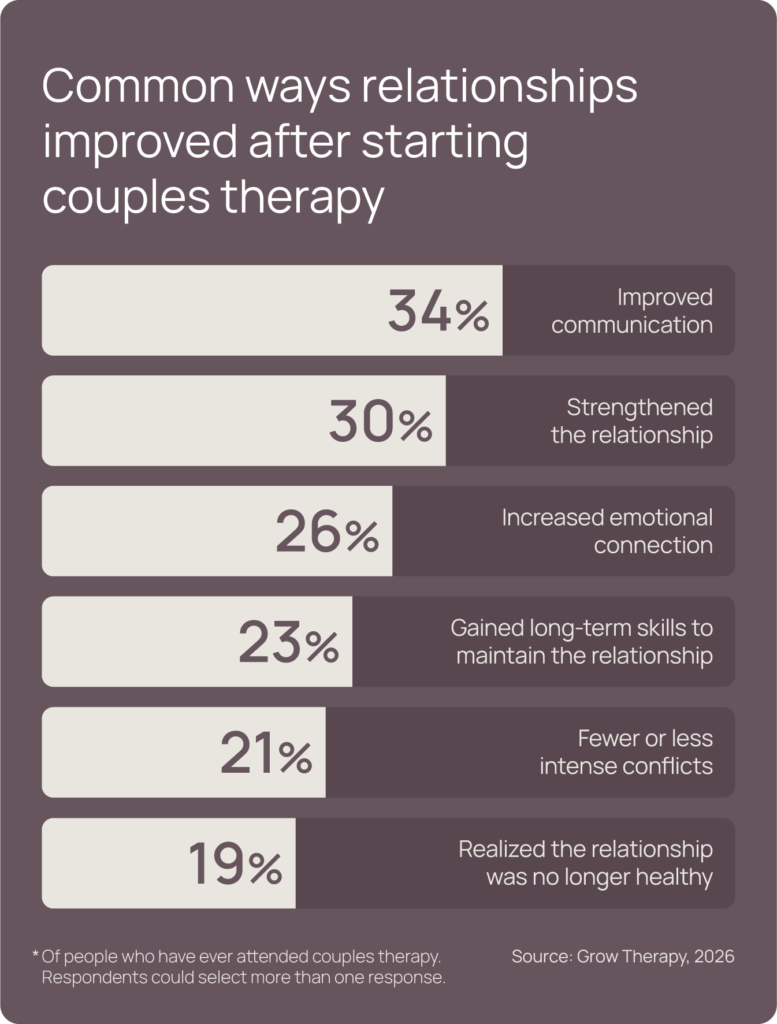
Parenthood also seems to amplify the positive impact of therapy. Parents of children under 18 reported higher success rates in almost every category compared to those without children.
This suggests that for those navigating the high-pressure environment of raising a family, therapy-related benefits — such as fewer or less intense conflicts — can offer a particularly high return on investment.
Ultimately, these results suggest that couples therapy is an underutilized resource for anyone looking to build a more resilient bond. You don’t have to wait for a crisis to become a better partner. Learning to communicate and work together is a skill that can benefit any relationship, regardless of its current state.
Couples in need want a neutral, skilled advisor
When it comes to selecting a therapist, objectivity is the top priority. Many partners are now exploring both in-person and online therapy options for couples to find an unbiased professional who can mediate without bias.
According to our results, the most important qualities respondents look for in a couples therapist are:
- Someone who doesn’t take sides (54%)
- Affordability and insurance coverage (52%)
- Expertise in communication and conflict resolution (51%)
While specialized traits like having a direct, “tell-it-like-it-is” style (38%) were less common priorities overall, these preferences vary significantly across different communities. For many, the search for a therapist is more about finding someone who understands their foundational worldviews.
For example, 27% of Black respondents prioritized a therapist who shares their cultural background or values. This potentially correlates with recent research that indicates spiritual and cultural values are frequently viewed within the Black community as inseparable from mental wellness.
Similarly, respondents in the South (22%) showed a higher-than-average preference for shared values. In regions where faith is a cultural staple, some individuals may turn to clergy or pastoral counselors for guidance before considering a licensed therapist.
While faith leaders offer vital spiritual support, they may not always be trained in the specific clinical techniques required to navigate significant marital crises or deep-seated behavioral patterns.
For couples with significant or long-standing issues, finding a licensed provider who can integrate these shared values with clinical expertise is often the key to a successful outcome.
You’ve found your partner — now find your therapist
Finding the right therapist is a lot like dating because it requires choosing the best fit for your unique relationship dynamic. Meeting with a few different professionals is a normal part of the process until you find the person who truly understands your needs and makes both partners feel supported.
Whether you are looking for a provider who shares your cultural values or a neutral voice to help you navigate a major life transition, the right support is out there. Prioritizing your relationship health today helps you build the foundation for a more resilient and connected future together.
If you’re ready to take the next step, Grow Therapy makes it easy to find a couples therapist who fits your needs, accepts your insurance, and is ready to help you grow stronger together.
Methodology
The survey was conducted online by YouGov with a total sample size of 2,514 adults. The results have been weighted and are representative of all US adults 18 years old and older.
Fieldwork was undertaken from December 18 to December 22, 2025. Respondents were selected from the YouGov panel using randomized invitations and completed the survey via an online interview.