Nearly half of adults with attention-deficit/hyperactivity disorder (ADHD) also meet the criteria for an anxiety disorder, making it one of ADHD’s most common companions.
If you’ve ever wondered whether your anxiety might actually be ADHD, or if your ADHD is affecting your anxiety, you’re not alone. And you’re asking the right questions. The challenge is that both conditions share several surface-level symptoms, which can make it difficult to know what’s driving what and how to get the right kind of support.
Whether you’re already diagnosed or you’re starting to connect the dots, this guide breaks down how ADHD and anxiety relate. Read on to learn how to distinguish their symptoms from each other and other conditions like PTSD and bipolar disorder, and what evidence-based treatment options are available.
Key takeaways
- 47% of adults with ADHD also have an anxiety disorder.
- ADHD and anxiety share overlapping symptoms, including trouble concentrating and sleep disruption.
- An ADHD-anxiety feedback loop can develop when ADHD-related struggles fuel real-world stress that worsens anxiety.
- Effective treatment addresses both conditions together instead of in isolation.
ADHD vs. anxiety: Where their symptoms overlap and diverge
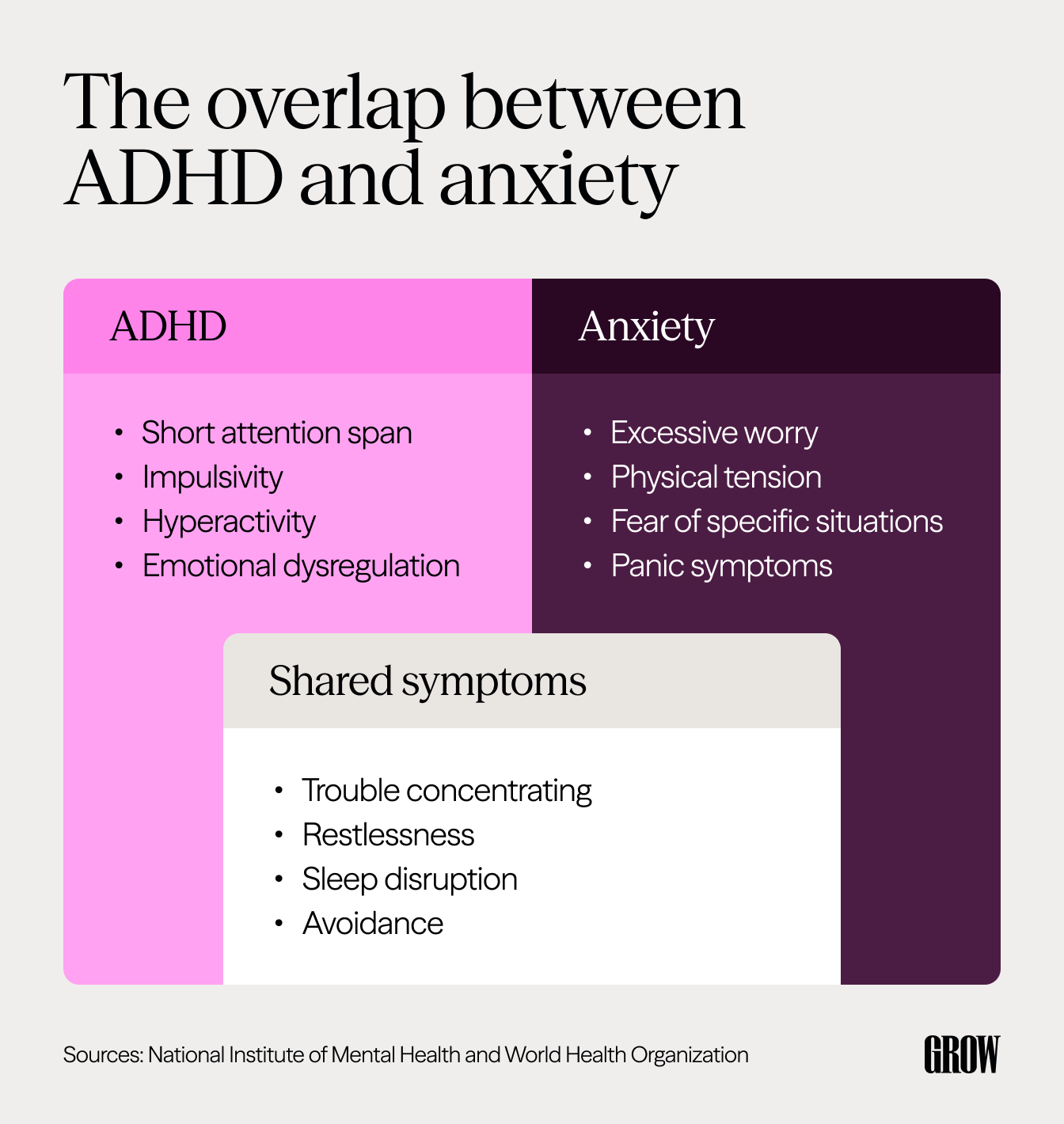
ADHD and anxiety often look remarkably similar, with several overlapping symptoms. But the underlying reasons for those symptoms are different, and those differences matter for treatment. Also, the presence and effects of symptoms can differ from person to person.
Below, we dive into the most common symptoms of these two conditions, including what sets them apart:
| Symptom | ADHD | Anxiety | Main difference |
|---|---|---|---|
| Trouble concentrating | ✔ | ✔ | ADHD: Stems from dysregulation and executive function. Anxiety: Caused by persistent worry that crowds out other thinking. |
| Restlessness | ✔ | ✔ | ADHD: Rooted in the nervous system’s dysregulation. Anxiety: Caused by mental tension rather than a drive to act. |
| Sleep disruption | ✔ | ✔ | ADHD: Often tied to difficulty winding down, a mind that won’t stop running, delayed sleep phase, or hyperfocus. Anxiety: Usually driven by worry or rumination. |
| Avoidance | ✔ | ✔ | ADHD: Tasks are unstimulating or overwhelming to start. Anxiety: May be caused by a fear of failure or judgment. |
| Emotional regulation | ✔ | ADHD-specific | |
| Short attention span | ✔ | ADHD-specific | |
| Impulsivity | ✔ | ADHD-specific | |
| Hyperactivity | ✔ | ADHD-specific | |
| Task paralysis | ✔ | ADHD-specific | |
| Excessive worry | ✔ | Anxiety-specific | |
| Impending sense of doom | ✔ | Anxiety-specific | |
| Fear of specific situations | ✔ | Anxiety-specific | |
| Panic symptoms | ✔ | Anxiety-specific | |
| Need for control | ✔ | Anxiety-specific | |
| Irritation | ✔ | Anxiety-specific |
ADHD symptoms
ADHD is a neurodevelopmental condition that affects how a person focuses, manages impulses, and organizes their daily life. It is often identified in childhood, but many adults also live with undiagnosed or ongoing ADHD symptoms.
The DSM-5-TR recognizes three primary presentation types:
- Predominantly inattentive, including difficulty sustaining focus and following through on tasks.
- Predominantly hyperactive-impulsive, including restlessness, interrupting, and acting before thinking.
- Combined type, which is characterized by symptoms of the former presentations.
Symptoms for those with ADHD can look different depending on the person and presentation type. Plus, inattentive and combined-type ADHD are frequently missed in women and girls, who are more likely to internalize symptoms rather than display the more visible hyperactive behaviors.
Despite these differences, the most common daily life ADHD symptoms include:
- Difficulty sustaining attention on tasks or conversations
- Frequently losing items or forgetting appointments
- Struggling to follow through on multi-step tasks
- Talking excessively or interrupting others
- Difficulty waiting or sitting still
- Time blindness, such as losing track of how long tasks take
- Emotional dysregulation, including rapid frustration or overwhelm caused by overstimulation
- Task paralysis and the difficulty of starting a task, even when motivation exists
Anxiety disorder symptoms
Anxiety disorders are characterized by excessive worry or fear that is disproportionate to the situation and persistent enough to interfere with daily life. The most common type, generalized anxiety disorder (GAD), involves worry that can attach to nearly anything, including work, health, relationships, and the future.
Before diving into the symptoms, it’s worth distinguishing clinical anxiety from everyday stress. Many people feel anxious before big presentations or difficult conversations, but anxiety disorders feel harder to control, out of proportion, and unresolved.
Noting this difference, these are the most common anxiety disorder symptoms:
- Persistent, hard-to-control worry and hypervigilance
- Physical tension, like tight muscles and headaches
- Restlessness or feeling keyed up
- Difficulty concentrating due to intrusive or looping thoughts
- Sleep disruption, such as trouble falling asleep or staying asleep
- Fatigue from sustained worry
- Avoiding situations and anxiety triggers that cause fear or discomfort
There are also anxiety subtypes, like social anxiety disorder and panic disorder, that share these symptoms and additional (often physical) symptoms like rapid heart rate or shortness of breath.
How to tell which condition is driving a symptom
Because ADHD and anxiety share so many surface features, even experienced clinicians take care to disentangle them. One of the most useful tools is asking “why” behind each symptom.
The following questions aren’t diagnostic tools, but they can help you articulate your experience more clearly when you speak with a provider:
- Is the worry tied to a specific fear, or does it seem to attach to everything?
- Does the restlessness feel driven and physical, or tense and mental?
- When you avoid a task, is it because it feels overwhelming to start, or because you’re afraid of how it will go?
- Does your mind race because it jumps from thought to thought, or because it keeps returning to the same worry?
- Do you feel better once a stressful event has passed, or does the worry persist regardless?
These aren’t meant to replace a professional anxiety or ADHD evaluation, and a licensed clinician can assess patterns across settings and time to determine the root cause of your symptoms.
The impact of the ADHD-anxiety loop
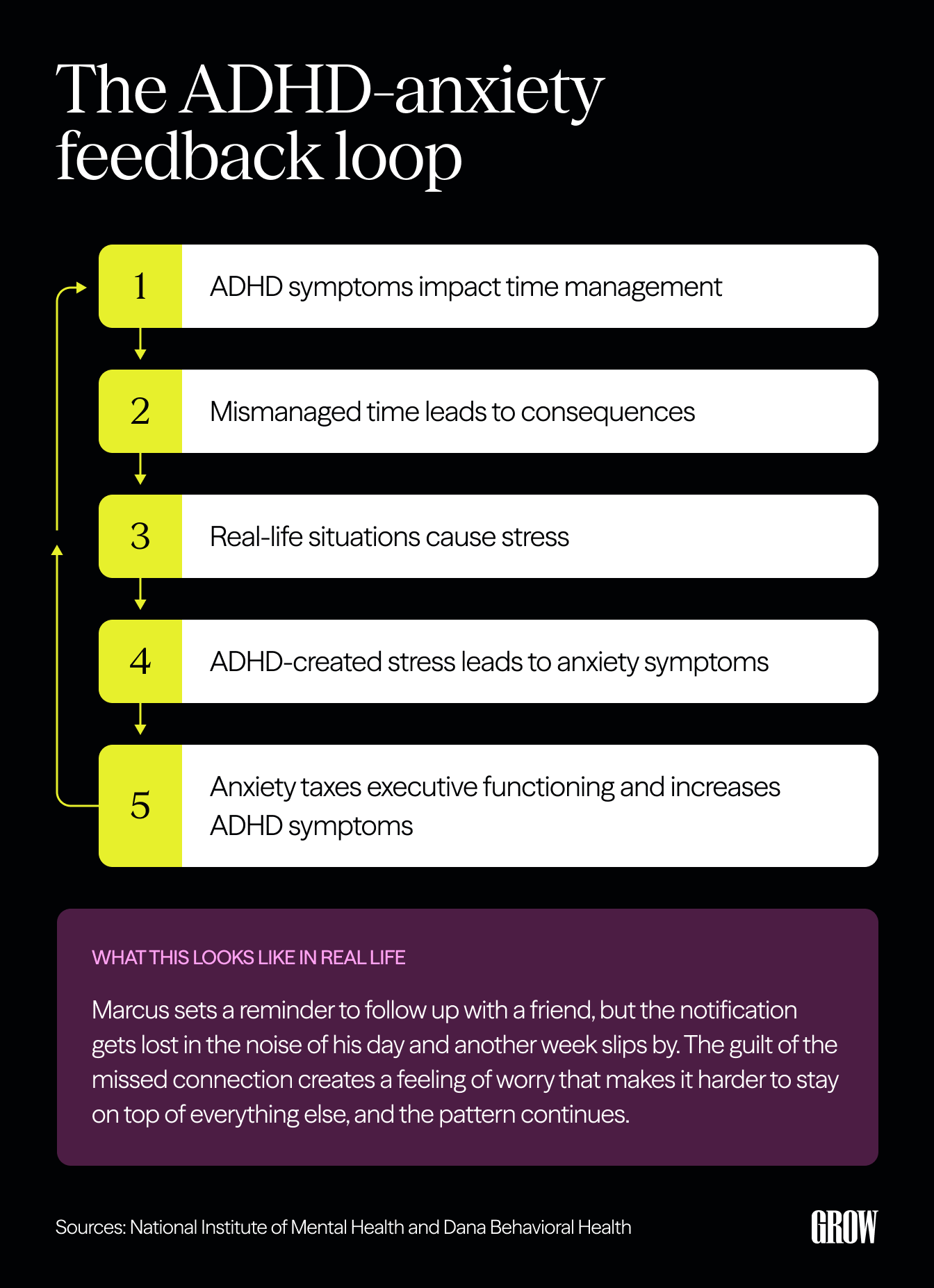
ADHD and anxiety can each actively worsen the other, creating a feedback loop that can be overwhelming. Here’s an example of how this loop may work:
- ADHD executive function challenges may make it harder to manage time, remember deadlines, and follow through on commitments.
- Mistakes can lead to real consequences, like missed meetings or strained relationships.
- This leads to genuine stress from real-life situations.
- Over time, this stress can evolve into anxiety, with symptoms like constant internal worry and irritation.
- This anxiety, in turn, creates a mental load that taxes executive function, making ADHD symptoms harder to manage, leading back to step one.
Anxiety can also mimic the cognitive drag of ADHD, consuming memory and attention. Plus, stimulant medications, which are often prescribed for ADHD, can increase anxiety symptoms in some people. While this isn’t universal, it can mean that managing co-occurring conditions often requires coordinated care from providers who understand both.
Treatment options for ADHD and anxiety
There’s no one-size-fits-all approach to treating ADHD and anxiety in adults and children, but most people benefit from a combination of therapy, lifestyle adjustments, and medication when appropriate. When both conditions are present, the goal is often coordinated care through these types of evidence-based options:
Therapy approaches
Therapy is widely used to help people with ADHD and anxiety recognize unhelpful thought patterns and learn strategies to manage them. The most common forms include:
- Cognitive behavioral therapy (CBT) can help clients build executive function skills such as time management and goal setting.
- Mindfulness-based cognitive therapy (MBCT) simultaneously targets impulsivity and anxious thought patterns.
- Dialectical behavior therapy (DBT) works well for people with significant emotional dysregulation alongside ADHD and anxiety.
Professionals can adapt these approaches to address both conditions, focusing on cognitive restructuring and anxiety relief.
Medication considerations
Medication can also play a key role in ADHD and anxiety management. Providers often prescribe stimulant medications for ADHD, but they may also consider non-stimulant options. Plus, when anxiety is a co-occurring condition, providers can use SSRIs or SNRIs alongside ADHD-specific treatments.
Getting the balance of ADHD and anxiety medication typically requires time and ongoing monitoring. For the best support, these decisions should be made in partnership with a psychiatrist or psychiatric mental health nurse practitioner (PMHNP) experienced with co-occurring conditions.
If you’re managing both ADHD and anxiety, it’s especially important that your prescribing provider knows the full picture, including all medications and how symptoms are affecting your daily life.
Lifestyle and self-management strategies
Lifestyle factors won’t replace professional treatment, but they may meaningfully support it. Some of the top lifestyle inclusions are:
- Exercise: Regular aerobic exercise a few times per week has well-documented benefits for both ADHD and anxiety.
- Sleep: A consistent bedtime routine and limiting screen time before bed can help break the cycle of sleep disruption.
- Caffeine reduction: Caffeine can increase anxiety, and reducing intake (especially later in the day) may be worth considering.
- Structure and routine: Predictable routines and external scaffolding (like written to-do lists and phone reminders) may reduce the executive function demands and uncertainty of ADHD and anxiety.
- Mindfulness and breath work: Even brief practices can improve attentional control and reduce physiological anxiety responses.
Find support for ADHD and anxiety conditions with Grow Therapy
ADHD and anxiety together can feel like a lot to carry. But with the right providers and tools, both conditions are treatable. Finding an anxiety and ADHD provider whose profile indicates experience with co-occurring conditions, ADHD in adults, or anxiety disorders specifically can make a meaningful difference in your care.
Whether you’re ready to start therapy or just want to understand your symptoms, Grow Therapy makes it possible to browse licensed providers and take the first step toward ADHD and anxiety care.
Find an anxiety and ADHD provider
Frequently asked questions
ADHD doesn’t directly cause anxiety disorders. However, it can create the conditions for anxiety to increase. When ADHD-related executive function challenges occur, the resulting stress can lead to heightened anxiety and stress.
People with both ADHD and anxiety often describe a combination of racing thoughts, difficulty focusing, constant worry, and a sense of being overwhelmed that doesn’t fully resolve.
ADHD-related restlessness tends to feel physical and driven, while anxiety-related restlessness often feels more mental and tense.
Managing both anxiety and ADHD typically involves a combination of therapy (especially CBT), medication if appropriate, and lifestyle strategies like consistent sleep, regular exercise, and structured routines. Working with a provider who understands co-occurring conditions is key to getting an approach that addresses both
To find a provider who treats both ADHD and anxiety, look for licensed therapists whose profiles list ADHD, anxiety disorders, or co-occurring conditions as areas of focus. On Grow Therapy, you can filter by specialty and insurance coverage to find a licensed provider who fits your needs.