
Getting to a couple’s therapy appointment used to mean two people, one waiting room, and a lunch break or weeknight that worked for both of you. Because of these barriers, only 15% of U.S. adults have attended couples therapy, while another 16% have considered it but never gone.
Online therapy options have removed some of this friction, though choosing the right platform for your budget and relationship issues and needs can still feel overwhelming. Below, we’ve vetted the eight best online therapy platforms for couples and have verified the actual numbers and insurance fine print so you don’t have to.
Key takeaways:
- The best online couples therapy platforms include Grow Therapy, Talkspace, Regain, and OurRitual.
- Insurance rarely covers couples therapy, but coverage may be possible if one or both partners have a diagnosable mental health condition.
- Payment models differ more than prices do, with pay-per-session and subscription options available.
- Live session lengths vary from 20 minutes to a full hour, and some platforms also offer asynchronous messaging.
- Consider all payment options when choosing a platform, including sliding scale rates, membership fees, HSA and FSA eligibility, and subscription prices.
Best online couples counseling platforms at a glance
Take a look at these eight online platforms and compare the most common factors that impact many couples’ decisions.
| Platform | Takes insurance? | Payment model | Session format |
|---|---|---|---|
| Grow Therapy | ✓ (Accepts 135+ plans) | Pay-per-session | Phone, video, or in-person sessions that typically last 45 to 60 minutes |
| Talkspace | ✓ | Pay-per-session and subscription (varies by insurance coverage) | Asynchronous messaging and real-time virtual sessions |
| Regain | ✗ | Subscription | Asynchronous messaging and live 30- to 45-minute video or phone sessions |
| OurRitual | ✗ | Subscription | 40-minute virtual sessions and self-guided resource pathways |
| Amwell | ✓ | Pay-per-session | Private 45-minute video consults |
| Sesame | ✗ | Pay-per-session and subscription options | In-person or virtual 30- to 50-minute talk therapy sessions |
| Online-Therapy.com | ✗ | Subscription | 45-minute live therapy sessions, unlimited messaging, and self-guided pathways |
| Open Path Psychotherapy Collective | ✗ | Membership fee + Pay-per-session | Online or in-person sessions and online wellness courses |
1. Grow Therapy

Grow Therapy is an online therapy platform that lets you browse providers by specialty, availability, identity, and insurance. Choosing a provider (instead of being matched with one) means you and your partner can review the profiles and agree on someone together, and partners can join sessions separately or together through a single login.
The platform’s directory includes providers trained in the approaches that couples therapy often hinges on, such as the Gottman Method and Emotionally Focused Therapy (EFT). Partners can also view each provider’s rate up front and check their insurance benefits before booking. And with no subscriptions, your couples therapy costs only include the care you receive, no matter how often you attend sessions.
Cost and insurance
- With insurance: Most clients pay ~$21 per session, while some pay as little as $0 (depending on insurance coverage)
- Without insurance: $75-$250 per session (depending on provider’s credentials and location)
Session format
Virtual sessions are available in all 50 states, and in-person options vary by location. Providers set their own session lengths and may offer evening and weekend appointments.
Who it’s a good fit for
Couples who want to choose their own therapist based on specialty or treatment methods, and to see exact rates before booking.
| Pros | Cons |
|---|---|
| Accepts 135+ insurance plans | In-person availability depends on location |
| Evening and weekend availability | Cash-pay pricing varies by provider |
| Search and filtering tools to find the right provider (e.g., by specialty, language, insurance, etc.) | |
| Medication management (psychiatry and NP providers) |
2. Talkspace
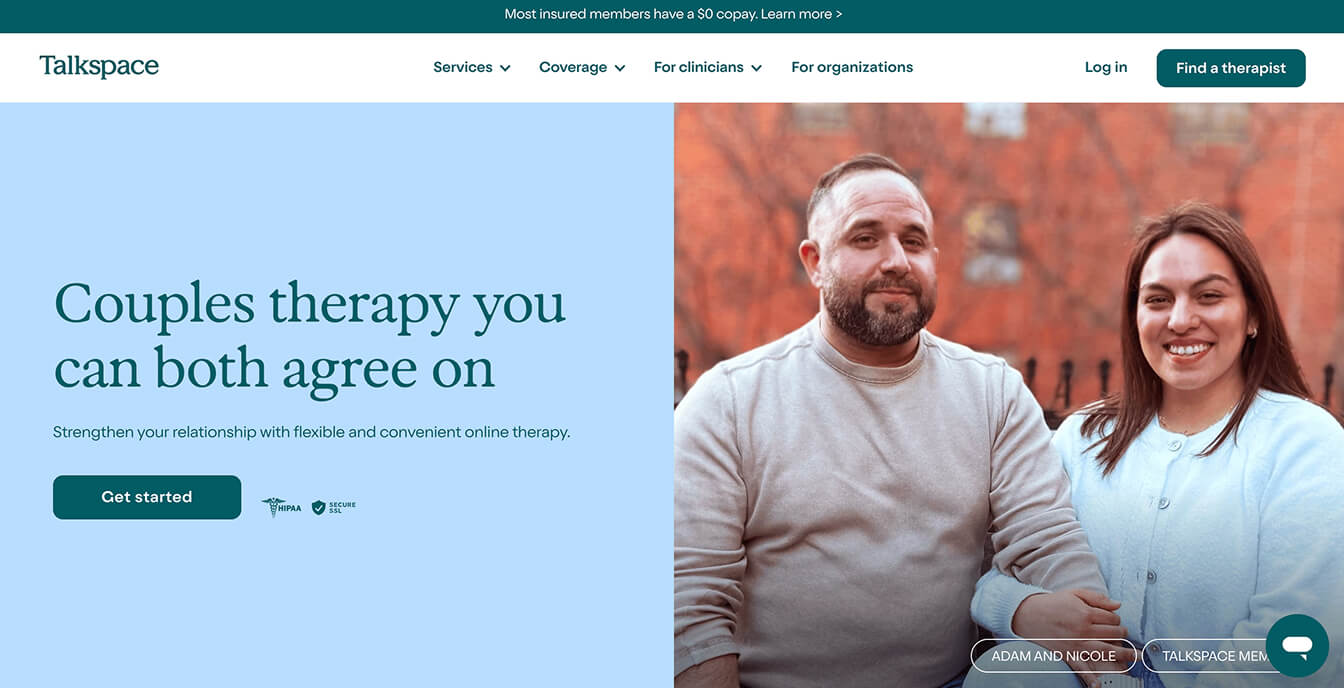
Talkspace is a pay-per-session and subscription-based online couples therapy platform that combines live video sessions with unlimited messaging. This platform offers couples therapy for any two people aged 18 or older in any type of relationship.
With Talkspace, users receive:
- Up to four live sessions per month (with additional sessions available for $65 each)
- Therapist support in-between sessions
- Individual therapy options and online psychiatry options
- Options for relationship, marriage, and premarital counseling
Cost and insurance
- Accepts many major insurance providers and EAP programs
- With insurance: Average copays between $0 and $25/session
- Without insurance: $109/week, with additional sessions available for $69/meeting
Session format
Live video sessions are scheduled around your provider’s availability, plus asynchronous messaging.
Who it’s a good fit for
Best suited for those who want between-session access through messaging and who plan to attend four sessions per month.
| Pros | Cons |
|---|---|
| Unlimited asynchronous messaging | Monthly billing continues whether or not you attend sessions |
| A single subscription for both partners | Providers are matched, not chosen |
| Options for couples to attend from separate locations |
3. Regain
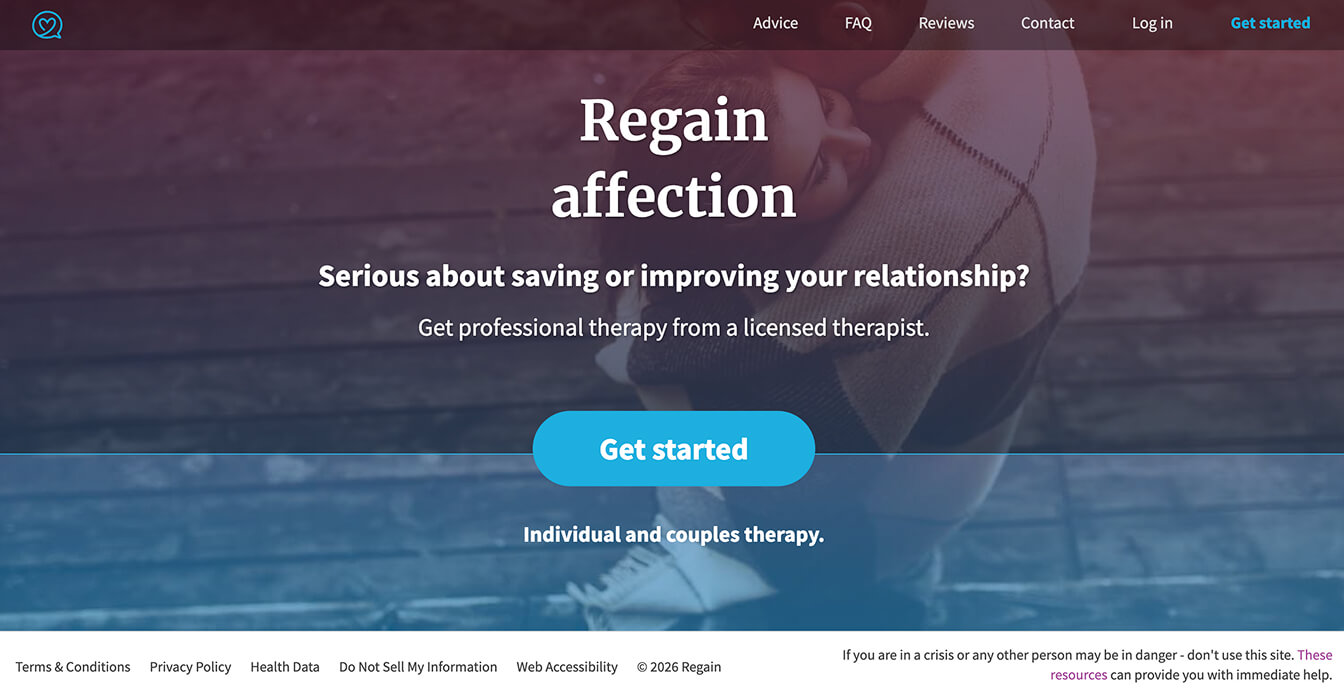
Regain, a BetterHelp relationship-focused option, is an online couples counseling platform where partners share a joint account with a single therapist. According to the platform, all providers hold at least three years and 1,000 hours of hands-on clinical experience.
This platform provides:
- Live sessions via video or phone
- Separately scheduled individual sessions
- Shared written messages
- Cancellation options at any time
Cost and insurance
- Therapy costs depend on your location, preferences, referral source, and provider availability
- Without insurance: Typically $70 to $100/week, billed as a subscription
Session format
Weekly live 30- to 45-minute sessions and unlimited messaging, with each partner able to join from a separate device and location.
Who it’s a good fit for
Long-distance couples, people without insurance, and couples who don’t want sessions filed with an insurer.
| Pros | Cons |
|---|---|
| Built specifically for relationship work | Insurance is not accepted |
| Partners can join from separate locations and devices | Shared messages are visible to both partners by default |
| Asynchronous messaging is available |
4. OurRitual
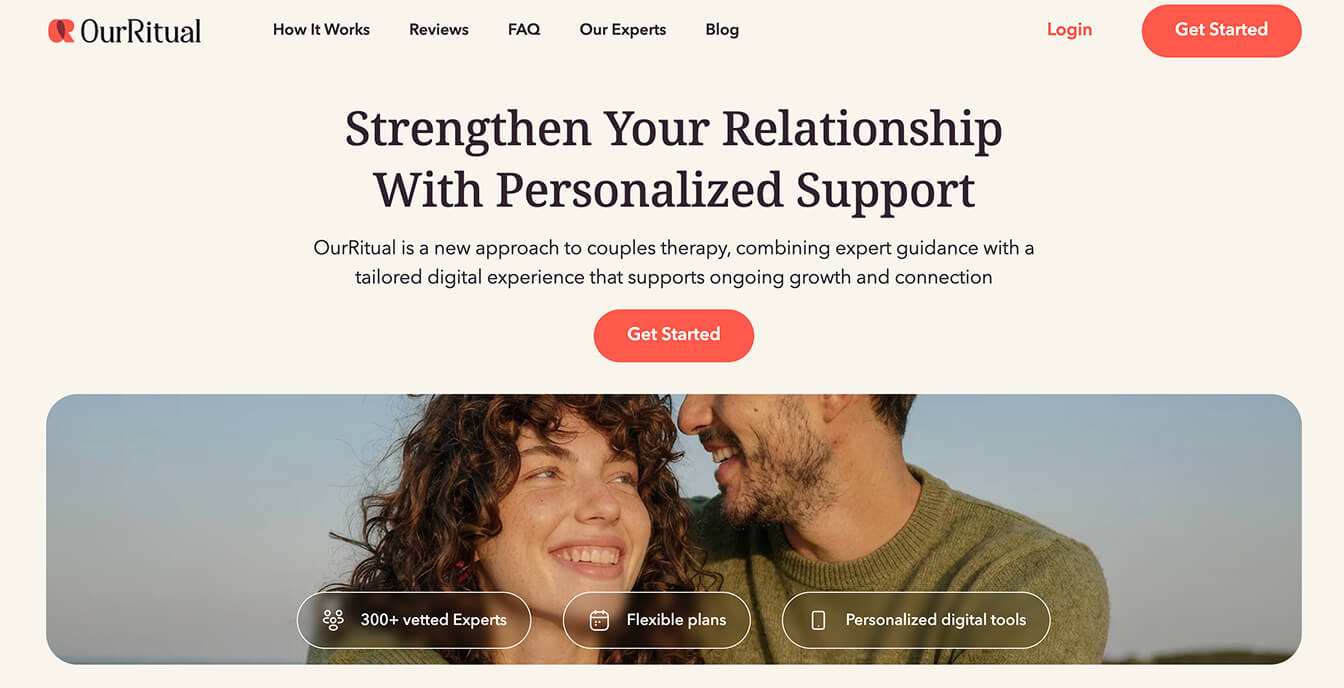
While OurRitual does not offer classic couples therapy, it is a relationship health platform that blends expert guidance with daily rituals. Borrowing elements from couples therapy, this structured program pairs users with dedicated support and provides between-session exercises.
OurRitual’s platform provides:
- A mix of virtual sessions and assigned curricula
- Chat support between sessions
- Plans to support individuals and couples
- Automatic subscription renewals
Cost and insurance
- Without insurance: Individual plans start at $144/month, and couples’ plans start at $240/month.
Session format
A 40-minute weekly virtual session with a dedicated relationship expert, plus app-based lessons and exercises between sessions.
Who it’s a good fit for
Couples who want proactive skill-building with structure and are comfortable with a coaching-style model.
| Pros | Cons |
|---|---|
| Structured curriculum with exercises between sessions | A subscription is required for care |
| 300+ vetted experts | Does not accept insurance |
| Options for individuals in relationships, in addition to couples counseling | |
| 14-day money-back guarantee |
5. Amwell
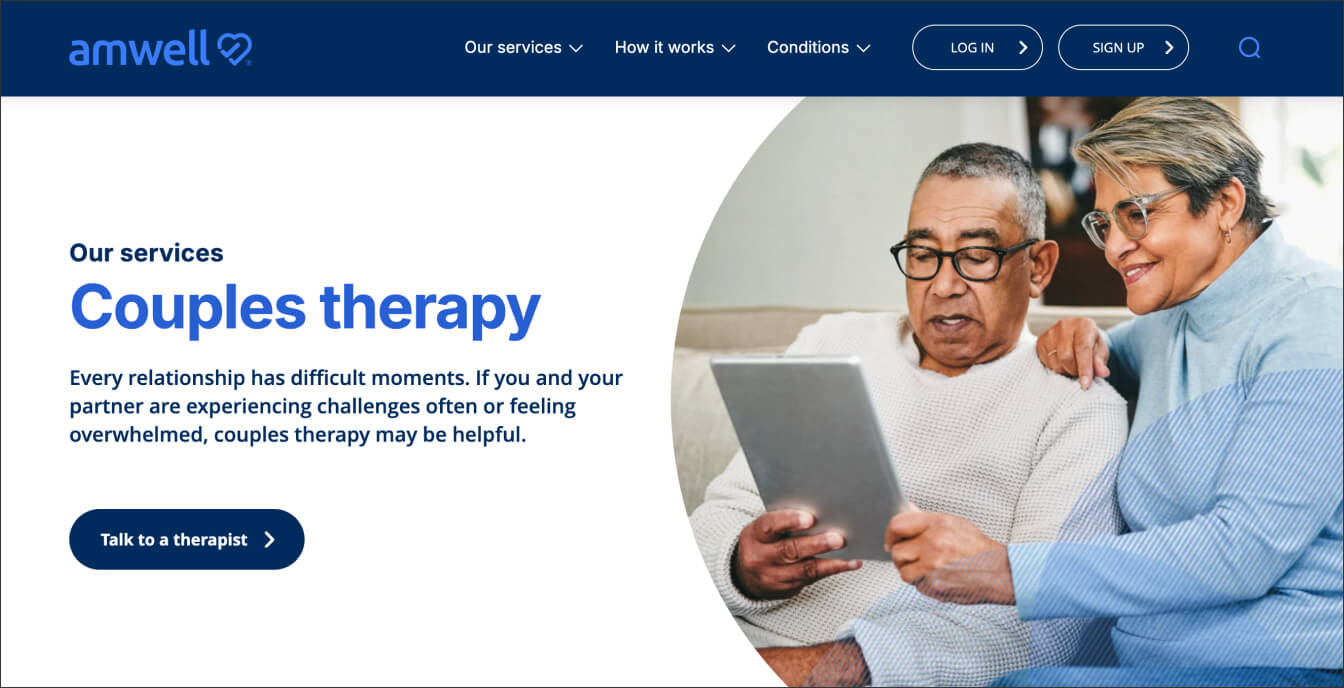
Amwell approaches relationship counseling as a single service within a broader telehealth platform. Partners meet with licensed therapists through the web or a mobile app, and providers readily support individuals attending alone.
Amwell couples therapy:
- Is available to individuals 18 years or older
- Addresses a range of challenges, including conflict resolution, infertility, infidelity, and parenting issues
- Provides tailored treatment plans
- Offers care for reconciliation and separation
Cost and insurance
- Cost varies by insurance plan and provider
Session format
Scheduled private video sessions with available providers, which offers additional flexibility but may impact continuity.
Who it’s a good fit for
Partners looking for a per-visit option with no subscription, and those already using Amwell for primary care or medication management.
| Pros | Cons |
|---|---|
| No continuous billing | Does not include transparent therapy pricing |
| Offers individual options | Coverage varies by state and plan |
| Therapy, psychiatry, and medical care on one platform | Booking by availability, not by provider |
6. Sesame
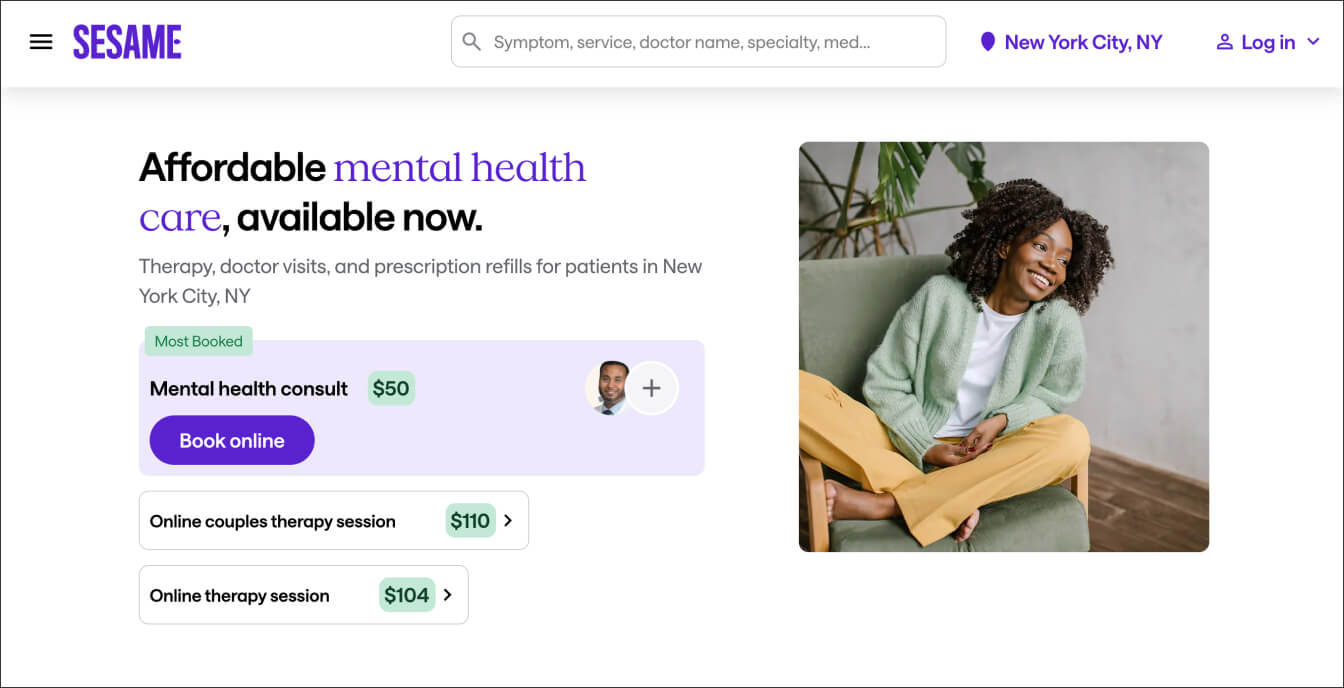
Sesame works like a cash-pay marketplace where providers list their individual rates on their profiles. Partners can browse options together or individually, then book an appointment directly from the site.
With Sesame, users:
- Only pay for the care they need
- Attend virtual sessions wherever they are
- Can receive individual and couples trauma treatment, plus additional care for conditions like anxiety and depression
- Access non-pharmaceutical treatment options
Cost and insurance
- Sesame Plus subscriptions begin at $10.99/month
- Without insurance: Mental health consults are $50, online therapy is $79/session, psychiatry consults are $140, and prescription refill visits are $29
Session format
30- to 50-minute virtual sessions with a licensed therapist focused on emotional support, coping strategies, and personal growth.
Who it’s a good fit for
Couples who are comfortable paying out of pocket and are looking for transparent pricing without a subscription.
| Pros | Cons |
|---|---|
| Transparent pricing before booking | No insurance billing or acceptance |
| HSA and FSA eligible | No messaging or support between sessions |
7. Online-Therapy.com
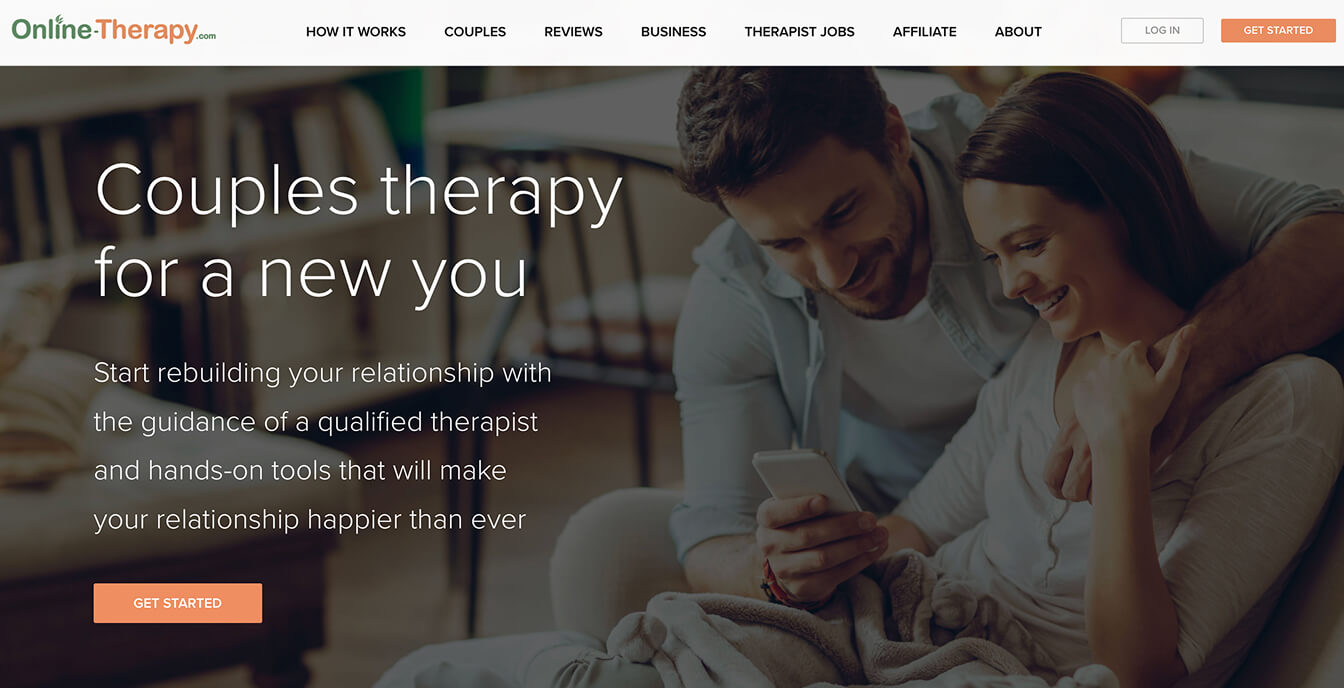
Couples counseling from Online-Therapy.com combines joint sessions with individual work. This platform is built on an eight-section cognitive behavioral therapy (CBT) program and offers unlimited messaging options with weekday replies from providers.
Online-Therapy.com provides:
- Subscription tiers with access to weekly joint sessions and self-guided therapy tools
- Therapeutic resources, including worksheets, a journal, an activity plan, and yoga videos
- Subscription pauses and cancellation options
Cost and insurance
- Therapy costs may be reimbursed
- Without insurance: Subscriptions start at $48/week
Session format
45-minute video, voice-only, or text session(s), with daily asynchronous support and a self-paced CBT curriculum for each partner.
Who it’s a good fit for
Best suited for those who want structured CBT tools and individual work running alongside joint sessions.
| Pros | Cons |
|---|---|
| Individual online therapy programs alongside joint counseling | Your choice of therapist is limited to the platform’s recommendations |
| Video, voice, and chat sessions available | No direct insurance billing |
| Provider responses Monday-Friday |
8. Open Path Psychotherapy Collective
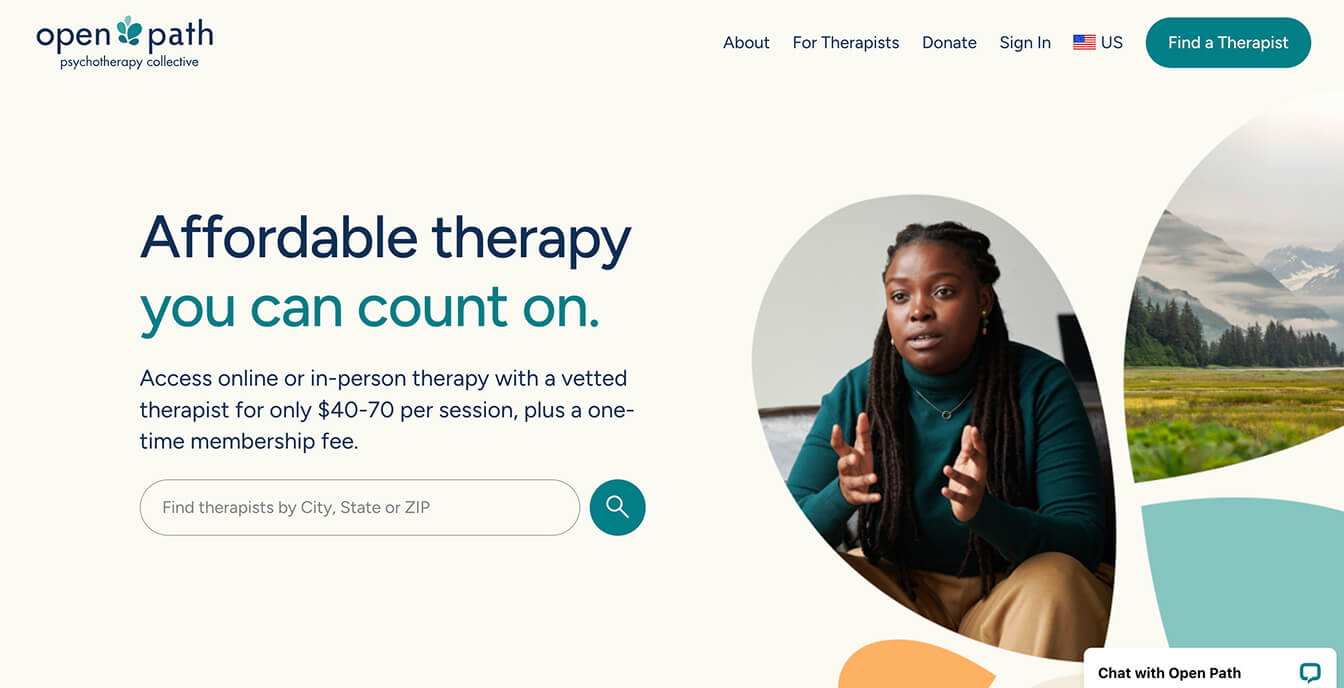
Open Path Psychotherapy Collective is a nonprofit that provides access to counseling for people without affordable care. After paying a one-time lifetime membership fee, users who are uninsured or underinsured and have a household income below $100,000 can use the platform’s services.
Those who qualify gain:
- Treatment at reduced rates
- Discounts on wellness products
- Access to more than 40,000 vetted therapists
- Student intern-led sessions at a rate of $30/meeting
Cost and insurance
- $65 for a one-time lifetime membership fee
- Without insurance: Typically $40 to $70 for individual counseling and $40 to $80 for couples or family counseling
Session format
Online or in-person sessions, as well as free online wellness courses.
Who it’s a good fit for
Partners who meet the income and coverage criteria and want the lowest sustainable per-session cost with a licensed therapist.
| Pros | Cons |
|---|---|
| Low per-session costs | Strict income and insurance eligibility requirements |
| Online and in-person options | Users contact and coordinate with therapists themselves |
| No messaging or between-session support |
Benefits of online couples therapy
Couples often arrive stuck in a loop they can’t see from the inside.
“[Therapy] becomes a place where couples can finally slow those patterns down and understand what’s really driving the conflict beneath the surface.” —Erika N. Jackson, LMFT, Grow Therapy provider
Online couples therapy may help partnerships by also offering:
- Access to a wider pool of qualified therapists: Expanding your options from your local counselors to statewide providers may offer better, more specialized support.
- The ability to join from separate locations or devices: Many platforms let partners join from different devices, keeping therapy possible through travel, deployments, opposite shifts, and long-distance stretches.
- More privacy for sensitive conversations: No shared waiting room means no chance of running into someone you know, which lowers the barrier to being honest about relationship concerns.
- Tools and exercises between sessions: Some providers include worksheets and journal prompts, or a full lesson track for post-session guidance.
- A lower barrier to starting, especially for a reluctant partner: The ability to call from anywhere at almost any time (without traveling) may be a smaller ask for some partners than traditional therapy.
- Comparable effectiveness to in-person therapy: A nationwide trial showed that online-based programs led to significant improvements in relationship satisfaction and negative relationship quality, along with reductions in depressive and anxiety symptoms.
What to look for in an online therapy provider for couples
No matter why you choose to seek couples counseling or how you find a provider, work through this list to determine if your selected (or matched) provider is a good fit:
- Do they accept your insurance? Plan-level coverage for therapy may not extend to relationship-focused care, so verify that your insurance provider covers couples therapy and that your provider accepts your plan.
- Are they trained in couples or relationship therapy? Couples work is a distinct skill, and providers such as licensed marriage and family therapists (LMFTs) are trained in relational dynamics and may hold certifications in other approaches.
- Do they offer care for your specific concern? Concerns such as infidelity, blended family conflict, intimacy after a baby, and caregiving strain all call for different expertise.
- How do they handle joint vs. individual sessions, and how do they address confidentiality between partners? Ask about the privacy of written messages and individual therapy options, so you know the default of your platform or provider.
- Can you browse and select them with your partner? Platforms that let you review profiles side by side and select a provider can help ensure that neither partner feels overruled or uninvolved.
- Do they offer flexible appointment availability? Two schedules are harder to align than one, and kids’ schedules make it three (or more). Flexible provider availability, including weekends and evenings, can be the difference between attending regularly and sporadically.
- Do you need to be in the same location to receive care? If you travel, work opposite shifts, or live apart, verify that your platform or provider can support multiple devices (in multiple locations) at once.
Help your relationship get the support it needs with Grow Therapy
Supporting your relationship with the best online couples therapy is an important decision, one that can feel overwhelming. From session type to insurance coverage, consider all your options to find couples counseling that best serves your and your partner’s needs.
With Grow Therapy, you can transparently view your options before committing. With or without your partner, filter for providers who specialize in couples counseling, review their credentials, see their rates upfront, check your cost estimate, and book directly from the platform.